

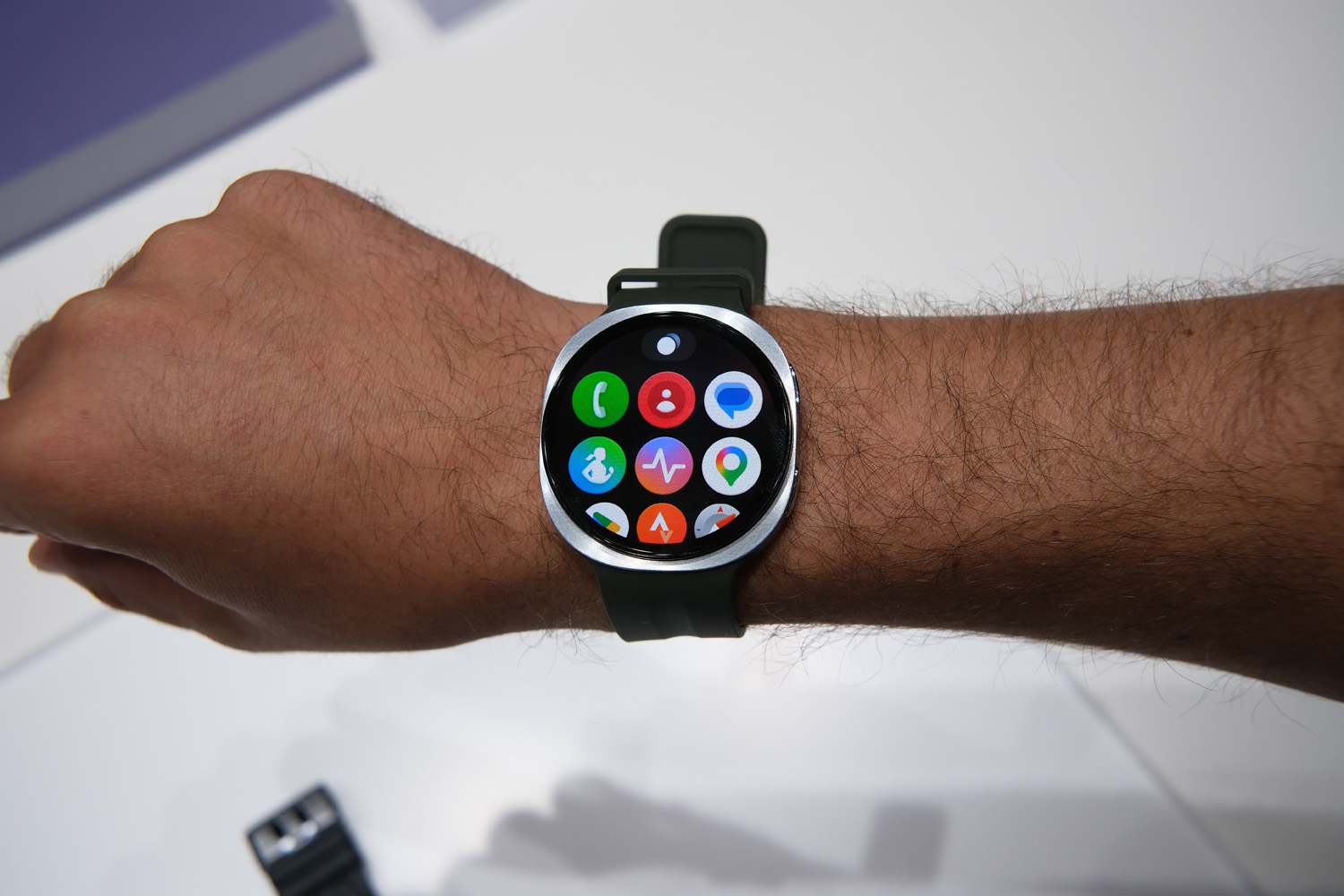
The luxe-leaning Galaxy Watch Ultra 2 might’ve hogged the wearable limelight at Samsung’s latest Unpacked event, but the Galaxy Watch9 shouldn’t be ignored. It’s much more mainstream, way more affordable, and isn’t far short on features.
AI-powered preventative health features are the big draw this year, but there are some welcome under-the-hood upgrades to performance and battery life. I got to try one on ahead of the official reveal and already think it could be the Android smartwatch to beat in 2026. For those not willing to spend silly money in the name of style, anyway.
Samsung has kept the minimal, circle-meets-square styling largely unchanged from the outgoing Galaxy Watch8 but swapped to a different aluminium casing that’s 25% lighter.
Even the included Sport Band strap has been on a weight loss journey, shedding 17% compared to last year by incorporating an air pocket along the centre that also reduces friction. Misty and Fabric bands are optional extras if you want to mix up your style or demand maximum nighttime comfort while tracking sleep.
It’s still a slim watch that should slip easily under a shirt cuff, with a sharp and colourful circular AMOLED display whether you go for the 40mm or 44mm version. Both now top out at 3000 nits brightness, which should help with outdoor visibility.
Two buttons still appear at the right edge for navigating the WearOS interface, which gets Samsung’s usual OneUI visual tweaks. Those wanting an extra shortcut to specific exercise modes and a more rugged look will need to step up to the larger, chunkier Galaxy Watch Ultra 2.
Underneath the skin, Samsung has switched to Qualcomm silicon for the first time. The firm’s home-grown Exynos has been ditched for a Snapdragon Wear Elite chipset, which brings a healthy performance boost as well as greater power efficiency.
Battery capacity may be unchanged on the 44mm model, but the smaller 40mm Watch9 now has a 390mAh cell – that’s a 20% boost over the previous generation. That could help wearers get into a second day before needing to charge, though I’ll withhold judgment until a full review.
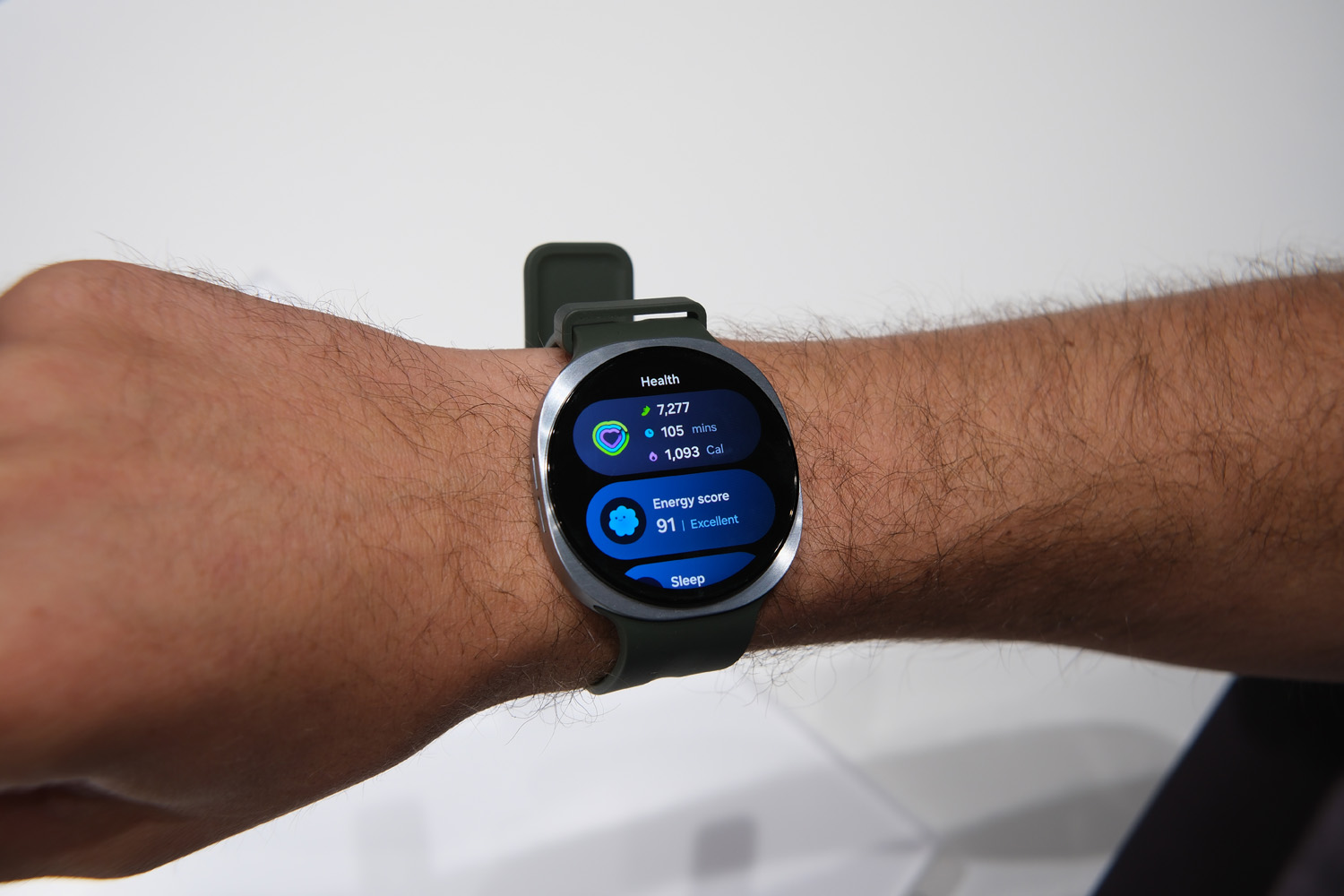
It’s all change on the software side. A new Vitals metric measures blood oxygen, heart rate variability, heart rate, skin temperature and respiratory rate (after establishing a baseline with a week of overnight wear), alerting you to any metrics that fall out of your normal range. The Watch9 also gives a heart health score out of 100, based on your BMI, vascular load and any vigorous activity.
A Daily cardio load then suggests how much effort to put in when training, on top of a Fitness Index that plots your endurance, flexibility, cardio, strength and body composition against other users in the same age range. The idea is to paint a clearer picture of your health and help you spot any issues early, before they become something you might want to talk to a doctor about. It sounds like a lot of numbers to me – Garmin’s body battery combines a lot of these features into a single metric. Perhaps the redesigned Galaxy Health companion app will present it all in an easy to understand way.
There aren’t as many new features for WearOS as a whole. Raise to talk with Google Gemini is the standout; it knows the difference between you checking the time and actually wanting to talk, so you don’t accidentally trigger it all the time. It could save a bit of battery life over the old keyword detection method, though I’ll need to confirm that once I get a Watch9 in for testing.
The 40mm Watch9 will start from $379/£349 in Graphite and Cream colours, while the 44mm model starts at £379 (no US pricing confirmed for that one yet) and can be had in Graphite and Silver hues. Those are significant jumps from the previous generation, though that partly has to be blamed on the insane cost of consumer memory and flash storage.
Both Galaxy Watch9 models are up for pre-order today, directly from Samsung, and will start shipping from August 7.


Read the full article here
