


I yawned four times just writing the headline for this article. Once because my third coffee had worn off, once because my dog yawned at me first (rude), and twice because simply typing the word “yawn” is apparently enough to trigger one. If you’ve caught yourself yawning in the last thirty seconds while reading this intro, I’m terribly sorry, but also welcome to the club.
For something we all do several times a day, nobody seems to agree on why we do it. The oxygen theory you might have heard at school was tested and rejected decades ago (I know, surprising enough to make your jaw drop, probably into another yawn).
Instead, both BBC Bitesize and the Guardian report that current explanations are considerably stranger than “you’re tired”. One theory puts yawning down to your brain overheating (not as concerning as it sounds), another suggests it’s your brain changing gears, and a third suggests that contagiousness is an old form of group communication.
The oxygen myth

Let’s start with the old classroom explanation. It suggested that a yawn is your body’s way of correcting an oxygen shortfall and carbon dioxide build-up in the blood, expelling excess CO2 in the process. It was a neat little story that seemed to make sense, so people generally accepted it.
But it’s also been dead for forty years. As reported by the Guardian, experiments in the 1980s deliberately altered the oxygen and carbon dioxide levels in volunteers’ inhaled air and found that, while it changed other respiratory processes, it made no difference to how often they yawned. Whatever a yawn is doing, then, it isn’t about changing your blood’s oxygen and carbon dioxide levels.
A built-in fan, for your brain
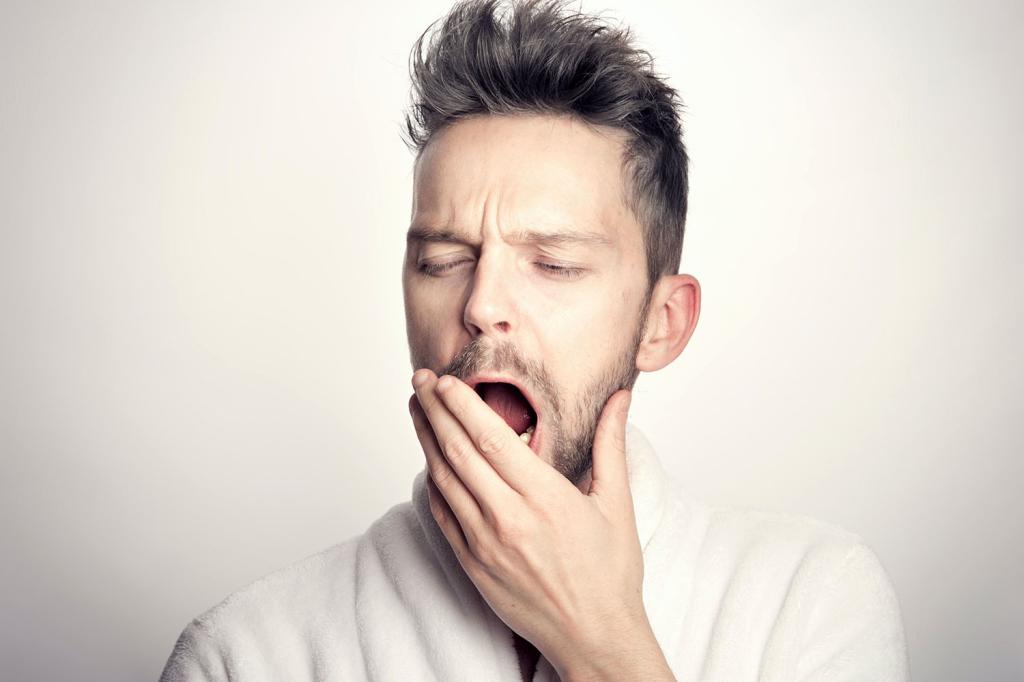
Instead, the theory with the most momentum these days is thermoregulation. This suggests yawning acts as a cooling system for your skull, not too dissimilar from a fan whirring inside your laptop when you’re running too many AI tasks at once (or maybe just trying to send an email, depending on what kind of day you and your computer are having).
As reported by The Guardian, Andrew Gallup, a professor of behavioural biology at Johns Hopkins University who’s spent decades studying this, describes the wide gape of a yawn as a localised stretch that boosts blood flow to and from the head. Add a deep lungful of air moving across the moist surfaces of your mouth and nose to carry heat away, and you have yourself a clever cooling mechanism.
The Guardian also suggests this theory is supported by yawning becoming more frequent as an environment gets too warm, and by yawning dropping off when it’s colder or when it’s very hot and sweating becomes the more efficient way to cool you down.
The BBC article, meanwhile, adds that yawning when we’re tired could also support the thermoregulation theory, as we tend to feel drowsy in warmer conditions. Before you start telling all your friends about this new discovery, however, it’s worth noting that this hasn’t yet been conclusively proven.
Or maybe your brain switching gears

Running alongside the thermoregulation theory is the ‘arousal change’ theory, which is also reported by The Guardian. We aren’t talking about naughty things here, so get that out of your head. This theory suggests yawning shifts your brain from one mode to another, such as from drowsy to alert, or from disengaged to focused, and so on.
Dr Olivier Walusinski, a historian of medicine quoted in the Guardian piece, proposes a mechanism for this. He says yawning helps the brain switch between its “default mode network”, which is said to include regions tied to daydreaming, memory and self-reflection, and the separate attentional network that gears your body up for action, possibly via changes in how cerebrospinal fluid circulates around the brain and spine.
It’s also possible these two theories aren’t rivals at all, with a state change likely to occur with a shift in brain temperature and activity either way.
The science behind yawning

Beyond the theories of why, the science of what yawning actually is is clearer. Turns out, it’s a properly choreographed neurological event. According to a 2025 review in the Journal of Family Medicine and Primary Care, it starts in the hypothalamus and brainstem, where dopamine and serotonin are the main chemical triggers. Experiments show that boosting the receptors these neurotransmitters act on can induce a yawn, while blocking them can suppress one.
Oxytocin, best known as the bonding hormone that new mothers will have heard about countless times, is involved too. This hormone is released in the same part of the hypothalamus and can stimulate yawning on its own.
From there, a chain of cranial nerves takes over: the trigeminal nerve controls the jaw, the phrenic nerve drives the diaphragm, and the facial nerve joins in, all coordinating to produce that unmistakable wide-mouthed stretch you are probably making right now after reading all that.
Why yawning spreads like a bad meme
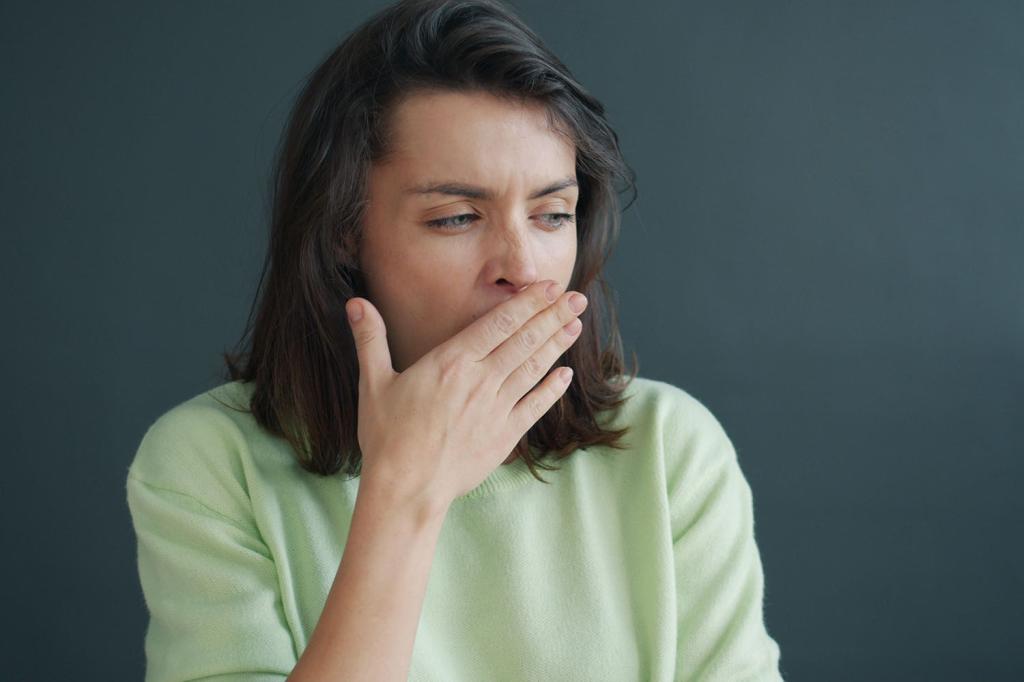
When it comes to contagious yawning, BBC Bitesize points to a theory that this might be a very old form of communication: one person’s yawn signals fatigue to everyone nearby, synchronising the whole group’s body clocks.
Andrew Gallup, reported in The Guardian, takes a slightly different view, suggesting that contagious yawning might not have much of a function at all. He suggests it may simply be a by-product of being a highly social species with well-developed mirror neurons, the brain cells that fire both when you act and when you watch someone else act.
It seems to spread beyond the yawn itself, too. A 2021 study, mentioned in the Guardian article and published by National Geographic, found that when one lion yawned and then got up to walk, other lions who’d caught the yawn tended to follow.
Many of us yawn multiple times a day, and most of the time you probably don’t even realise. Certainly not as much as you might have done while reading this article anyway. Excessive yawning might be worth a doctor’s opinion, but you can take comfort in knowing you’re unlikely to match the patient reported by a Victorian doctor in 1888 (noted by the BBC), whose single yawning fit reportedly lasted five weeks.
So, what’s the verdict?
Well, nobody is still entirely sure what exactly causes yawning, but it’s looking less like rudeness or boredom and more like your brain managing its own temperature, state, or social signalling. Maybe even all three at once.
Speaking of social signalling, though, this is where I’m going to stop, because I’ve just yawned for the fifth time, and I think that’s a sign to put the kettle on.
Read more: Best smart rings in 2026: we’ve tested Oura, Ultrahuman, Samsung and more


Read the full article here
