




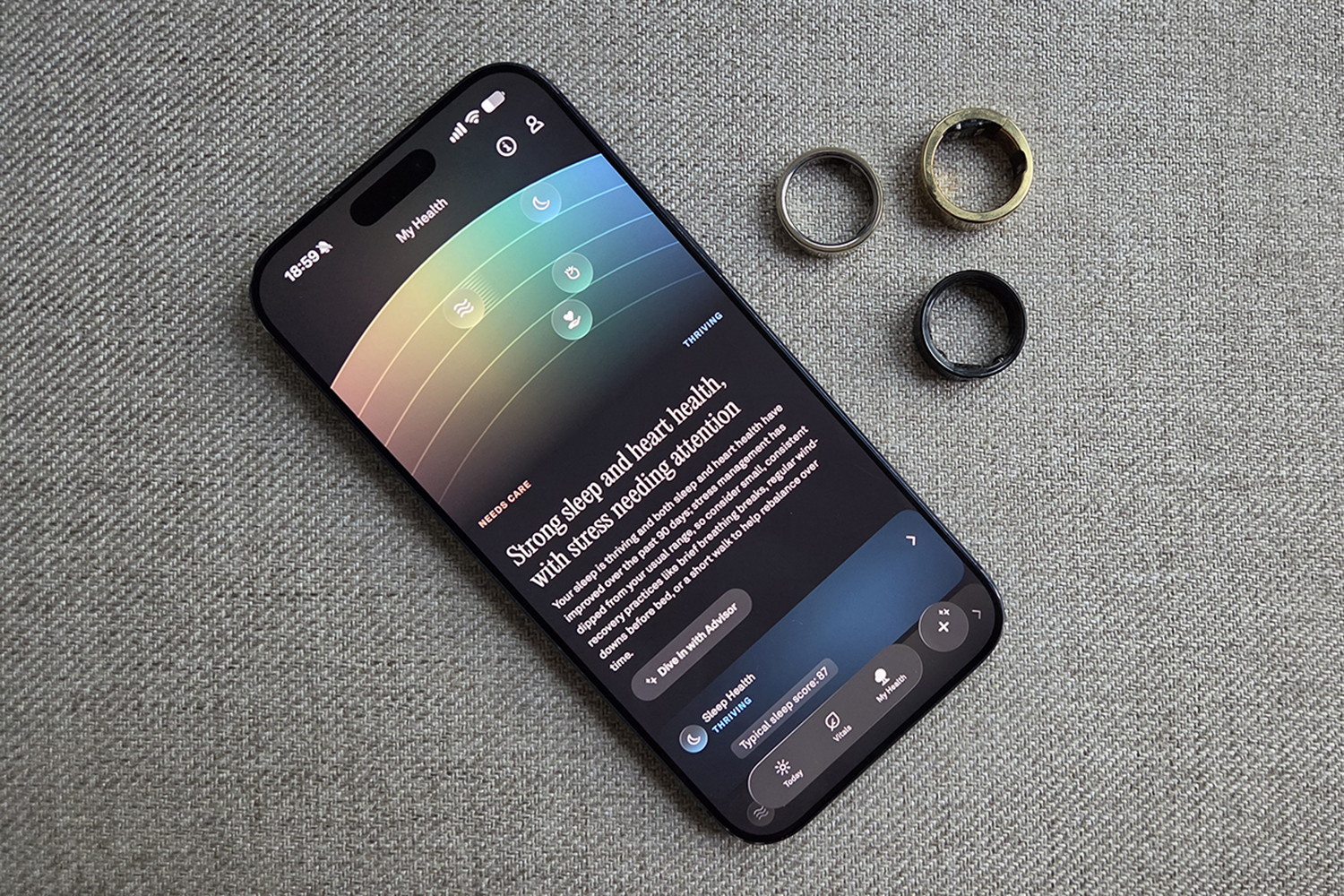
I often wear more than one smart ring at a time. Not because I’m so data-obsessed that I need three rings and a smartwatch to tell me what I already suspected (that I slept badly), but because I’m usually testing and comparing different models. They aren’t all that subtle, though, so along with the occasional dodgy look (fair enough, I do look like I’m wearing knuckle dusters), people often ask whether a smart ring is worth it and what they are supposed to track.
Whether it’s worth it depends entirely on the kind of person you are. If you want a wearable that tracks your run with real-time heart rate and buzzes with your messages mid-jog, the answer is absolutely not. A smart ring won’t help you locate the iPhone you dropped down the side of the sofa, it won’t give you live workout stats without your phone in hand, and it will not, under any circumstances, allow you to pay for a coffee using your pinky finger.
But there is an argument for wearing both a smartwatch and a smart ring, as they serve different purposes. Depending on the ring, it can track everything from resting heart rate and heart rate variability to stress and sleep. I’ve worn an Oura Ring for the last two years (among many, many others), and these are the five stats I check every morning.
Sleep score

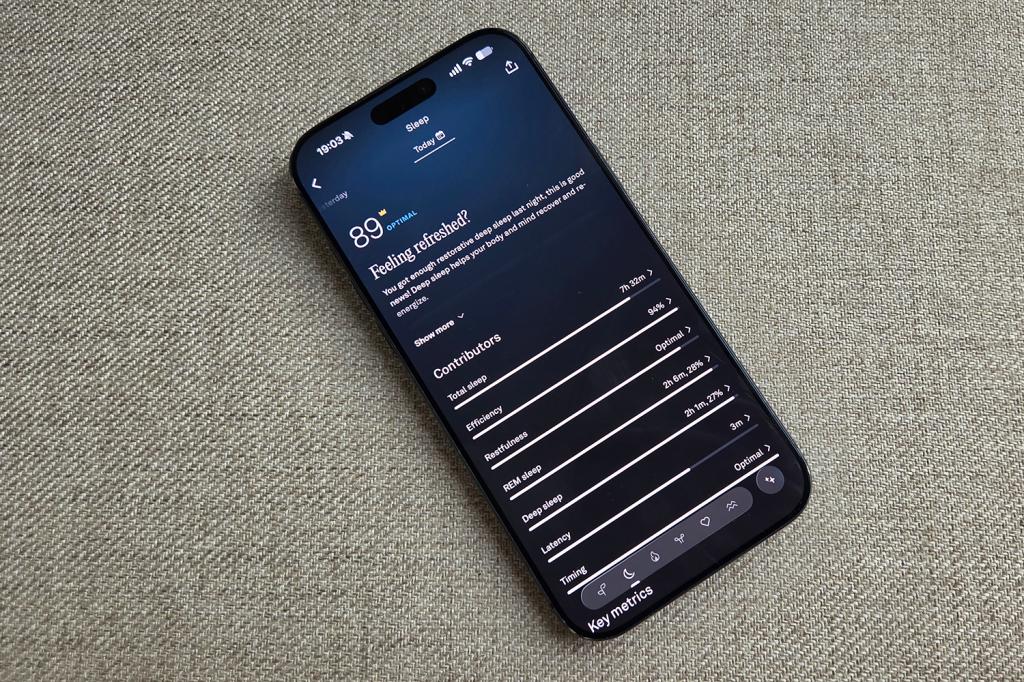
I have a few sleep trackers that spit out a sleep score, but Oura’s is the first thing I check every morning – unless I know I have slept badly. On those mornings, I’ll delay opening the Oura app until later, purely to protect my vibe from a number that would only confirm what my under-eye bags are already telling me. Most mornings, though, Sleep Score is my opening act, and I am always hoping for one of the little gold crowns (it needs to be over 85, with no room for negotiation).
I’ll also tap into the score for more detail – total sleep time, efficiency percentage, the time it took me to fall asleep, whether my body clock aligned with my chronotype, and whether I’ve accumulated or paid off any sleep debt.
Heart rate variability (HRV)
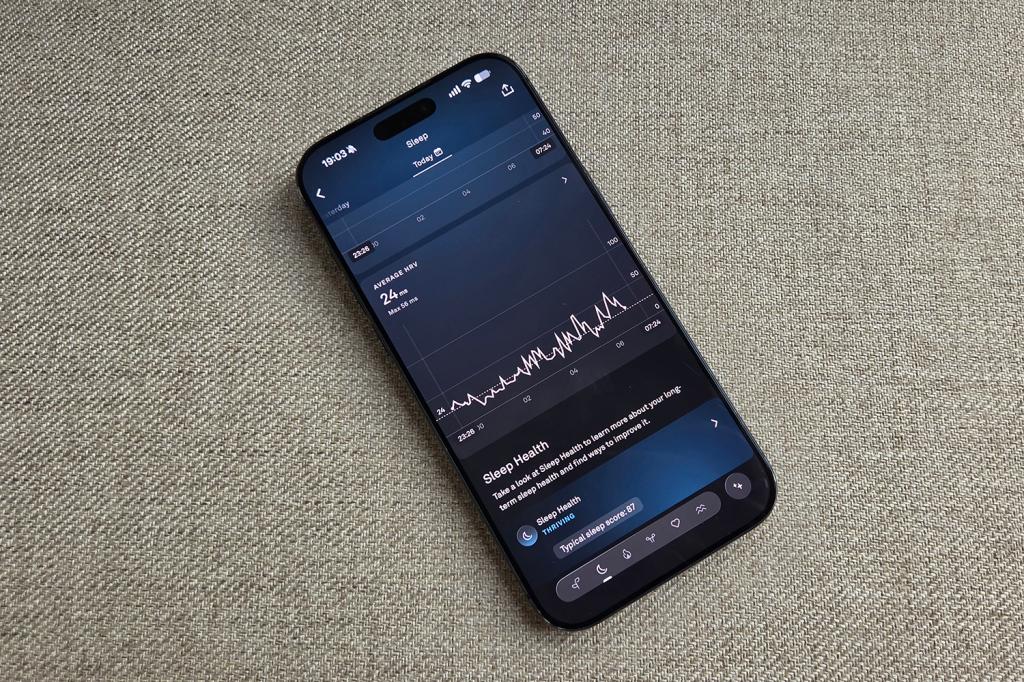
This is the second stat I check, mostly because it sits conveniently at the bottom of the sleep screen, and at 7am I am a creature of minimal effort. Heart rate variability measures the variation in time between heartbeats, and it’s usually a good indicator of how recovered – or utterly terrible – you might feel that day. Give Oura about a month to learn your baseline, and it will detect any patterns – good or bad.
It’s also the stat that shows no sympathy for your poor decisions. Late meals, a glass (or three) of wine, and HRV will rat you out even on mornings when you don’t feel remotely hungover. It’s like a wagging finger, which is ironic, given that’s where a smart ring lives.
Cumulative stress
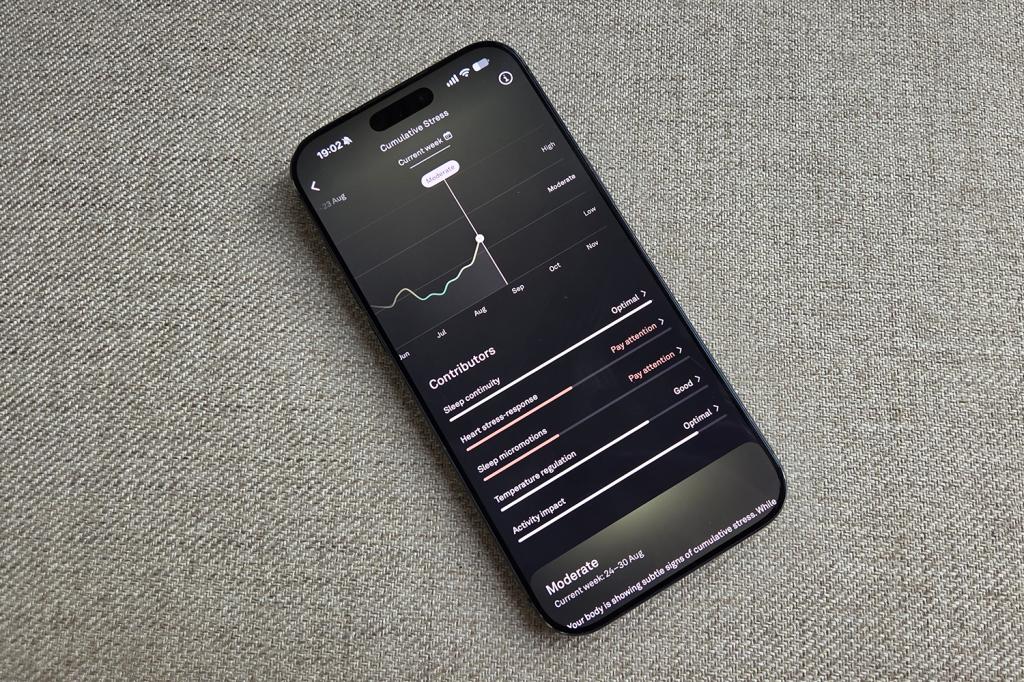
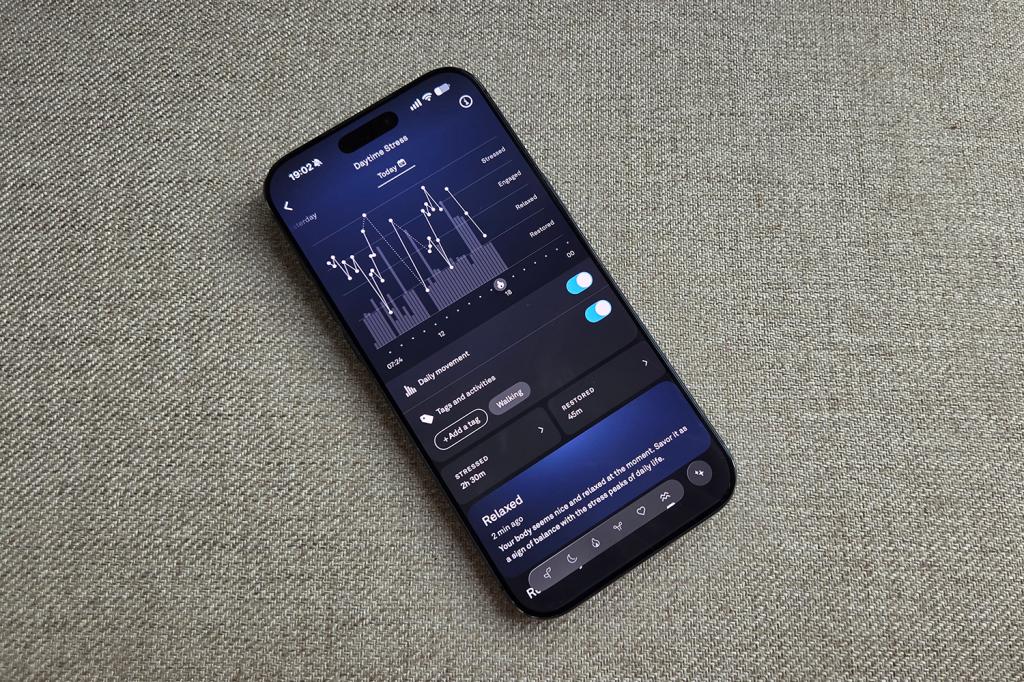
Once I’ve analysed my sleep, I move on to stress. This is probably one of my favourite metrics Oura (and other smart rings) track. It’s not necessarily fun to be told by a piece of jewellery on your finger that you’re stressed, but it’s great for spotting patterns. Maybe your commute is doing you dirty, or a particular client always sends your stress graph into orbit. I check the previous day’s daytime stress, shown hour by hour, with each point landing on Restored, Relaxed, Engaged or Stressed, and link it to what I was doing at that point in the day.
Then there’s Cumulative Stress, which tracks as Low, Moderate, or High. I’ve watched this creep up to High over the months without me physically feeling stressed. It factors in things like sleep continuity, your heart’s stress response, sleep micromotions, temperature regulation and activity impact. Not all are as easily corrected as others, but it’s a good indicator for what is actually ratting your body.
Resilience
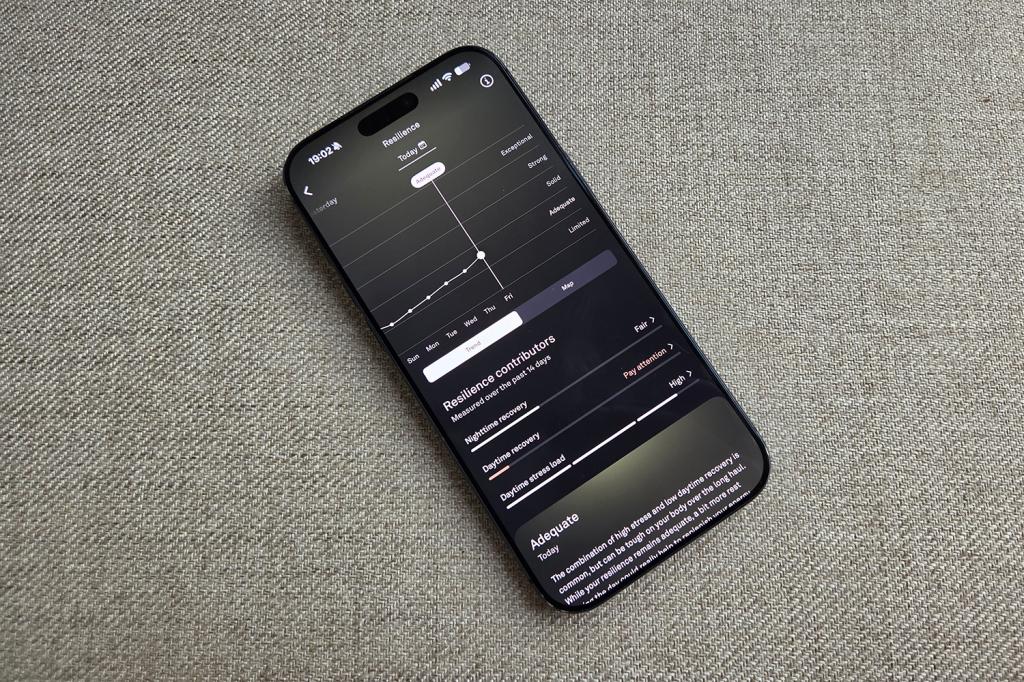
After clocking my Cumulative Stress, I flip to Resilience – the high I am eternally chasing. I have yet to make it past Strong, and even then I wasn’t up there for long. The scale runs from Limited to Exceptional, with Adequate, Solid, and Strong in between. If your stress is High and your Resilience is Limited, I probably don’t need to tell you it’s not going well for you.
It can be a frustrating metric because it moves at the pace of a Sunday morning. One very relaxing day and a great night’s sleep won’t catapult you from Limited to Exceptional overnight. There are no cheat codes here. But that slowness is the point. It nudges you towards good habits, such as a consistent bedtime or five minutes of meditation, and holds you accountable for choices you might have hoped would go unnoticed.
Readiness score
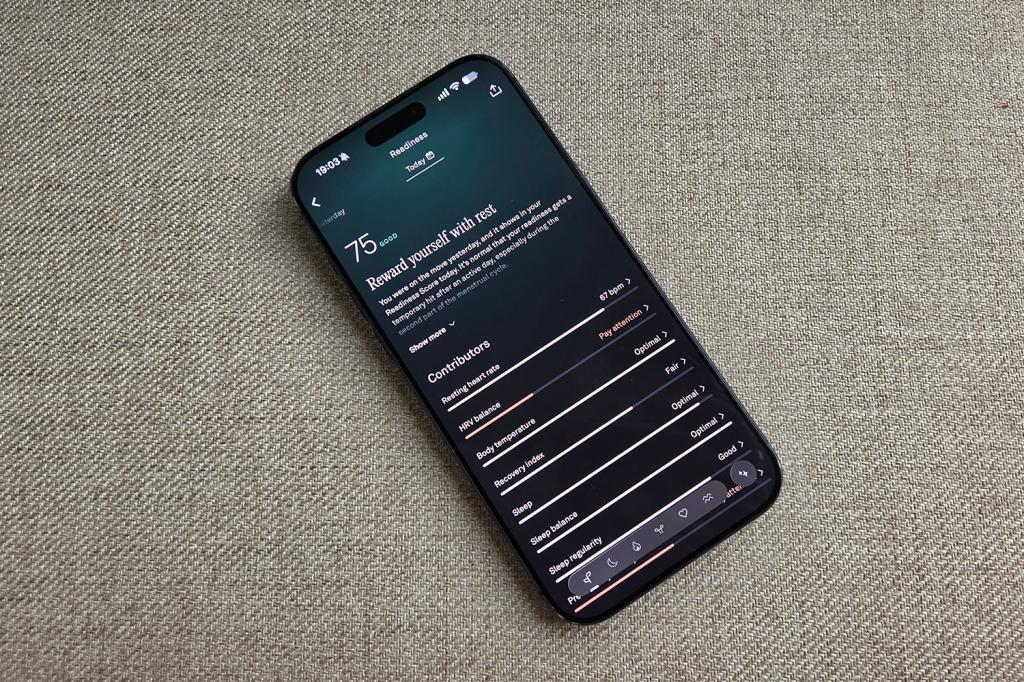
Last but not least, the Readiness score, which is often lower than I’d like because wishful thinking is, it turns out, not one of the recognised metrics of a smart ring. Readiness is a good overall snapshot of how everything is working together. Great sleep won’t save you if you spent yesterday stressed and sprinting around. Your Readiness score will reflect that.
This morning, for example, I scored 75 – ‘Good’ according to Oura, which is a polite way of saying ‘not bad, but definitely room for improvement’. It also told me to ‘reward myself with rest’, so it clearly didn’t get the memo about the two kids still on summer holidays. My resting heart rate, body temperature, sleep, sleep balance and activity balance were all ‘Optimal’, but my HRV balance, recovery index, and previous day’s activity dragged the score down.
As with Resilience, you can’t always fix every input, but it’s a handy nudge towards what could be draining your battery. If you’re a woman tracking your cycle, Readiness will also reflect your cycle stage and give you some insight into where your energy levels might sit. That’s a better excuse than a headache.
What else do smart rings track?
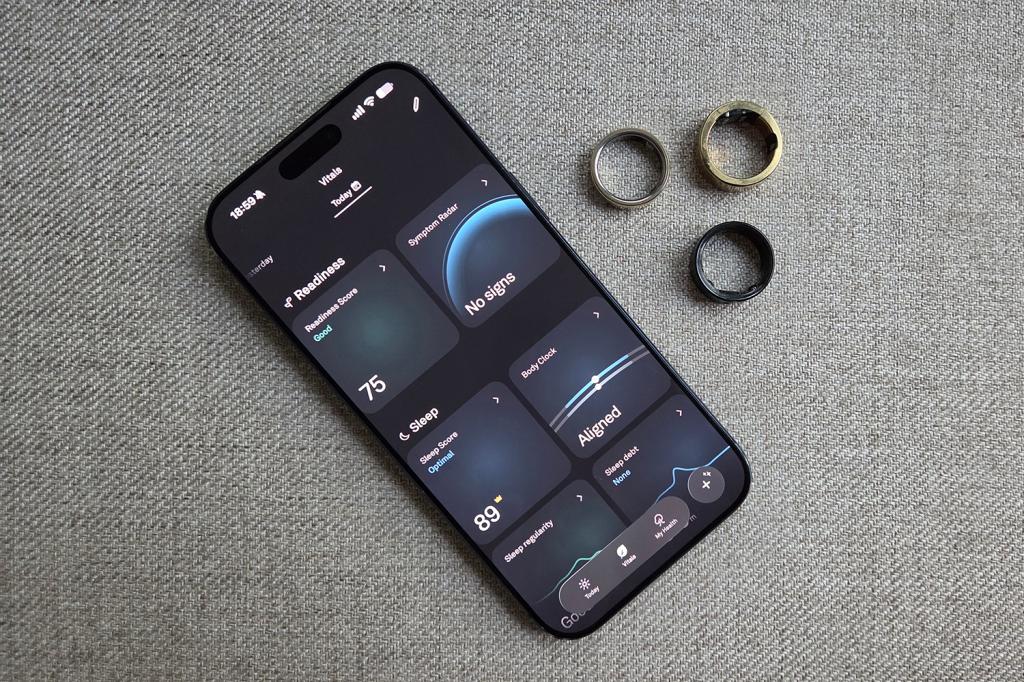
It varies by ring of course, but most offer the same basics. Oura has a Symptom Radar that flags when your biometrics suggest you’re coming down with something, tracks your Sleep Regularity (Pay Attention, Fair, Good and Optimal), and calculates Sleep Debt.
For activity, there’s also a score out of 100, based on factors like moving every hour, training frequency, training volume, recovery time, and general get-up-and-go. It also auto-detects workouts, counts steps, and lets you set goals so it knows whether you took a ‘rest day’ as ‘don’t leave the sofa’.
There’s also heart health: heart rate, Cardio Capacity (a VO2 Max estimate), and Cardiovascular Age, which tells you how your heart is holding up relative to your actual age – a stat that can be very flattering or extremely concerning. If it’s bad, I advise you to avoid the Cardio Capacity graph, which will tell you how hard you’ll find climbing five flights of stairs in the next 10 years.
There’s also Respiratory Rate (breaths per minute while asleep) and body temperature, also tracked overnight, which, among other things, helps estimate ovulation for those using Oura’s cycle tracking. Oura also offers Menopause Insights based on a short assessment, plus insights into how different cycle stages might affect how you feel and how your data looks.
Other smart rings, like Ultrahuman, throw in extras of their own, such as ideal caffeine windows, circadian alignment, AfiB detection and even migraine insights. The features differ, as does their presentation, but all smart rings are doing the same basic thing: monitoring your health and wellness behind the scenes to flag things you might otherwise miss.
Read more: Oura Ring 5 vs Ultrahuman Ring Pro: I’ve worn both but which smart ring is better?




Read the full article here


