

Only last year, Apple announced that ChatGPT would be integrated into iPhones via Apple Intelligence, letting Siri hand more complex requests over to OpenAI’s chatbot. Now, Apple is accusing OpenAI and two former senior Apple employees of misusing confidential information that it claims could help develop a new generation of AI hardware. Awkward.
At first glance, it sounds like another Silicon Valley legal battle. Tech companies have spent decades suing one another over patents, intellectual property, and trade secrets, after all. But this case has attracted far more attention than most.
That’s partly because of who’s involved. OpenAI isn’t just the company behind ChatGPT anymore. It’s rapidly become one of the biggest names in tech, acquired Sir Jony Ive’s AI hardware startup, and recruited hundreds of former Apple employees. Oh, and it’s also widely expected to be working on its first AI hardware device. So with the scene set…
What is Apple actually accusing OpenAI of?

Apple isn’t suing OpenAI because it created ChatGPT. And it’s not claiming that the chatbot copied Siri or infringed Apple’s AI models. Instead, the lawsuit centres on OpenAI’s growing hardware ambitions following its acquisition last year of io, the AI hardware company co-founded by former Apple design chief Sir Jony Ive, along with several other former Apple executives.
Apple alleges that former Apple vice-president Tang Yew Tan and former Apple engineer Chang Liu helped OpenAI gain access to confidential Apple information that could accelerate work on competing AI hardware.
According to Apple’s complaint, Tang encouraged Apple employees interviewing with OpenAI to discuss confidential projects and even bring Apple components to interviews as part of “show and tell” sessions. Apple also alleges that Liu retained an Apple laptop after leaving the company, regained access to Apple’s internal network and downloaded confidential engineering documents relating to future hardware projects.
Apple argues that OpenAI ultimately benefited from confidential information covering product development, supplier relationships, manufacturing processes and engineering work that took years to develop. The company says that it first raised concerns directly with OpenAI in February 2026, before eventually filing the lawsuit.
Apple’s complaint also highlights the scale of OpenAI’s recruitment from Cupertino, claiming that more than 400(!) former Apple employees now work at the company. There’s nothing illegal about engineers moving between rival firms – that’s commonplace across Silicon Valley – but Apple argues that the sheer number of former staff helps explain why it’s taking the alleged misuse of confidential information so seriously.
It’s important to remember, though, that these are allegations, not established facts. Apple’s claims have yet to be tested in court, and OpenAI disputes the company’s account of events. OpenAI, in return, has said that it is reviewing the complaint, has “no interest in other companies’ trade secrets”, and remains focused on building its own technology.
If Apple ultimately succeeds, the court could award damages and potentially restrict how any misappropriated information is used in future products. If OpenAI successfully defends the case, though, then its hardware ambitions are likely to continue.
How does OpenAI’s mysterious device fit into all this?
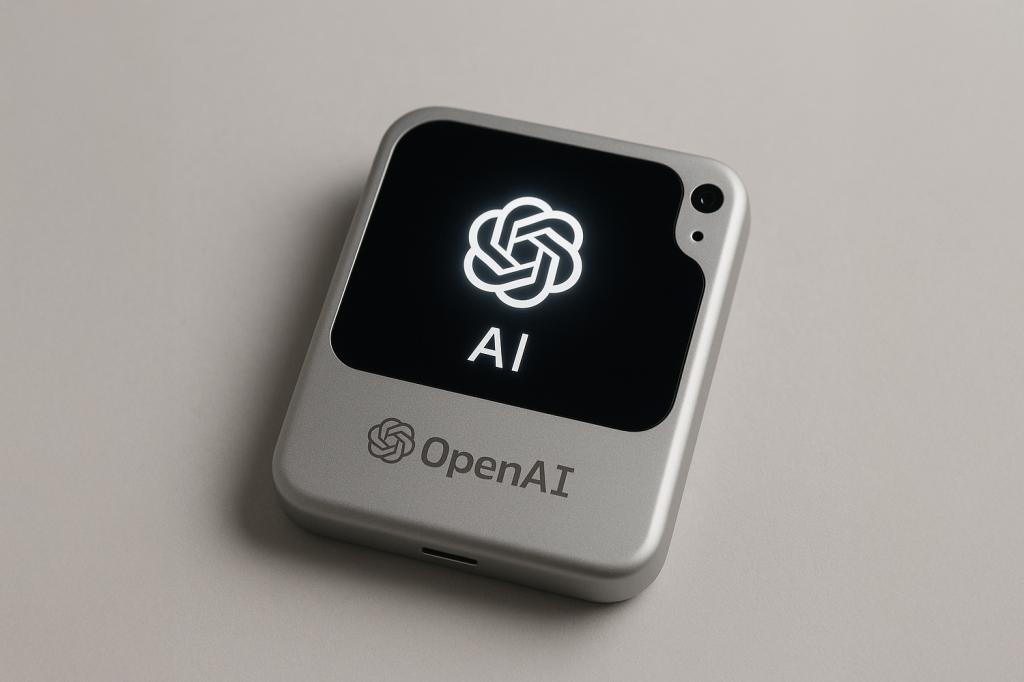
OpenAI has said surprisingly little about its first consumer device, despite the hype surrounding it. The company has made it clear that it wants to build hardware designed specifically for the AI era, but beyond that, almost everything we know comes from reports and industry insiders rather than OpenAI itself.
Those reports suggest that the company’s first product could be a compact, screen-free AI companion that relies on microphones, cameras and other sensors to understand what’s happening around you. Rather than constantly opening apps or typing prompts, the idea is that you’d simply talk to it naturally while it uses surrounding context to provide more useful responses.
If that sounds familiar, it’s because others have already tried something similar. Humane’s AI Pin and Rabbit’s R1 both promised a new way to interact with AI, but neither managed to convince most people to carry another gadget alongside the smartphone already in their pocket.
OpenAI has some obvious advantages. ChatGPT is already one of the world’s most popular AI platforms, and the company has attracted many of Silicon Valley’s top hardware designers and engineers.
For Apple, though, that’s beside the point. This lawsuit isn’t about whether OpenAI’s mystery device will compete with the iPhone. We don’t know if it even will at this stage. Ultimately, the courts will decide whether Apple’s claims stand up. And by the time that happens, we might finally know whether OpenAI’s long-rumoured mystery device is the future of tech – or another ambitious idea that couldn’t live up to the hype.


Read the full article here
