





When Xpeng suggested I try a hands-free autonomous drive around the roads close to the Beijing Autoshow I was keen, but also rather nervous. I’d already witnessed so much chaos on those multi-laned highways that being behind the wheel with jetlag and little experience felt borderline nuts. A lack of lane discipline is par for the course when driving around Beijing.
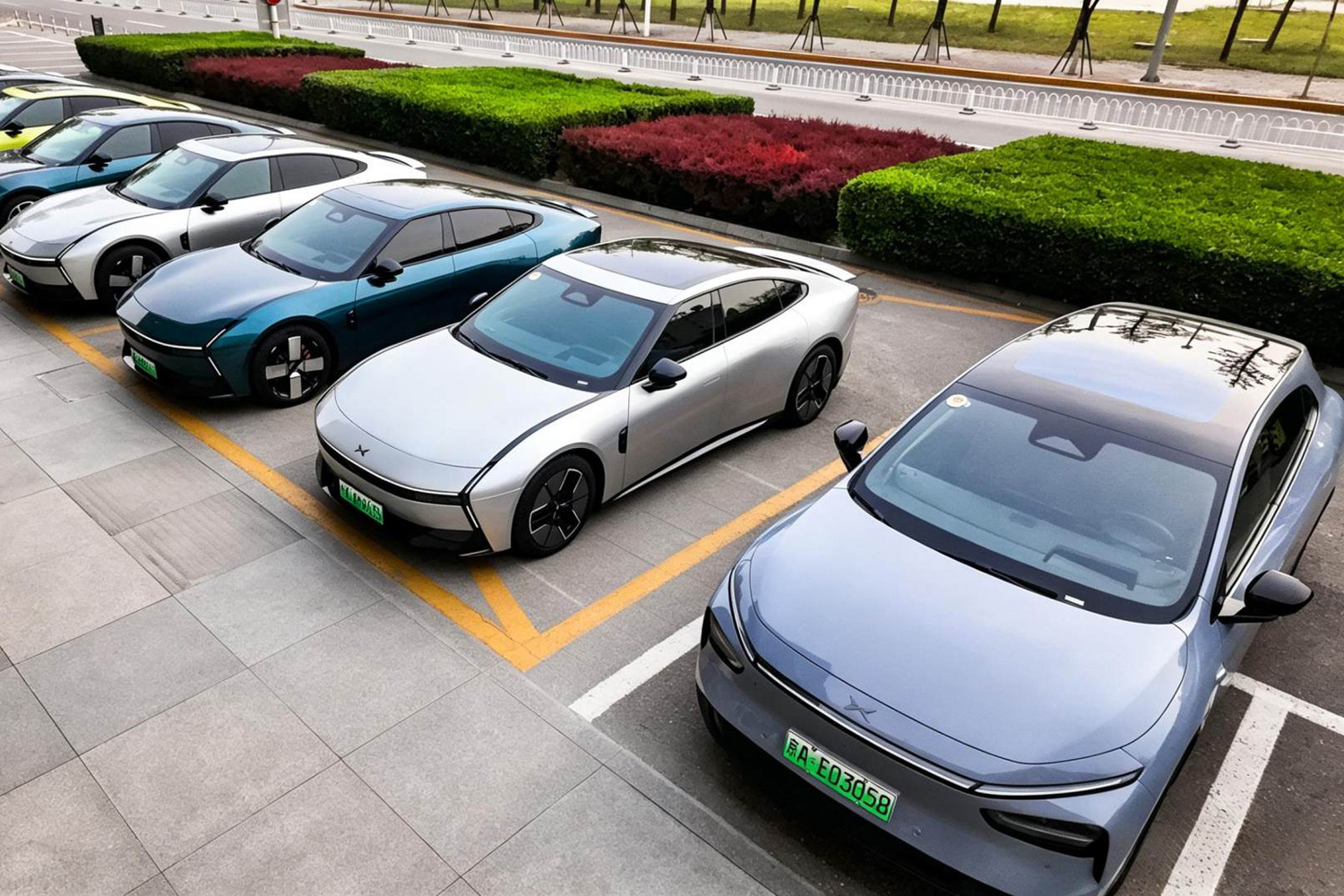
However, a definite upside was being given the Xpeng P7 Ultra to try. This super cool electric car comes from a company that proudly boasts it is a tech business that just so happens to build vehicles. The P7 Ultra looks awesome from the outside, but the really impressive stuff is indeed the tech.
Cutting edge autonomy
Xpeng unveiled its VLA 2.0 automated driving system earlier this year. It works using a combination of cameras around the car combined with bespoke software and lots of computing power. The result is a dynamic hands-free experience that was a revelation. I managed to complete an entire test drive in proper hands-free fashion, only having to touch the wheel when prompted to let the system know I was still there.
A couple of days prior, I had to spend a few hours at a Chinese driving licence centre to get my paperwork cleared and pick up a laminated driving licence after filling in lots of forms, getting my photo taken and sitting through a loop tape of terrible crashes. The rest of the class looked on very seriously as I sat there thinking how much the tape reminded me of Alan Partridge’s ‘Crash, Bang, What a Video’.
Nevertheless, this bumper collection of mangled wreckage and bloodied bodies did underline how serious I needed to take driving in China. As it turned out, it was the Xpeng P7 Ultra that would do all the hard work. Slipping behind the wheel in the car park of my hotel, the instructor next to me gave a brief overview of what was going to happen and zoomed out of the map to show an overview of the loop we’d complete.
Little input needed
I had it in my head that I’d be needed to supply some input for the driving part. However, save for those occasional taps of the steering wheel, VLA 2.0 did all the heavy lifting. This was a truly impressive demonstration. The car slipped seamlessly out of the parking lot and into the flow of traffic.
At first, it was hard to sit back, relax and enjoy the drive as other cars, a few trucks and lots of mopeds attempted to block the route ahead. The Xpeng P7 Ultra took it all in its stride and not once did I have to grab the wheel or stab the brakes.
By the time we’d got about halfway around the route, I started to relax a little and marvel at just how good this system was. Occasionally, I’d wonder if the system was going to forget to indicate and carry out a manoeuvre but, nope, every nuance in the route plan, which had a great mix of different roads, was taken without fuss or bother.
I loved the way VLA 2.0 worked so dynamically too, providing an extremely smooth experience that involved a subtle tweak of the throttle here and a soothing dab of the brakes there. Overall, it was seamless.
Making smarter moves
We topped off the experience by pulling back into the hotel car park, hopping out and letting the Xpeng P7 Ultra reverse itself into a parking space. Of course, in a place where patience is limited and horns are plentiful, not everyone seemed to be as impressed by Xpeng’s tech as I was. But it was hard to not stand there thinking just how much of a gamechanger VLA 2.0 could be.
However, the world is full of different drivers and countries all have their own driving rules and regulations. Working out how to get an Xpeng P7 Ultra to behave just as impressively in, say, the UK or Europe is an altogether different can of worms. Somehow, though, it’s hard to see how the Chinese ‘can do’ attitude will stop it happening even if the legislation continues to say no.
Xpeng is already testing the VLA 2.0 system in Europe and it’s exciting to think of the opportunities such a good system could create for driving in some of the world’s most congested and stress-inducing capital cities. All we need to do is wait, but there’s more to it than providing us with smart products, as Elon Musk realised when the formative roots of the now huge Tesla network were being devised.
Tesla pulled off a masterstroke when it not only came up with an electric car range but supplemented it with a worldwide charging infrastructure. Up until now, that has been a hard act to follow, but Xpeng is already making headway by developing its own global charging network, starting in China but with plans to extend the strategy to dozens of other countries.
Reducing stress levels
“We’re creating a worry free and hassle-free experience for our customers,” says Brian Gu, Vice Chairman and President of Xpeng at the Beijing Auto Show a day later. “From the product perspective, though, I think our focus is beyond just electrification. I think for our customers to really enjoy what the technology can bring to their lives, we are increasingly looking at the intelligence. We wanted to build an intelligent mobility ecosystem like you’ve experienced.”
“We have developed a core of what we call physical AI,” he explains. “Utilising our chips, our models, our dataset and using our own electronic architecture that really comes together to deliver a more intelligent solution. You’re not just thinking about driving an EV, you’re actually driving something that can help you, make the experience safer and more enjoyable and more relaxing.”
Considering how calm I felt after my drive in the Xpeng P7 Ultra, it was hard to disagree.


Read the full article here


