







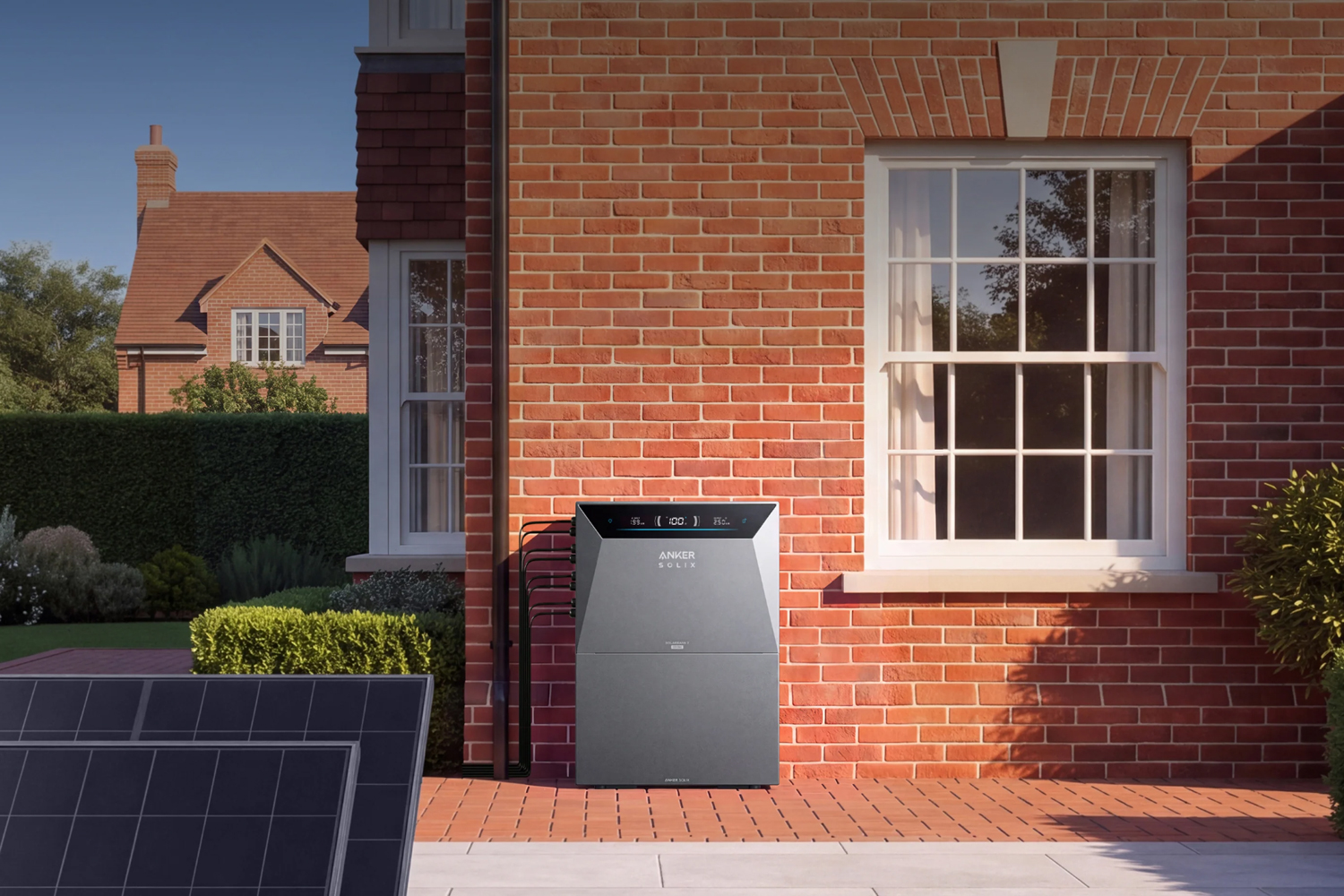
Solar panels you can plug straight into a regular socket are finally legal in Great Britain. Hooray! That’s good news if you fancy generating some of your own phone-charging electricity without committing to a traditional rooftop installation. If you do, you might want to take notes – Anker’s new Solix Solarbank 4 Pro is a home battery designed to save that solar energy for later, while also making the most of cheaper electricity from the grid.
There is one fairly important catch before you get too excited, mind. Britain’s new plug-in rules currently apply to solar systems without batteries, so the Solarbank 4 Pro still needs to be hardwired into your consumer unit by a registered electrician.
Anker has designed the hardware so it could eventually work as a plug-in battery if the rules change though, but you can’t simply shove it into the nearest socket for now. Still, it’s a step in the right direction for many solar enthusiasts. Here’s everything you need to know:
Anker solar battery: storage and smart charging
The Solarbank 4 Pro starts with around 5kWh of storage, with additional battery modules stacking underneath it to increase capacity all the way up to 30kWh.
It can handle up to 5000W of solar input from up to 12 panels, and deliver up to 2500W of AC power when hardwired. There’s also a separate off-grid output capable of supplying up to 2500W, potentially keeping compatible appliances running during a power cut.
The main unit is roughly the size of a carry-on suitcase, although don’t expect to actually carry it anywhere without at least aggravating something – it weighs around 50kg. It’s IP66-rated for protection against dust and water too, while the lithium iron phosphate (LFP) battery cells are rated for 10000 charging cycles. Anker says the system should last around 15 years, and also backs it with a 10-year warranty.
Solar isn’t the only way to charge it, either. Anker Intelligence can use time-of-use electricity tariffs to charge the battery from the grid when electricity is cheaper, then use that stored energy when prices rise.
Anker says that the system supports tariffs from more than 870 electricity suppliers across Europe, including Octopus Energy in the UK. Pair it with Anker’s Smart Meter Gen 2, and it can monitor how much electricity your home is using and automatically adjust when the battery charges and discharges.
In real–world terms, on a sunny afternoon, it could stash spare solar energy away for the evening. When the Great British weather inevitably does its thing, it can instead top itself up with cheaper grid electricity, helping you avoid paying peak rates later.
Anker claims the right setup could save a UK household up to £770 a year, paying for itself in around 3.3 years. Take that figure with the appropriate pinch of salt, though. It’s based on Anker’s own calculations for a £2510 system with four 500W solar panels, a 5kWh battery, 4100kWh of annual electricity use, and the Octopus Go tariff, with installation costs excluded. Actual savings will depend on your tariff, electricity use, location, weather, and how much power your panels generate, natch. For context, the government estimates that an eligible plug-in solar system without battery storage could save a household up to £110 a year and provide as much as 20 per cent of an average home’s electricity use.
The Anker SOLIX Solarbank 4 Pro is available to pre-order in the UK for £1699, while the 5kWh BP5000 expansion battery costs £1299 during the pre-sale period. It’s not currently available in the US – plug-in solar is still at an earlier regulatory stage there, with the 2026 National Electrical Code yet to recognise systems that feed power back through a standard household socket.


Read the full article here


