

Introduction
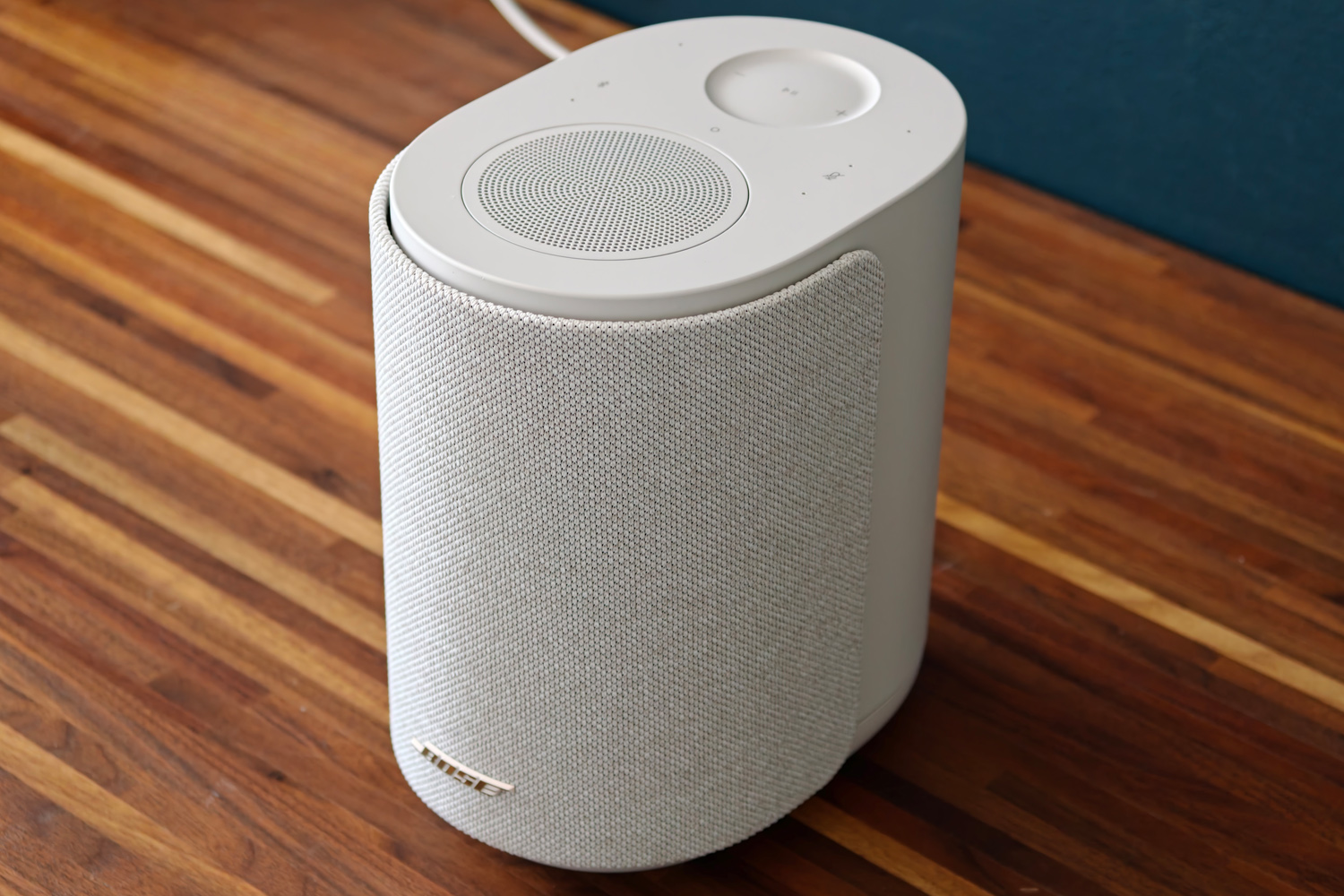
Rather than live in its own walled garden, Bose has made a concerted effort to open its latest wireless speaker up to everyone. As the entry point of a new, interior-friendly lineup that also includes a soundbar and subwoofer, the Lifestyle Ultra Speaker has both multi-room and home theatre ambitions – but it’s first and foremost a standalone unit, with wide streaming support and a three-driver setup that promises convincing spatial sound.
Launching at $299/£299, Bose has slotted the Lifestyle Ultra Speaker directly between the Sonos Era 100 and Era 300; it also competes with other closed multi-room rivals like the Denon Home 200, plus more open alternatives like the WiiM Sound. Does that make it the best choice for anyone yet to commit to one particular system?
Design & build: sand your bird can sing
With impressively svelte dimensions you can put a Lifestyle Ultra Speaker almost anywhere in your home that’s in reach of a power socket… though you’ll want to avoid enclosed spaces to give the up-firing driver room to do its thing, and leave a gap to the wall for the proprietary angled quietport bass port.
My review unit took up very little shelf space and its rounded shape blended in with my home far better than Bose’s previous, more boxy speakers. The soft-touch plastics add to the premium feel and the activity LEDs are very subtle.
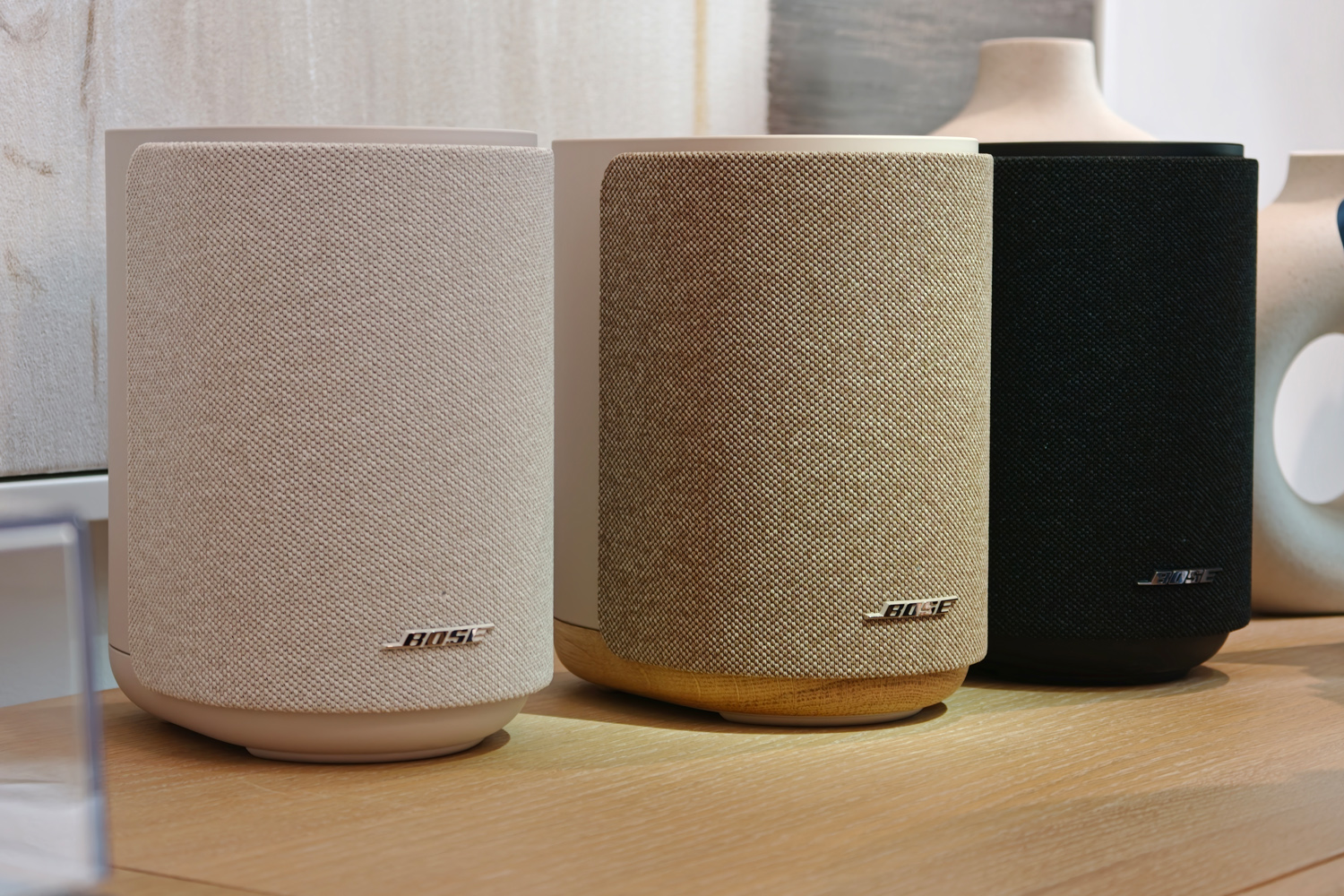
I tested the White Smoke model, whose wraparound grilles made from textured-knit fabric are more a light grey. It’s the ideal pick for neutral decor, while the black version leans more towards traditional Hi-Fi. There’s also a special Driftwood edition that’s a real looker, with earthier tones on the chassis and a base made from natural oak wood. It commands a $50/£50 higher asking price, though, so you’ve got to really be a fan to go for it over the regular models.
The grilles aren’t user-removable, so you’ll want to keep them out of reach of inquisitive (and sticky) young hands. Bose’ official wall and floor mounts could be a great way to do it. The latter is very slickly integrated, with a channel that almost completely hides the power cable. There’s a thread in the base if you want to go the third-party route.
This is strictly a wired speaker for indoor use, with no built-in battery or ingress protection.
Features: get connected
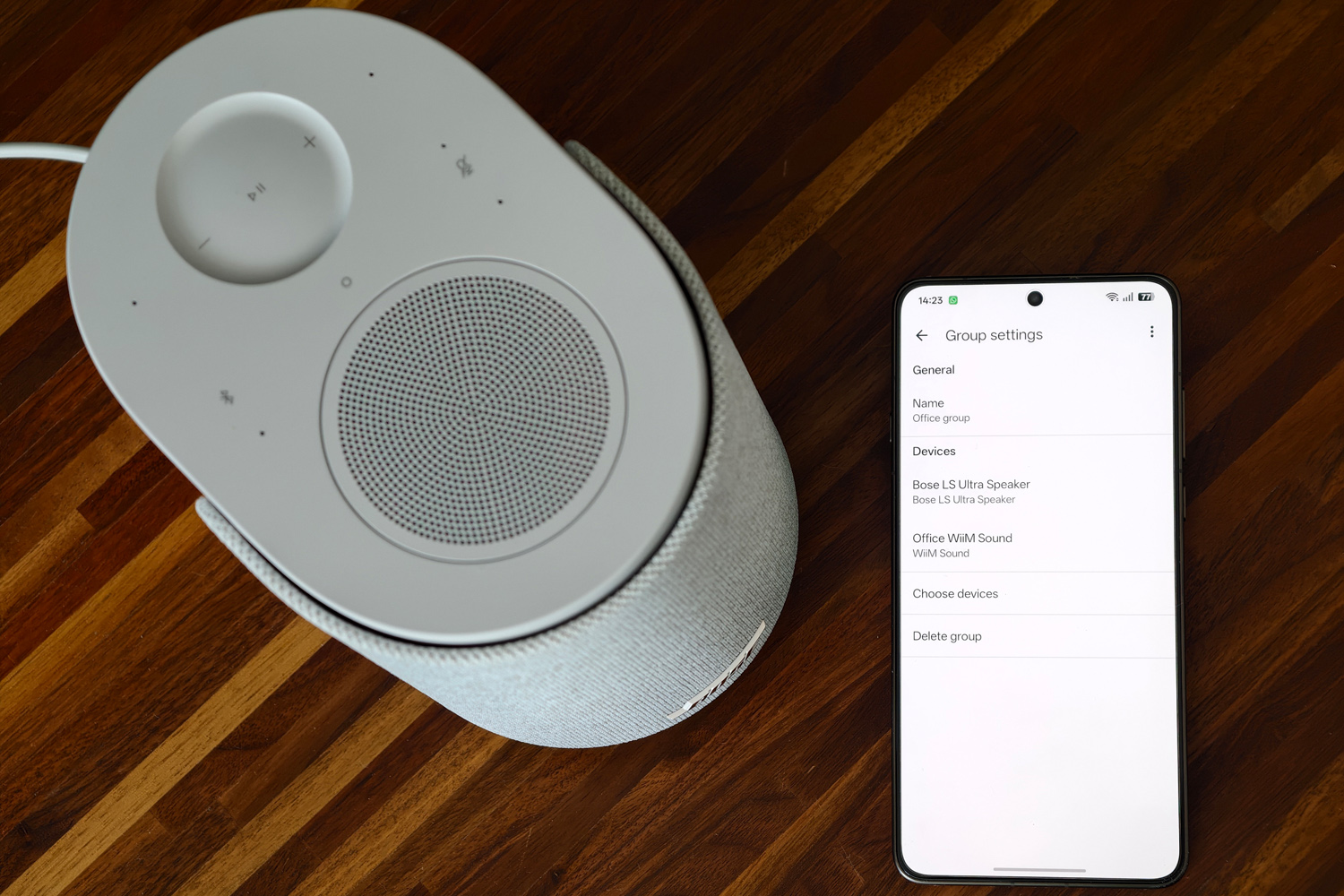
All the controls are found up top, with a bunch of capacitive buttons taking care of playback, changing sources, pairing new Bluetooth devices and muting the on-board microphone. I like how you can tap the volume wheel to make small tweaks or circle your finger around it for larger changes.
Wireless connectivity is excellent, with Google Cast, Apple AirPlay 2 and Spotify Connect all present and correct. Tidal Connect isn’t supported yet, though it’s apparently due later in a firmware update. Bluetooth 5.3 is also here for a direct hookup to your other tech, but the AAC and SBC codec support is a little basic. I’d have liked to have seen LDAC or aptX for higher quality local streaming.
The focus might be on wireless connections, but it’s great to see Bose keeping an analogue line in at the rear for hooking up the Lifestyle Ultra speaker to a turntable or other wired source. Holding the on-device play button switches inputs so you don’t have to reach for the companion app.
Another button wakes Alexa+, the Lifestyle Ultra Speaker being the first smart speaker outside of Amazon’s own lineup to support the virtual assistant. It also listens out for voice prompts, though you can mute the built-in microphone with a press if you’re not a fan. Alexa generally worked well in my testing, picking up my voice from across the room and responding just as quickly as a native Echo device, though the Alexa+ conversational bits had yet to roll out to me in the UK. I’d seen it in action during my initial briefing, at least, where it responded in more natural language and understood multi-stage questions that would’ve stumped the old Alexa. Hopefully it’ll arrive here soon.
Smarts are also exclusive to Amazon; while the Lifestyle Ultra Speaker has AirPlay and Google Cast, it doesn’t also get Siri or Gemini. There aren’t any temperature or presence sensors onboard either, so don’t think of this as a direct alternative to an Echo smart speaker for connected home duties.
Interface: brilliantly basic
After Sonos’ app redesign garnered near-universal hate, I wasn’t surprised to see Bose dial things back for the Lifestyle Ultra Speaker. The shock was that beyond the initial setup – which has to be one of the most straightforward I’ve used for a piece of connected audio kit – you really don’t need to reach for it at all.
Once I’d connected to Wi-Fi and logged into Amazon to activate Alexa+, the only feature left of note for solo speaker users was a three-band equaliser (plus an extra slider to adjust the height). It’s basic, and there’s currently no room correction function for the speaker to calibrate itself automatically, but I didn’t really find much call to tweak things – the default tune is really rather good. More on that in the section below.
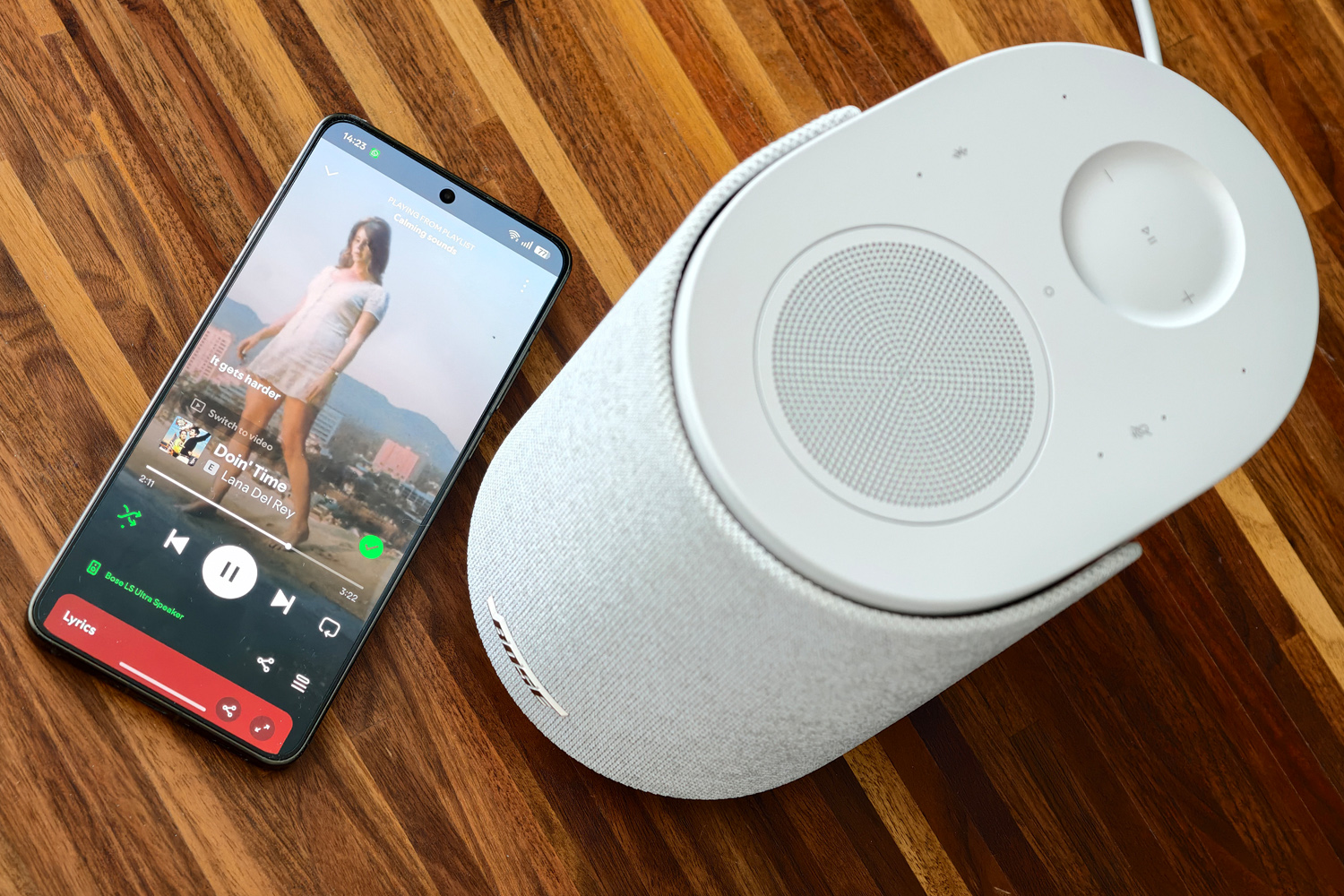
You’ll need the app to run two Lifestyle Ultra Speakers as a stereo pair, arrange more in a Bose-controlled multi-room system, or create a home theatre with the Lifestyle Ultra Soundbar – which I’m sure Bose would very much like you to do – but otherwise playback is handled exclusively through the music apps you’re already familiar with. Open Spotify and the speaker is listed as a source; Google Cast and Apple Airplay let you stream directly from YouTube Music or Apple Music.
The big win here is being able to stream to the Bose and connected speakers from other brands at the same time, independently of the app. Using Google Home to create a group with a WiiM Sound worked flawlessly, with no perceptible timing issues. If you’re not already invested in a particular multi-room ecosystem, this is an excellent choice. If you’re used to one app being the hub for all your music, though, this could be a black mark.
Sound quality: new heights
Bose doesn’t disclose the amplification of its speakers, but the single 3in main driver, 1in tweeter and 1.5in up-firing mid-high driver must have plenty of power behind them. The Lifestyle Ultra speaker is able to deliver a rich, engaging sound for something so compact, and gets loud enough to fill a surprisingly large space without having to double up as a stereo pair first.
The height channel is something you won’t find on a Sonos Era 100; the Bose creates a noticeably taller sound as a result, with vocals often feeling like they were coming from above the speaker rather than directly out of it. Lana Del Rey’s soft singing on her cover of Doin’ Time was separated from the instruments, but in a way that still felt natural.
The soundstage doesn’t have quite as much width as some rivals, even with Bose’s TrueSpatial audio processing is doing a lot of work behind-the-scenes to divide the signal between the front and upward drivers. You’ll want a stereo pair for the best sensation of width. I only had a single speaker for this review, but having previously heard a stereo pair at a pre-launch briefing, I was impressed by the excellent separation and how the two worked together to keep the height element balanced.
Bose has nailed the mid-range and high-end frequency delivery here, with real crispness and precision. The hi-hats on Luude’s Down Under had plenty of bite, without becoming aggressive or overly sharp, while Nothing But Thieves’ Welcome to the D.C.C was just as punchy. All-round clarity is really rather great.
As mentioned above, the bass port can leave things a little boomy if the speaker is positioned too close to a wall; moving it out into the open creates a more balanced low-end, which is again more impactful than I’d expect for something so small. Wu Tang’s C.R.E.A.M. had all the thump I was looking for.
It’s only really when you go hunting for serious sub-bass that the Lifestyle Ultra Speaker’s limitations are revealed. Beama’s Go Down simply doesn’t have the divide between bassline and sub-bass that larger, more expensive wireless speakers can manage. Bass is also toned down by the DSP at maximum volume, but I rarely listened at anything beyond 70%; closer to 50% was ideal for my home office.
Bose Lifestyle Ultra Speaker verdict
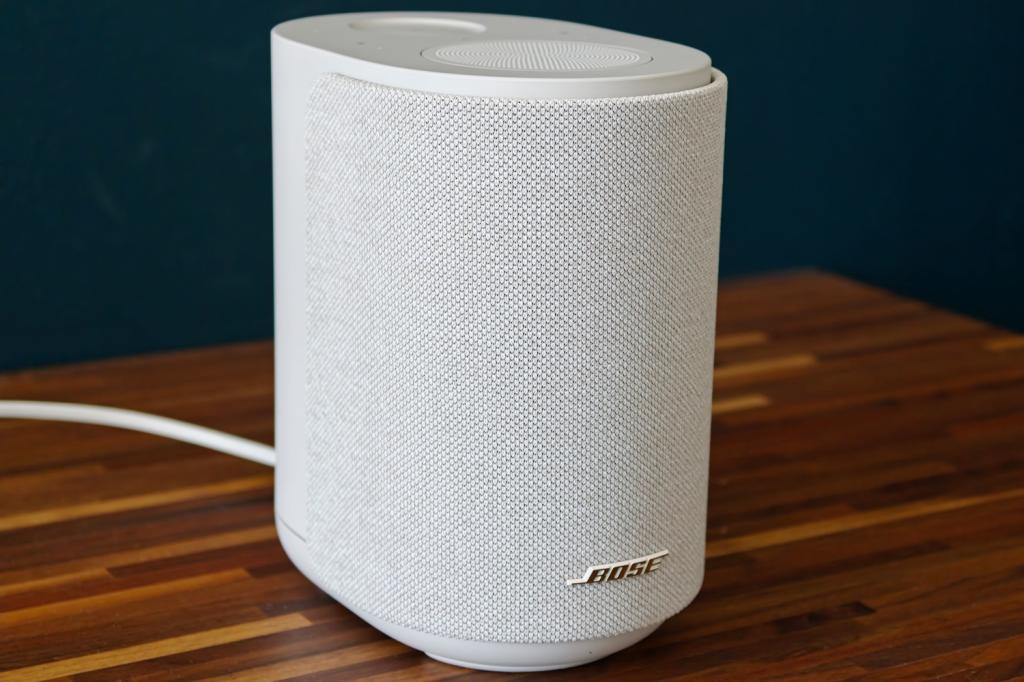
Anyone building a multi-room setup from scratch should consider the Lifestyle Ultra Speaker their new starting point. The open approach Bose has taken is a breath of fresh air compared to rivals’ walled gardens, and you can stick with the streaming apps you’re most familiar with.
It’s delightfully easy to set up, whether solo or as part of a larger install, and sound quality is superb for the price. While you do miss out on Dolby Atmos, the up-firing driver really puts in a room-filling performance, and I give it the edge over Sonos’ Era 100. It only gets better when you add a second speaker, which could also help convince those with especially deep pockets to consider a full 7.1.4 home cinema setup.
Bose Lifestyle Ultra Speaker technical specifications
Scroll to see more →
| Specifications | Bose Lifestyle Ultra Speaker |
|---|---|
| Drivers | 1x 3in driver, 1x 1in tweeter, 1x 1.5in up-firing mid-high driver |
| Wired connectivity | 3.5mm |
| Wireless connectivity | Wi-Fi (Apple AirPlay 2, Google Cast, Spotify Connect), Bluetooth |
| Dimensions | 184x121x167mm, 1.66kg |


Read the full article here
