

There’s a good chance you already have a robot living in your home. It might not have arms, legs, or an unsettlingly cheerful metal face, but that little robot vacuum diligently trundling around beneath the sofa still counts.
Robot vacuum cleaners had a rocky start, mind, beginning as fairly dim appliances that bounced between walls and ate charging cables. Today’s best models can map several floors, recognise different objects, wash their own mop pads, empty their bins, and return to their docks for a recharge without requiring much attention.
They’re also being joined by robots that mow lawns, clean windows and swimming pools, patrol rooms and keep people company.
Meanwhile, a new generation of humanoid machines is being developed to tackle the jobs that our current helpers cannot. In fact, by 2030, robots should be a much more noticeable part of everyday home life. Here’s how…
The robot takeover has already started
Modern robot vacuums are, thankfully, much better at knowing where they are and what’s around them. Lasers, cameras and depth sensors allow them to build maps, avoid pet mess and navigate around obstacles instead of repeatedly headbutting a chair leg.
The latest machines are even beginning to manipulate their surroundings. Roborock’s Saros Z70, for example, has a folding mechanical arm that can lift selected objects weighing up to 300g, including socks, tissues and small towels. It can spot something blocking its route, move it elsewhere, then return to clean the newly exposed patch of floor.
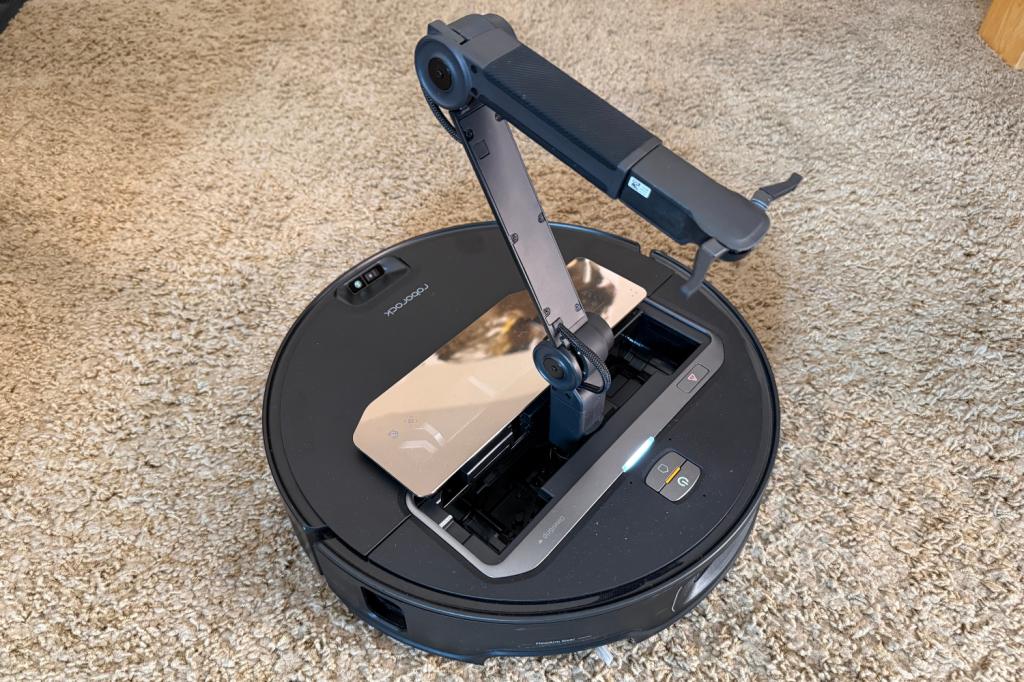
Granted, that’s still a very long way from tidying an entire bedroom. The number and type of objects it can handle are limited, and you need to tell it where certain things should go. Even so, it represents an important step – a cleaning robot is no longer simply moving through the home. It is beginning, in a very small way, to change the environment around it.
Expect that idea to (hopefully) spread. Floor cleaners will become better at crossing thresholds, reaching edges and dealing with clutter. Outdoor robots will map gardens without requiring a boundary wire. Window-cleaning robots should become easier to attach and slightly less alarming to watch dangling several storeys above the ground.
It’s impossible to say, but it’s likely that our robot-filled future will be filled with several specialised machines rather than one expensive all-rounder – one for the floors, another for the garden, and perhaps another for large windows or a swimming pool. What you choose to name them, is entirely up to you.
AI is teaching robots to actually understand your home
Newer robotics systems are being built around AI models that connect vision, language and physical actions. These are sometimes known as vision-language-action models. In simple terms, the robot can look at the world, interpret a spoken or written instruction, and translate it into movements.
Figure’s Helix system is designed to do exactly that. Its Figure 03 humanoid was unveiled as a machine designed around AI control, home use and eventual large-scale manufacturing. It features redesigned hands and sensors, softer exterior materials, wireless charging and additional battery-safety measures intended to make it more suitable for working near people.
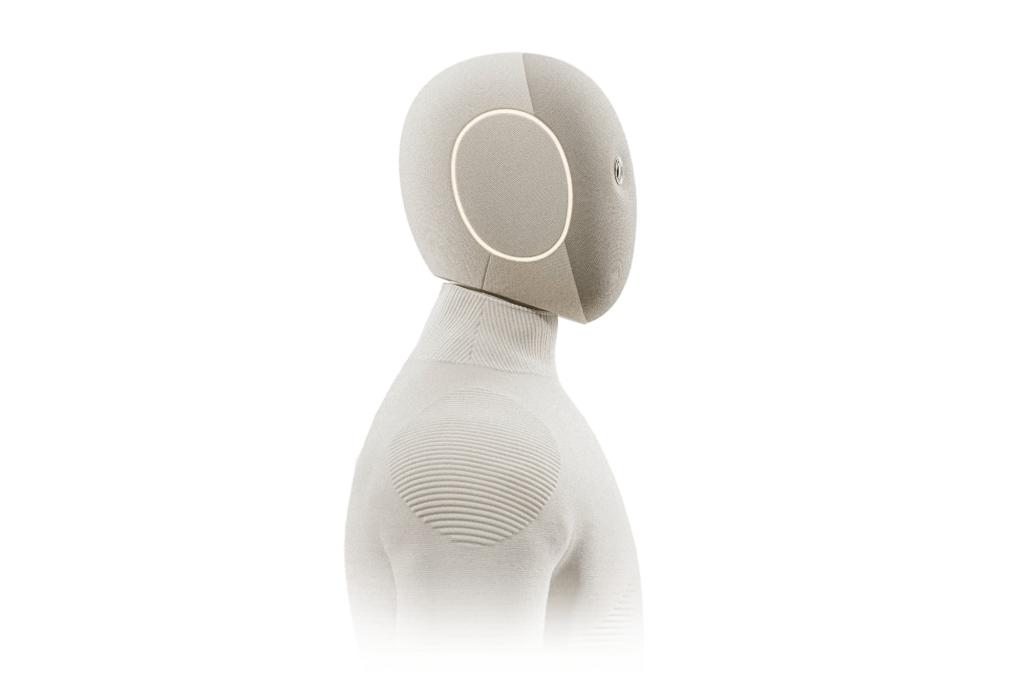
Robotics company 1X has taken an even more direct run at the domestic market. It opened orders for its NEO home humanoid last year, with the ambition of producing a machine you can instruct conversationally. Rather than programming every movement, you might ask it to put away the shopping, water the plants or bring you something from another room.
AI could also allow robots to learn by watching people or studying video demonstrations. A manufacturer would no longer need to manually program every variation of every household task. The robot could potentially use a broad AI model as a starting point, then adapt its behaviour to your particular cupboards, furniture and routines.
Why folding a towel is harder than it looks for a robot
Humans make household chores look deceptively easy. We can pick up a slippery plate, separate two pieces of fabric, open a stiff drawer and handle a ripe tomato without crushing it, often without paying much attention.
For a robot, these jobs are a nightmare involving force, friction, balance, object recognition and constant physical feedback.
A convincing demonstration might show a humanoid folding one particular towel on an empty table. Your own laundry basket contains socks turned inside out, fitted sheets seemingly designed by a malevolent mathematician, and several garments that absolutely cannot go in the tumble dryer.
Kitchens are even worse. Ingredients vary in size, shape, texture and condition, while knives, boiling water, naked flames and breakable containers leave very little room for error. Posha, for example, sells a countertop cooking robot that automates stirring, heat control and the timing of ingredients, but you still prepare and load everything yourself. Moley’s far more ambitious robotic kitchens use mechanical arms to reproduce chef-like movements, but remain bespoke luxury installations rather than something you will find beside a £40 microwave.
By 2030, more people may own cooking appliances that automatically manage much of a recipe. An independent robot chef that opens your fridge, prepares every ingredient, and cleans up afterwards, though, is a much tougher proposition.
The real reason humanoid robots cost more than your car
The obvious advantage of a humanoid robot is that our homes were designed around humanoid bodies. Door handles, stairs, worktops, cupboards and tools are all positioned for people with two hands and roughly human proportions.
A capable humanoid should therefore be able to use an existing home without requiring every room to be rebuilt around it. That is one reason so many robotics firms are chasing the format.
The problem is that legs, arms and dexterous hands make a robot dramatically more complex and expensive. A machine weighing tens of kilograms must remain balanced, avoid falling onto people and know how much force it can safely use. It also needs enough battery power to make itself useful.
McKinsey says that most current humanoid robots can operate untethered for around two to four hours before requiring a recharge. It also estimates that advanced models currently cost between $150,000 and $500,000, and suggests this may need to fall to somewhere around $20,000 to $50,000 before large-scale adoption becomes realistic.
Even at the bottom of that range, a humanoid would cost more than many family cars. Early domestic models are therefore more likely to be leased, supplied through subscriptions or bought by wealthy enthusiasts than picked up during the weekly Aldi shop.
Their abilities may also arrive gradually. 1X says difficult NEO tasks can be remotely supervised by one of its human experts when the robot’s autonomous system is not capable enough. This could help it learn, but also raises obvious questions about who might see or hear what is happening inside your home.
By the end of the decade, a small number of people may have humanoid robots carrying laundry, fetching items and performing simple tidying tasks. For most households, however, they will probably remain expensive and imperfect glimpses of what comes next, rather than essential appliances.
The robots designed to keep you company, not just clean up
Some of the most valuable domestic robots may not perform physical chores at all.
Companion robots are already being used to remind older people about medication, encourage activity, help them communicate with family members, and provide regular conversation. ElliQ, developed by Intuition Robotics, is designed specifically for older adults and offers medication reminders, health tracking, exercise suggestions and tools for communicating with relatives and caregivers.
Research suggests that social robots can reduce feelings of loneliness among some older people, although the studies vary in quality and results. They are best viewed as a supplement to human contact and care rather than a replacement for either.
By 2030, these systems could become more proactive. A robot might notice that someone has not entered the kitchen at their usual time, offer a reminder about an appointment or alert a trusted relative when something appears wrong. It could also provide a simpler interface for video calls, online services and smart-home controls.
Liked this? How do AI robot companions affect your brain? We’ve spoken to psychologists and experts to find out


Read the full article here
