





Introduction
It might feel like smartwatches are getting brainier all the time, but as of 2026 only Huawei has managed to cram one particular health feature into a device that doesn’t look like it belongs in a hospital. The Watch D3 takes medical-grade blood pressure readings, which is a big deal for anyone suffering from – or trying to stave off – hypertension.
Rather than estimate using optical sensors, this wearable inflates a slim airbag built into its strap, using the same oscillometric method as a traditional blood pressure cuff. This is the tech’s third outing in a consumer product, except now Huawei has managed to miniaturise it enough you’d struggle to tell the Watch D3 is anything more than a regular GPS sports watch. It has the styling, software and fitness features to match the Watch Fit 5 Pro I tested earlier in 2026.
Landing in the UK and Europe for £400/€449 (as ever, Huawei products remain off-limits in the USA), the Watch D3 costs more than the mainstream smartwatch rivals – but neither Apple, Google nor Samsung can match it for blood pressure readings. Based on my time wearing one, I’m convinced that for certain health-conscious users it’ll be impossible to ignore.
How has the Watch D3 changed up its design and screen?
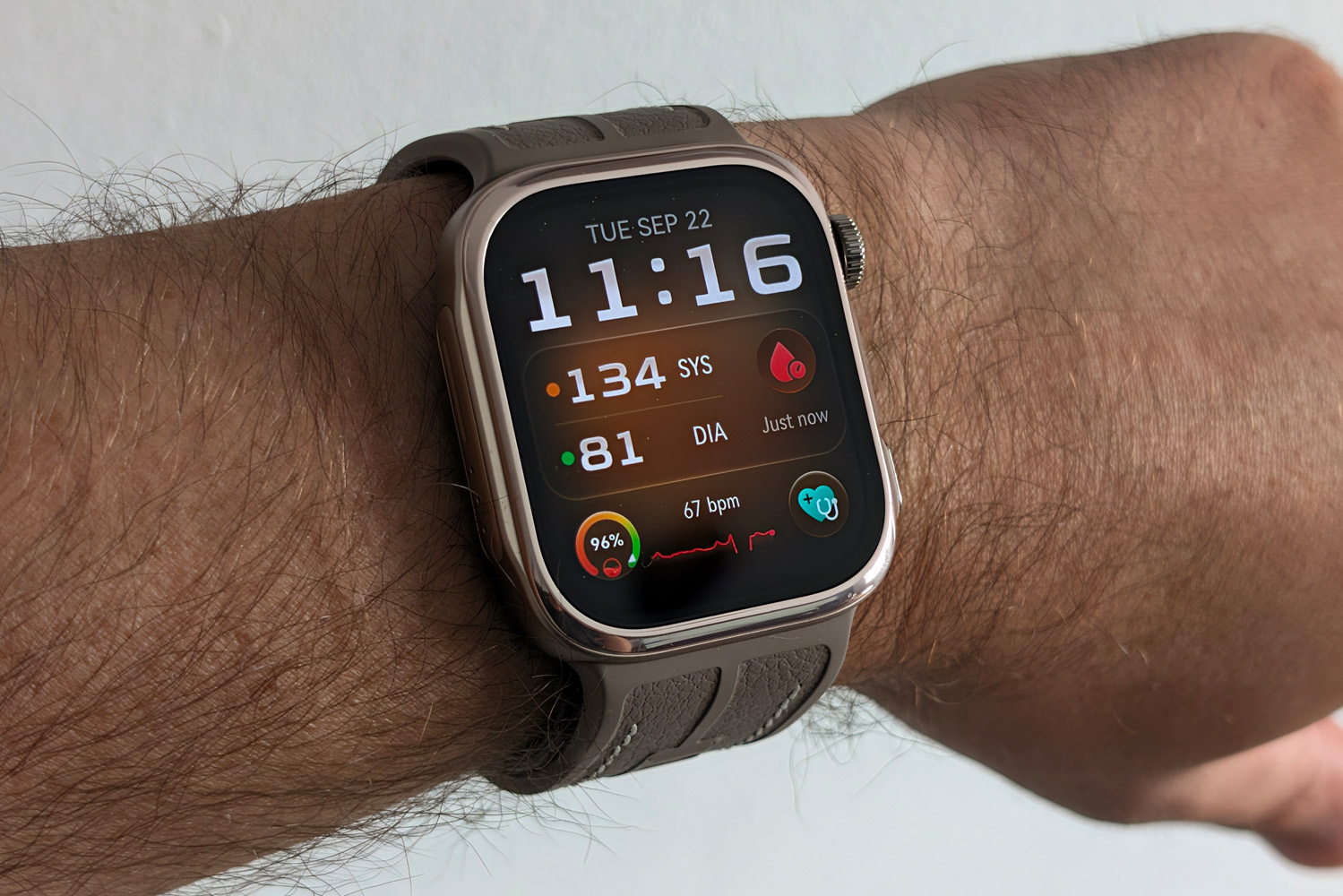
The original Watch D looked like something you’d only find in a doctor’s surgery, but this has improved with each successive generation. The Watch D3 is now just 11.3mm thick and weighs 36g – a considerable improvement over the second-gen Watch D2. The strap has gone on a similar slimming journey; combined it should look sensible on even small wrists.
Personally I think Huawei has played it safe with the styling, which could be mistaken for an Apple Watch from a distance – I much prefer the firm’s circular smartwatches, which have more distinctive looks. Still, the metal watch body, knurled digital crown and leather effect strap add an air of refinement and luxury – especially to my Gold review unit. There are black and white options too.
A subtle crown guard cut down on accidental presses of the crown and function button (which doubles as an ECG electrode) when bending my wrist.
The Watch D3’s blood pressure monitoring abilities demand a proprietary strap. You get two in the box: one for small to medium-sized wrists, and one for medium to large ones. The clasp can then be adjusted to get a tight yet comfortable fit. I found it a little fiddly, but it otherwise clips closed tightly and keeps the watch firmly in place during exercise. Just keep in mind the inflatable bag hampers breathability, so you’ll want to give the strap a rinse more often than you might any other smartwatch.
While the watch body is IP68 rated, you won’t find any swimming modes in the workout app. It’s not designed for watersports and should be taken off before jumping in the shower.
At 1.92in the Watch D3’s display is just a tiny bit smaller than an Apple Watch Ultra 4’s, so it easily fills even large wrists. A higher screen-to-body ratio means the distracting black bars at the sides have shrunk a bit compared to the outgoing model, but it’s nowhere close to matching the Watch GT 7 Pro’s almost-invisible circular bezel. Using a watchface with black edges helps hide it significantly.
There’s an OLED panel underneath, with a satisfyingly crisp 408×480 resolution and expressive colours. Viewing angles are great and outdoor visibility wasn’t ever a problem, given it can ramp up to a peak 3000 nits when required. That’s double what the old D2 could muster.
It wasn’t clear from Huawei’s press info whether the Watch D3 has the same sapphire glass as Huawei’s other premium smartwatches, or some other kind of scratch-resistant glass. Either way, it has stayed entirely free from scrapes and blemishes throughout my near-month of testing.
Is the Huawei Watch D3’s interface any different?

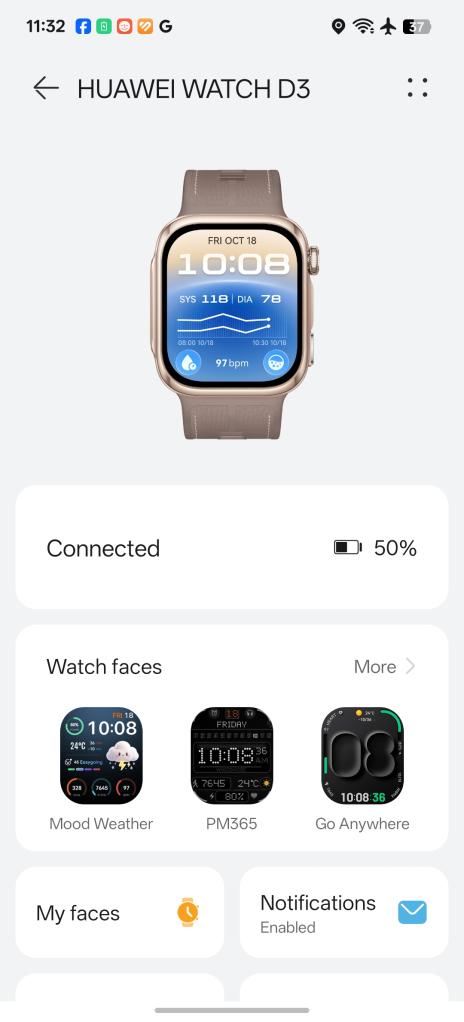
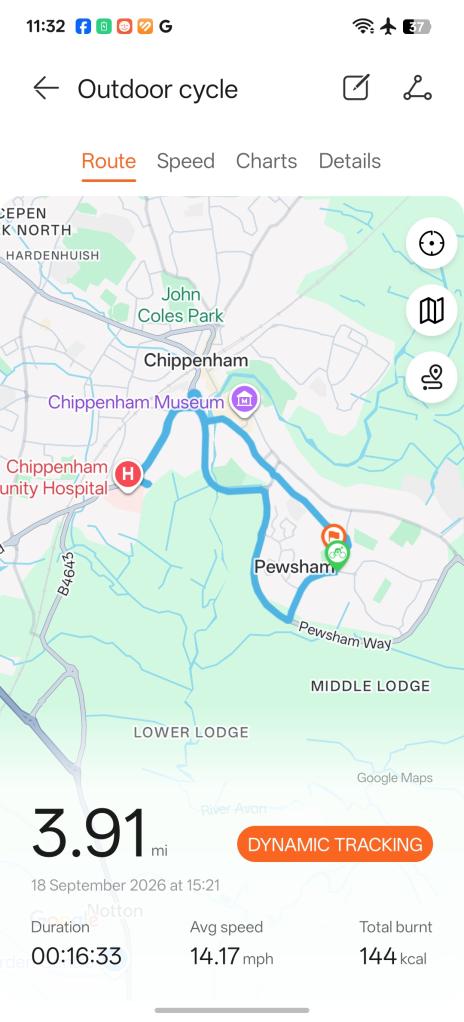
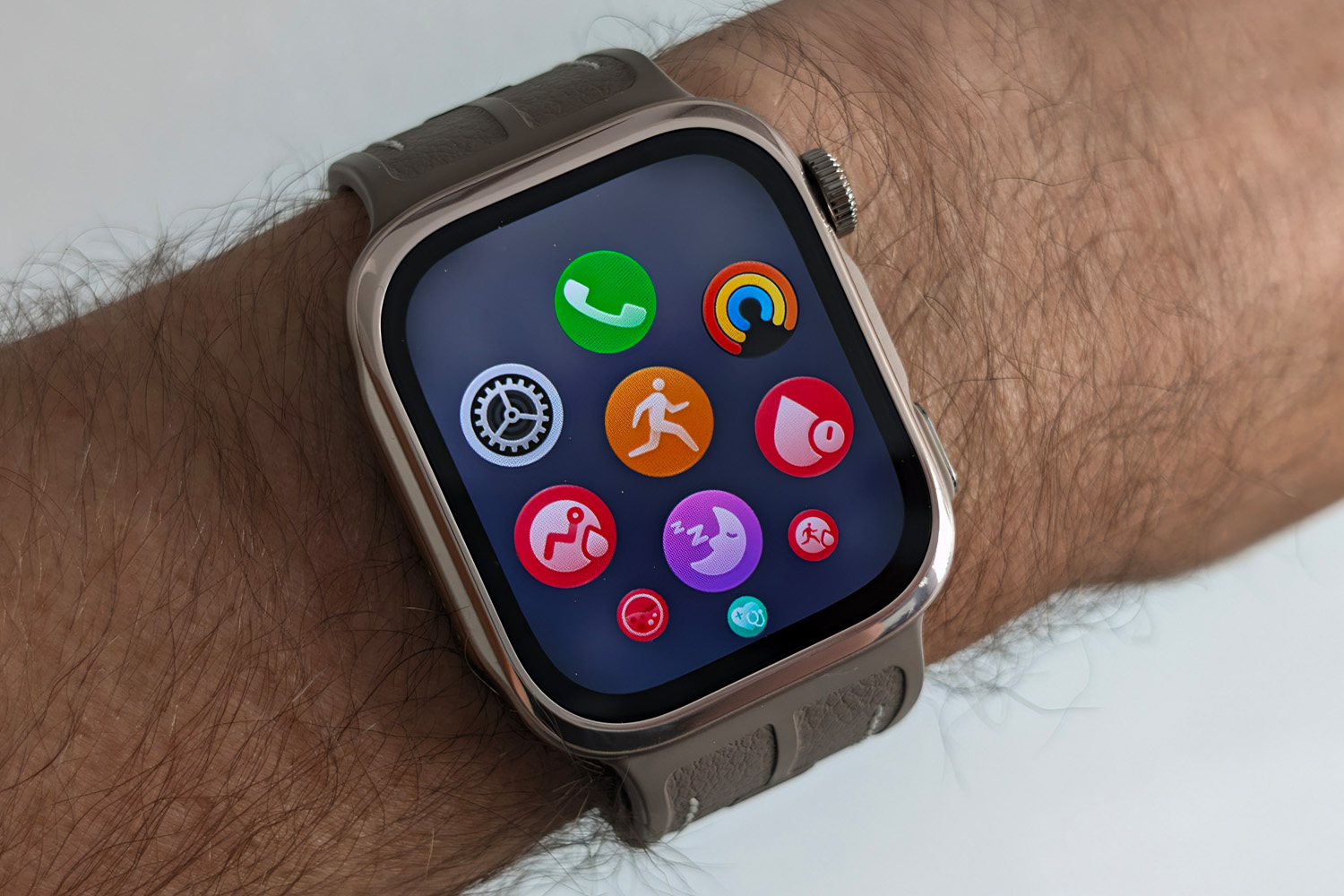
It might be running a new version of Huawei’s HarmonyOS interface, but the Watch D3 doesn’t feel all that far removed from the older software I saw on the Watch 5 Fit Pro. It’s perfectly user-friendly, with phone notifications, quick settings, widgets and apps just a swipe or squeeze of the digital crown away from the homescreen. Quick cards keep music controls, weather and calendar appointments close to hand too.
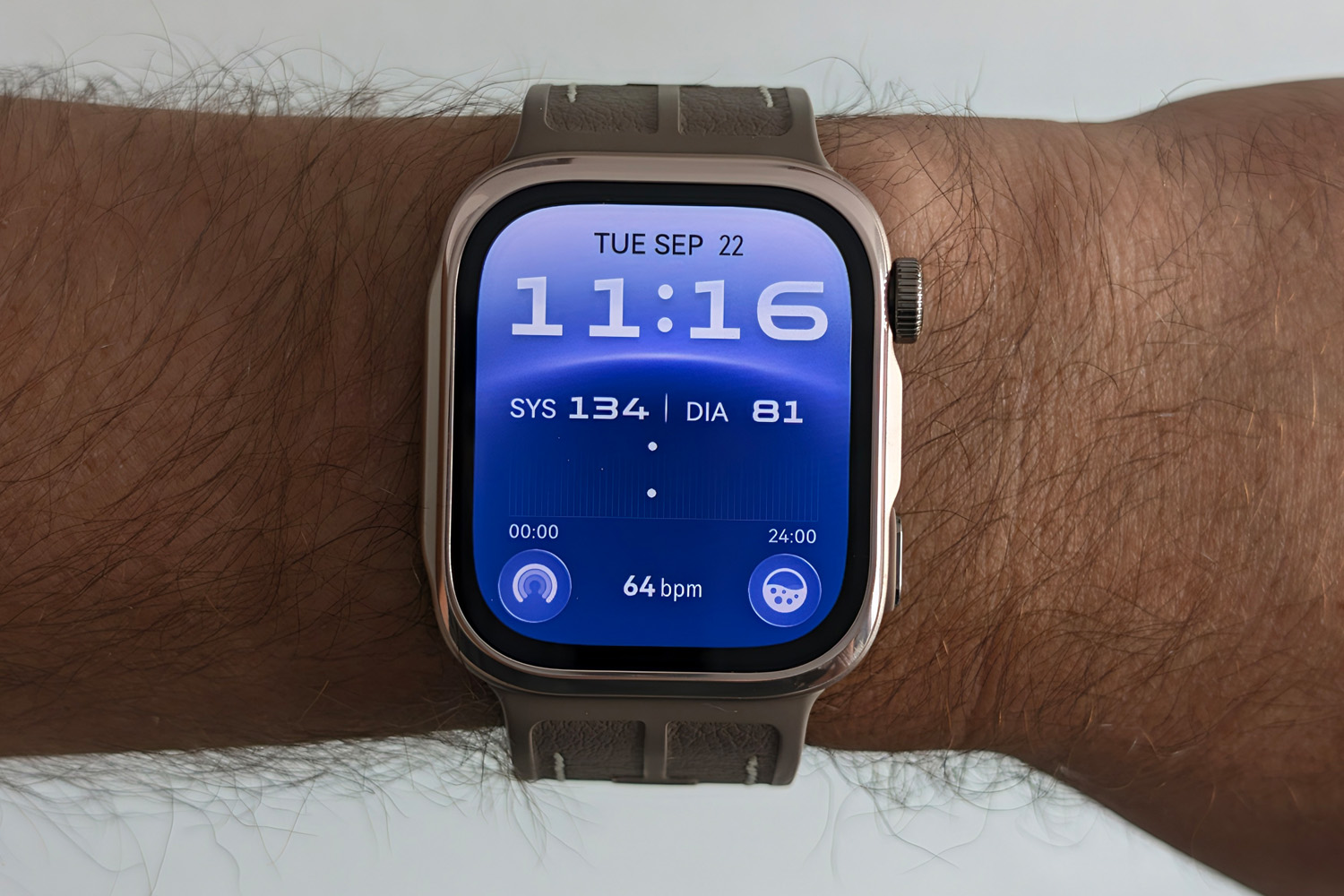
Only a handful of watch faces have been created specifically for the D3, with complications that track blood pressure readings throughout the day. The rest are pretty much unchanged from the Watch 5 Fit Pro. The same goes for the pre-installed apps; blood pressure monitor aside, the long list is essentially a repeat. I still don’t like opening each one individually to grant it access to the watch’s sensor suite, even if it’s only once when you first get the watch.
I can’t fault performance, which was always snappy and responsive. Apps open quickly and notifications are instant, at least when paired to my Android smartphone. Huawei’s App Gallery isn’t exactly bursting with useful third-party apps to download and install, but being able to make contactless payments through Curve is much appreciated. You can answer incoming calls from your wrist, control your phone’s camera remotely, and change music tracks right from the off.
Huawei can’t do much about being barred from the Google Play Store, but being available through the Samsung Galaxy Store is a big win. Everyone else has to sideload the app, which is becoming harder from Android 17 onwards, and allow a bunch of permissions from inside the Settings app. It’s a more complex process than rival smartwatches, which are one-and-done installs.
How does the Watch D3 handle health & fitness tracking?
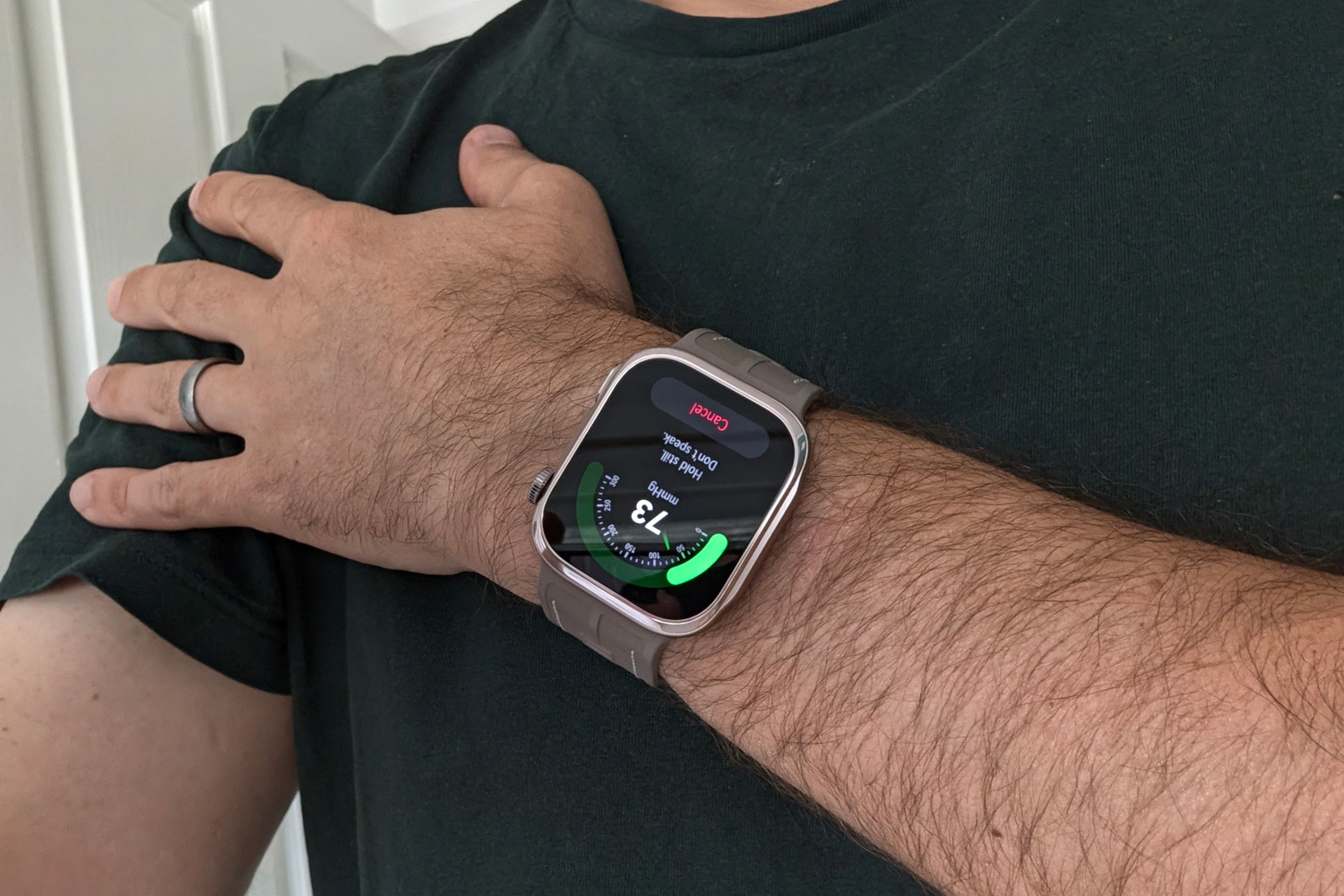
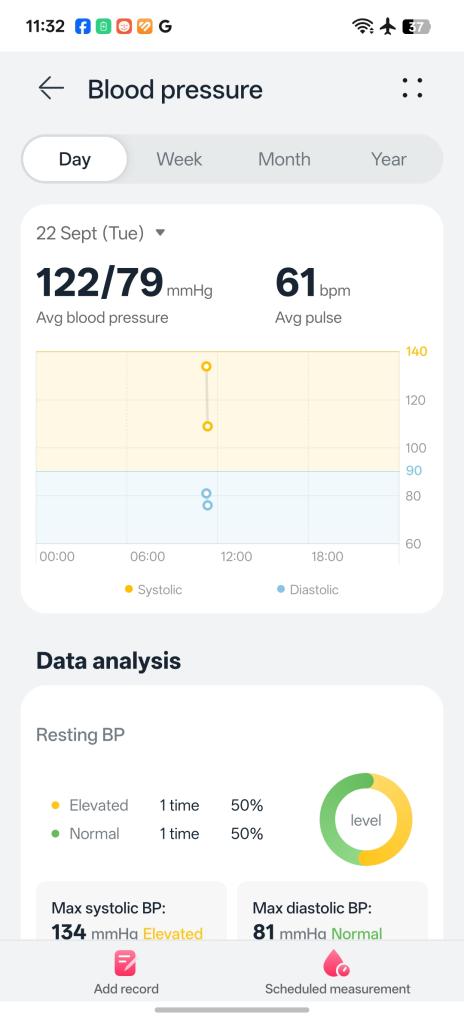
The Watch D3’s headline blood pressure monitoring abilities have improved from the previous generation. Now it can automatically take a reading before and after certain workouts (mainly running and cycling), for a better indicator of your overall health than a single reading taken at rest. The process hasn’t changed, though.
Start a reading and the airbag built into the strap quickly inflates until it’s properly tight. You’ve got to hold still and not talk for ten or so seconds, then it deflates and displays the results. It quickly became routine to take a measurement before hopping on my bike for a ride, then again afterwards before kicking off my cycling shoes.
The other big addition is Ambulatory Blood Pressure Monitoring, which follows the main European health body’s recommendations for tracking hypertension. That means half-hourly readings for a full 24 hours to establish a baseline. These were irritating at first, as I’d have to stop what I was doing and hold my arm over my chest, but after comparing with an elderly relative’s blood pressure cuff, the results were remarkably accurate for something not medically prescribed.
Did I actually need blood pressure information on the regular as a (relatively) healthy person in his late 30s? Probably not. I’d also worry hypochondriacs would obsess over negative readings, which in my experience could be tied to stress, sleep quality or alcohol intake. But if you’ve been told by your doctor to keep a closer eye on your blood pressure, this is the least obtrusive way to do it.
Huawei has made sure to bring the Watch D3 up to speed with its other wearables everywhere else, adding things like fall detection and a ‘Health Community’ feature for sharing data with family members. You’re of course getting the usual heart rate, steps and sleep tracking, but also SpO2, skin temperature tracking, ECG, afib detection and arterial stiffness checks. The one button Health Glance checks most of these in one test, which is quick and convenient. Mini workouts, explained via a cuddly animated panda, are then a fun addition covering quick arms, waist, abs, glutes, legs, neck and face stretches.
Across a mix of running, cycling and strength training, the Watch D3 proved consistent and as accurate as I’d expect from a mainstream fitness wearable. GPS tracking was up there with Apple and Samsung, while heart rate was as good as any wrist-based HRM I’ve tried. Daily step counts were in check with rivals and sleep stages aligned too. I remain a big fan of the virtual FTP for estimating power when cycling – the algorithms get impressively close to my set of power meter pedals.
If I have any complaints, it’s with the Huawei Health app. It’s overly keen to get you to subscribe to a membership, putting adverts throughout the UI. It’s otherwise easy to get around and puts pertinent info front-and-centre, with more detailed data available with a few taps. Exporting to third-party services like Strava is a breeze too.
What does blood pressure tracking do to the Watch D3’s battery life?
Checking your blood pressure on the regular is going to give the Watch D3’s battery a workout. With the ABPM function set to 15 minute increments, it’ll last a little over a day before you’ll need to top up – but that’s with always-on heart rate and SpO2 monitoring enabled, sleep tracking throughout the night and a half-hour workout thrown in for good measure. Some rival smartwatches only barely do better – and they aren’t constantly having to inflate their straps.
Once I stuck to more occasional blood pressure measurements – say five times a day – I was getting more like five or six days of use per charge. That’s days better than the Galaxy Watch Ultra2 and recently-revealed Apple Watch Ultra 4. A battery saver mode can stretch that out to a few more days, if you don’t mind dialling back on functionality. Huawei’s in-house software really can go the distance.
I was also genuinely happy to see the included magnetic charging puck end in a USB Type-C connector, after years of Huawei doggedly sticking with Type-A. It gets the Watch D3 back up to full strength in a little over an hour – not Pixel Watch 4 fast, but quick enough that I’d gain at least another days’ use by charging while I took my morning shower.
Should you buy the Huawei Watch D3 in 2026?

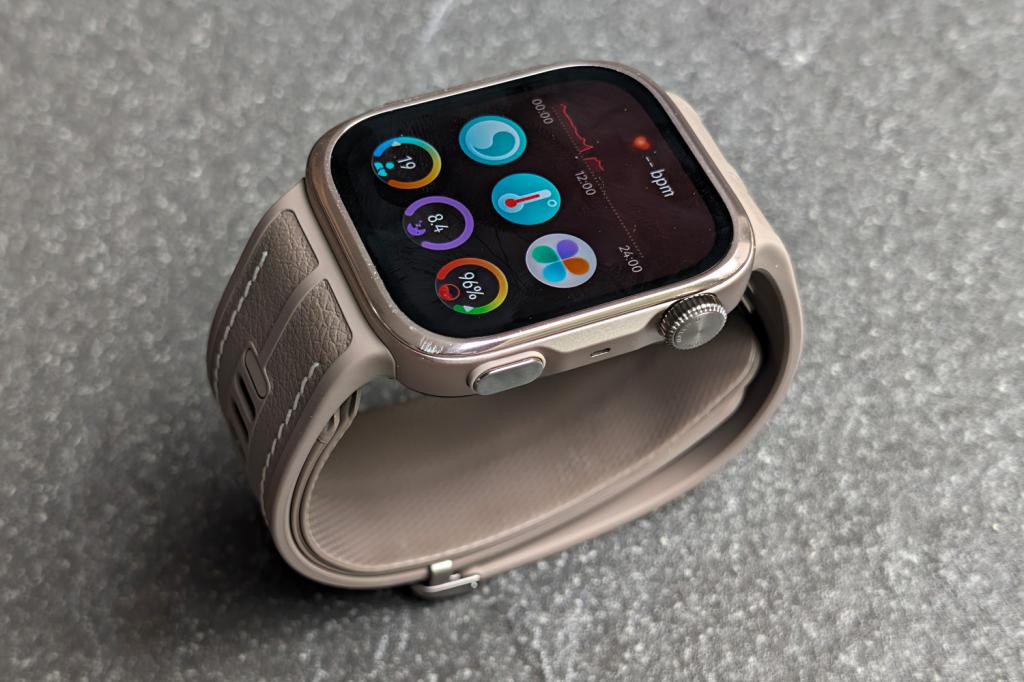
The Watch D3 measures one particular health metric to a level you won’t find in any other wearable. For people who need to keep a particularly close eye on their blood pressure, that medical-grade accuracy is a huge deal – as is the fact it doesn’t look like a medical device. There’s little here to suggest you’re wearing anything more than a regular smartwatch.
Elsewhere Huawei’s other, more familiar fitness and smart features are present and correct, as is the firm’s impressive battery life and a price that won’t make you wince (too much). That does mean an app that’s all too keen to sell you subscriptions also makes an appearance, though, as do some extra software hurdles you won’t encounter with rival wearables.
They’ll be worth putting up with if blood pressure monitoring is essential, but if you’re happy with a more general overview of your health and fitness, there are plenty of cheaper alternatives to consider first.
What are the Huawei Watch D3 technical specifications
Scroll to see more →
| Specifications | Huawei Watch D3 |
|---|---|
| Screen | 1.92in OLED |
| Sensors | Accelerometer, gyroscope, heart rate, barometer, compass, SpO2, thermometer, blood pressure |
| Connectivity | Wi-Fi, Bluetooth, NFC, 5-band GPS |
| Storage | Not stated |
| Operating system | Harmony OS |
| Battery | 6 days (average) |
| Weight | 36g (watch body only) |




Read the full article here


