







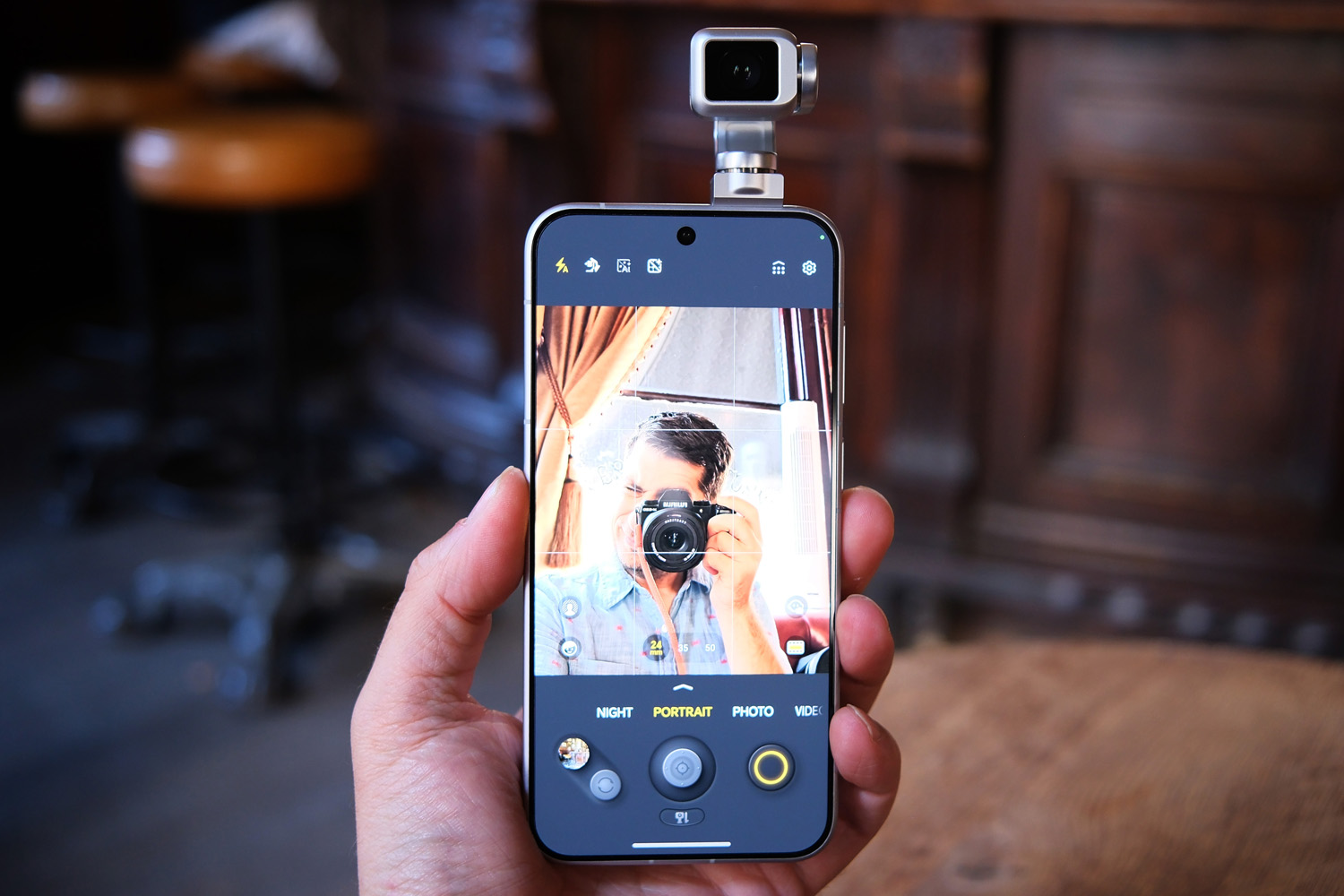
If you’ve ever tumbled down a YouTube/Instagram/TikTok rabbit hole, you’ll definitely have spotted at least one DJI Osmo Pocket: the compact gimbal-stabilised camera is a content creator’s best friend. Well what if one of those had a baby with an Honor Magic8 Pro? You’d get something like the Honor Robot Phone – possibly the most exciting new handset I’ve tried so far in 2026.
While unassuming from the front, this oddball handset is hiding a gimbal of its own, letting its high pixel count sensor capture the sort of steady footage no other phone can hope to match. It also has major ramifications for the phone as a smart assistant, though that still feels like something for the future rather than today.
I first got a look at the Robot Phone at Mobile World Congress near the start of 2026, but it was a non-working prototype that I wasn’t allowed to touch. Barely six months later and I’m holding the real thing, following its official launch in China a few weeks earlier.
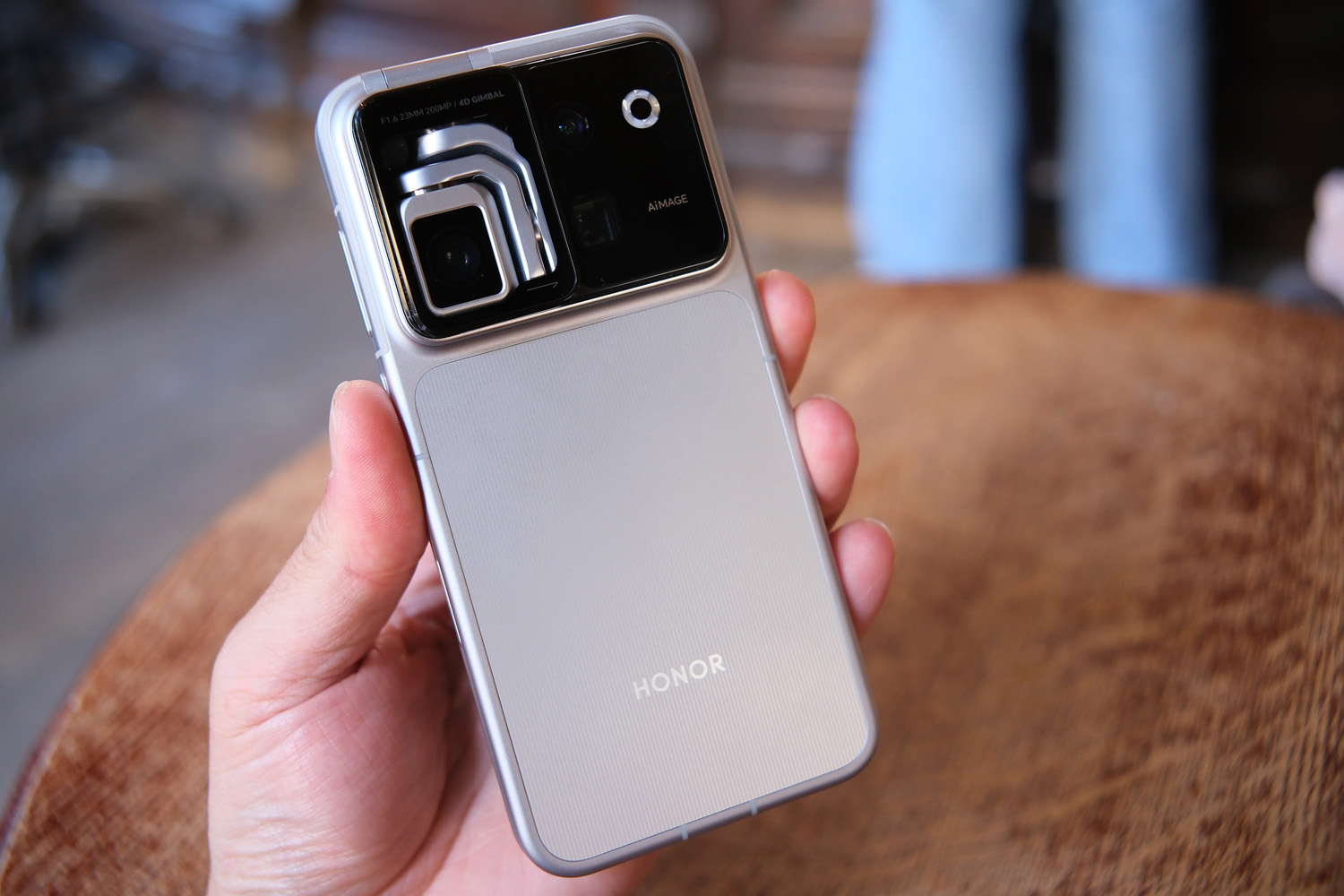
From the front it looks like any other modern flagship – flat glass, rounded corners, satisfyingly skinny display bezels – albeit a fairly compact one at just 6.31in. Turn it to the side or flip it around, however, and you’ll instantly spot the prominent camera bump. A sliding transparent glass cover makes no effort to hide what’s lurking underneath. It slides open with a satisfying motion – I could easily see myself flicking it open and closed like a fidget spinner.
The handset feels robust in general, the metal frame’s grooved edges giving plenty to grip onto. The way it incorporates the camera island adds a sense of rigidity you just don’t get from the usual glass-and-metal sandwich designs seen from rival phone brands.
The screen is as bright and colourful as I’d expect from a modern OLED, with the viewing angles and 120Hz smooth scrolling to match. Honor’s 6800 nits peak brightness claim is a lofty one that I couldn’t test during my brief demo, but should mean outdoor visibility is never an issue.
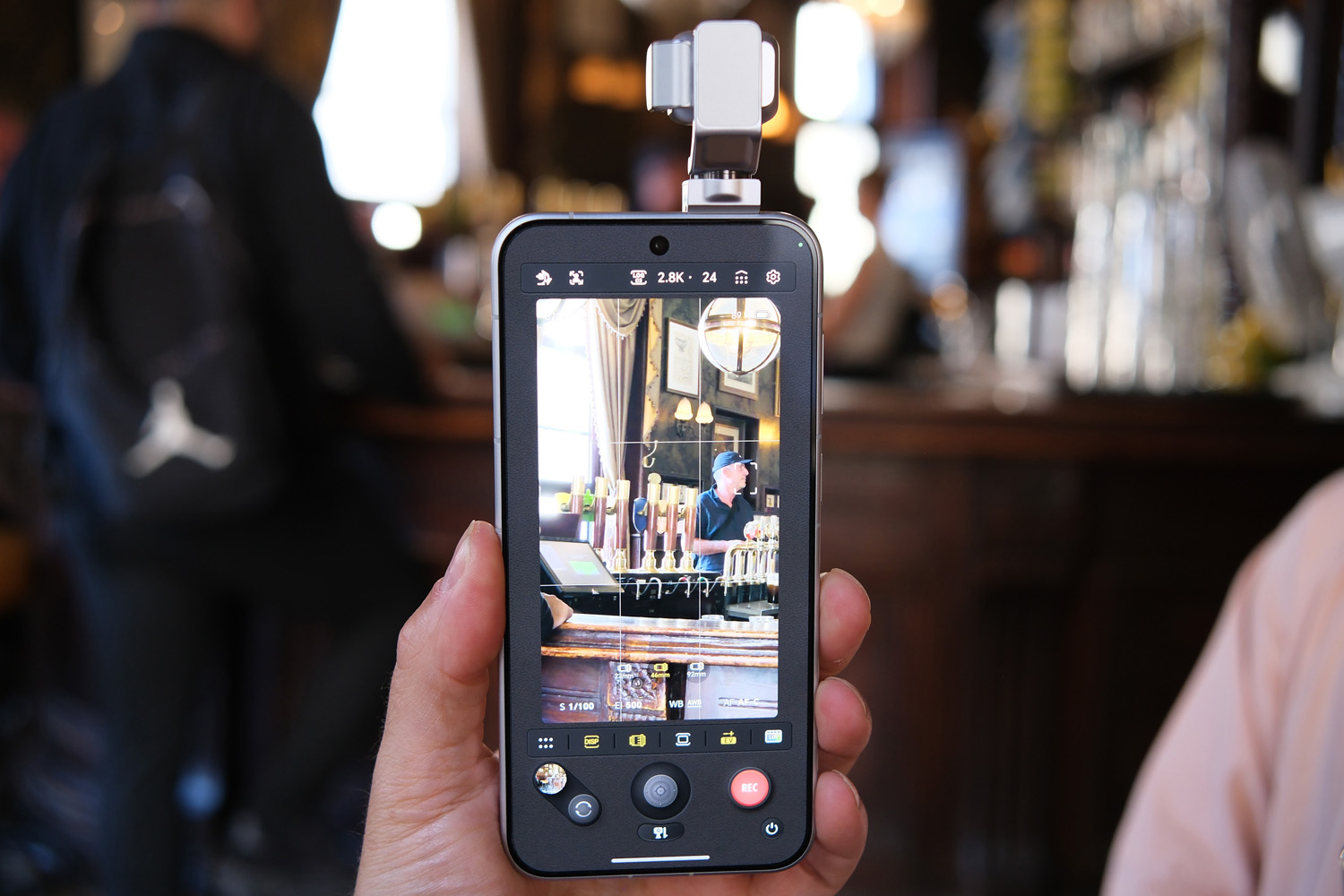
Opening the camera app doesn’t automatically engage the gimbal; it faces outward while folded, letting the 200MP main snapper function like a regular phone camera. The 200MP periscope telephoto (good for 2.7x optical zoom) and 50MP ultrawide are both fixed in place to the side of it.
Press the onscreen icon, however, and the gimbal unfolds – its micro motors whirring as the various bits move into place and a matching animation appearing onscreen. From there you can pan, tilt and rotate it using a virtual joystick; double-tap subjects in the viewfinder to focus lock; or pick from a handful of static shooting modes (which to me seemed more optimised for portrait shooting than landscape).
The gimbal has four degrees of freedom (4DoF) stabilisation and is astonishingly effective, staying locked in place even while I panned the phone around without much care to keep it level. Subject tracking was very convincing too, with it not getting confused by someone else walking past the lens. It makes video shot on the move look like it was taken with a steadicam, instantly elevating it over my usual handheld phone footage.
While I can’t speak for image quality, it bodes well that the 1/1.28in sensor is one of the largest around right now and the f/1.6 lens aperture is very wide. The Robot Phone should have excellent light-gathering abilities in low light. Fast phase-detect autofocus and optical image stabilisation are also on-board.
Honor has also teamed up with movie making experts Arri, for a dedicated shooting mode that records uncompressed LOG footage for you to colour-grade later. A bunch of on-device LUTs can be applied to give a sense of what the final result will look like, without also baking it into the clip so you can change your mind in editing if you want a different vibe. Content creators will love it, even if they’ll need ample external storage to preserve all their clips – a twelve second clip I took was over 1GB.
There’s also a 50MP selfie camera up front – but let’s be honest, you’re going to want to get the gimbal out at every opportunity. The larger sensor pretty much guarantees better image quality.

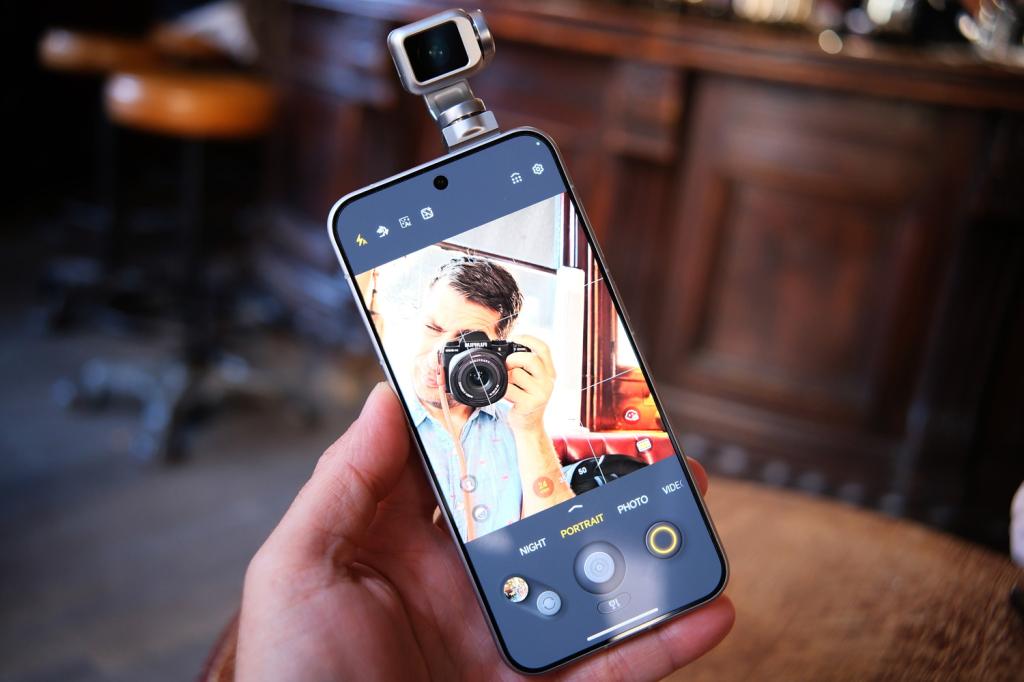
Beyond the camera, the Robot Phone has the sort of spec you’d expect from a 2026 flagship. Power comes from a Snapdragon 8 Elite Gen 5 chipset, paired with ample amounts of memory and storage. The sizeable 7060mAh battery should easily manage a full day of use, even with a fair bit of gimbal recording, and can refuel at a rapid 120W over USB-C (or 50W wirelessly).
While it was running a the China-specific version of Honor’s latest MagicOS software, I was most surprised by how normal it felt to use. The gimbal is unlike anything else I’ve seen built into a smartphone, yet once it’s stowed the Robot Phone behaves like any other Honor.
There were still a few signs I was holding a first generation product. The sliding glass cover that protects the gimbal has to be opened manually, and the phone can’t tell what position it’s in – meaning if you press the gimbal button, it’ll try to unfurl whether or not there’s room to do so. It does quickly stop if it meets resistance and flashes a reminder onscreen, but I imagine a future revision would make this entirely automatic.
It’s also highly unlikely that Honor will bring the Robot Phone outside of China officially; pricing would be prohibitively expensive once things like VAT and import taxes are taken into account. The content creator crowd may have deep pockets, but not necessarily that deep.
That’s a shame, as I think it’s a genuine sign of where smartphones could go next. We’re sorely in need of devices that bring more than slightly faster performance or marginally better image quality with each new generation, especially now that prices have gotten as high as they have. If Honor keeps iterating the design, I could definitely see this coming to more handsets in the future.




Read the full article here


