







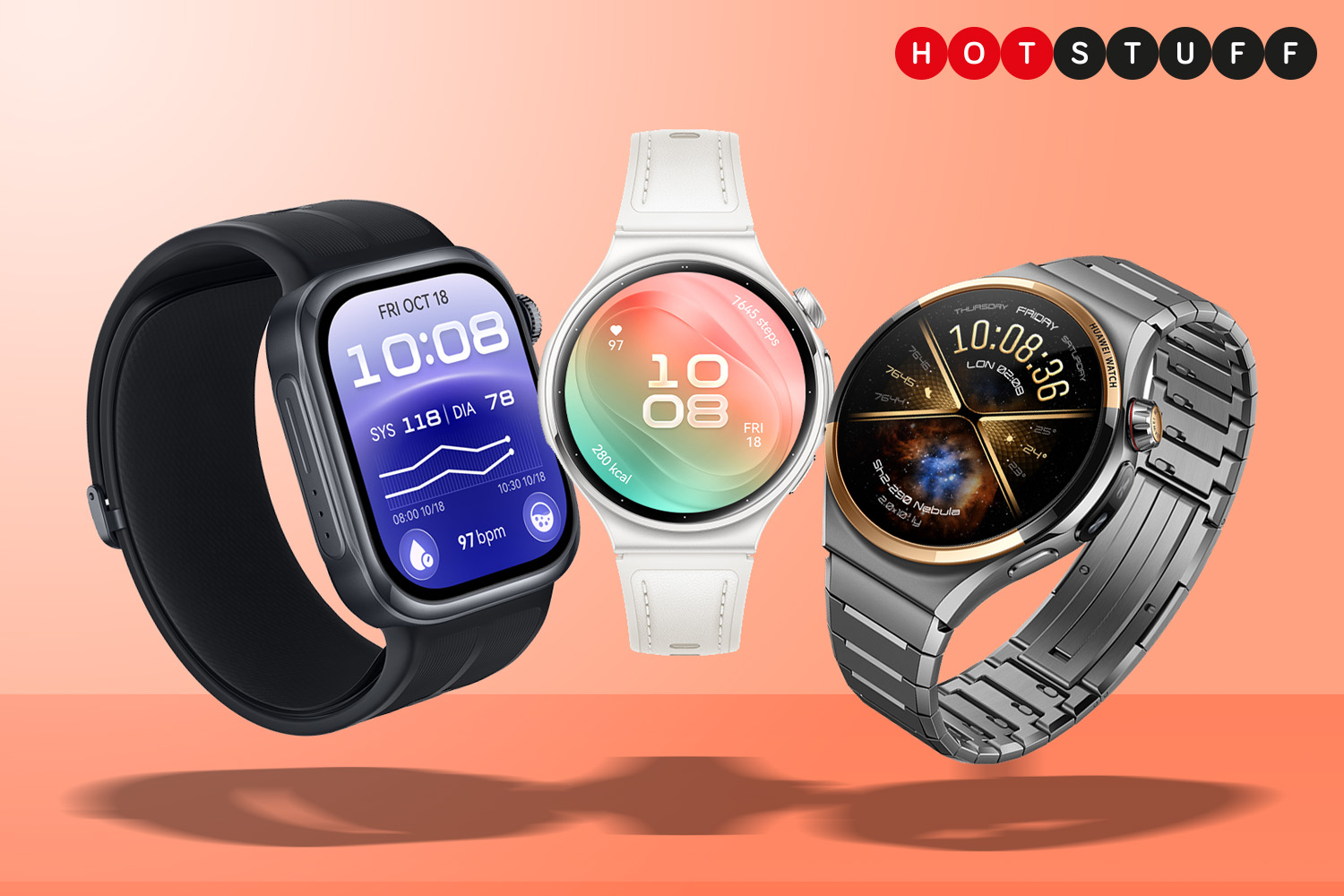
Huawei’s wearable division continues to expand faster than my waistline after another failed diet, with no fewer than three new models announced this week. As well as an all-rounder smartwatch and a fitness-focused GPS sports watch, the firm has also updated its millions-selling, health-monitoring Watch D.
They’ll be coming to Europe and the UK later this month (but, as ever, not the USA). Here’s a rundown of what to expect – and why it’s the Watch D3 I’ll most want to wear.
This’ll set pulses racing

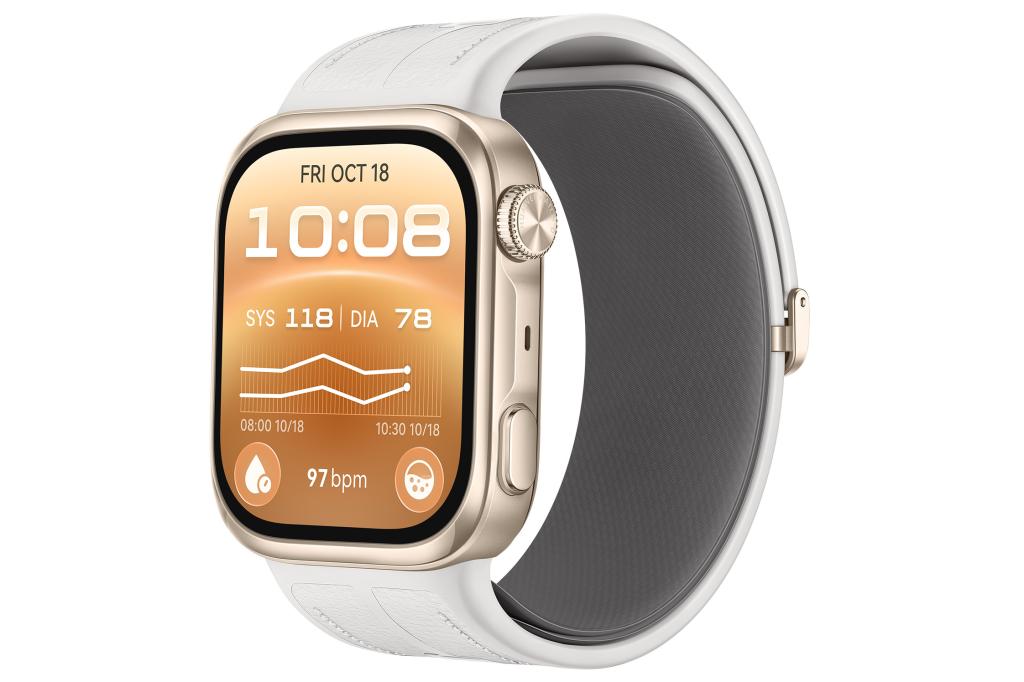
The original Watch D looked like something you’d only find in a doctor’s surgery, but this latest iteration seems impressively sleek. At 11.3mm and weighing 36g, the watch body is both thinner and lighter than the second-gen Watch D2, while the strap has gone on a similar slimming journey.
You’ll be able to get one in Black, White or Gold colours. Each has a larger rectangular screen than the outgoing model, which at 1.92in should still look sensible on even small wrists but has a higher screen-to-body ratio, meaning less distracting bezel at the sides. It’ll hit a peak 3000 nits brightness, so outdoor visibility shouldn’t be a problem.
It’s still the only medically-certified smartwatch for measuring blood pressure, courtesy of a clever inflatable cuff built into the strap; the Watch D3 inflates it on demand, letting you look out for the warning signs of hypertension. Huawei says this latest version can now automatically record your blood pressure before and after exercise, which it can then use to better monitor your overall health than with a single reading taken at rest.
Other health-centric additions include fall detection for the first time, along with a bunch of software and algorithm updates that are also making their way to Huawei’s other new Watch models. Wearers should see around six days of use between charges, which is more than double what the top Apple Watch, Galaxy Watch and Pixel Watch can manage.
It’s launching in Europe first for €449, and should reach the UK towards the end of September for £400.
Fashionistas, here’s your stop

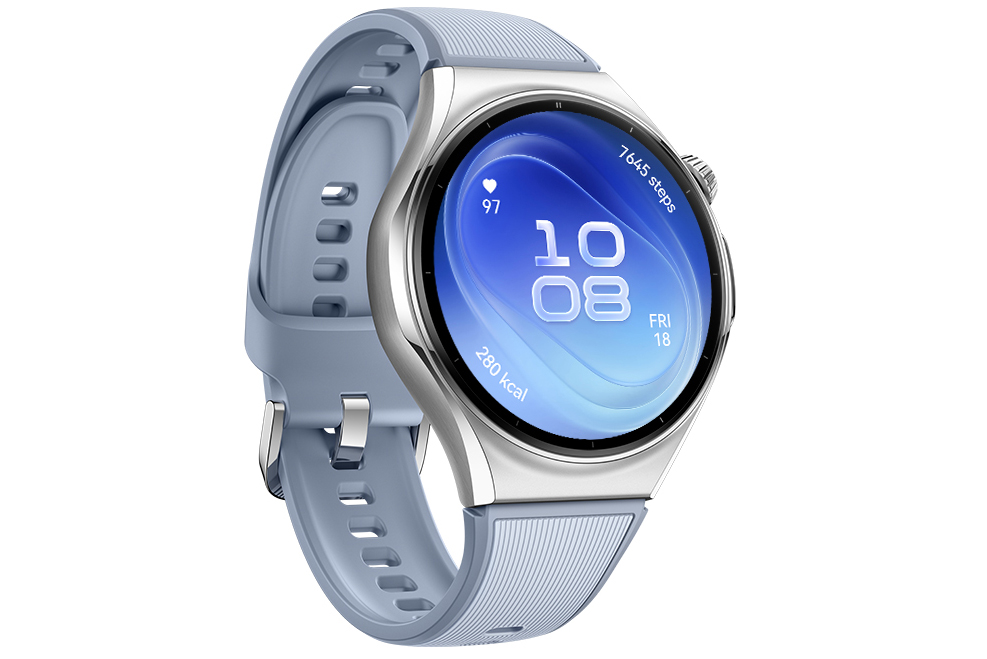

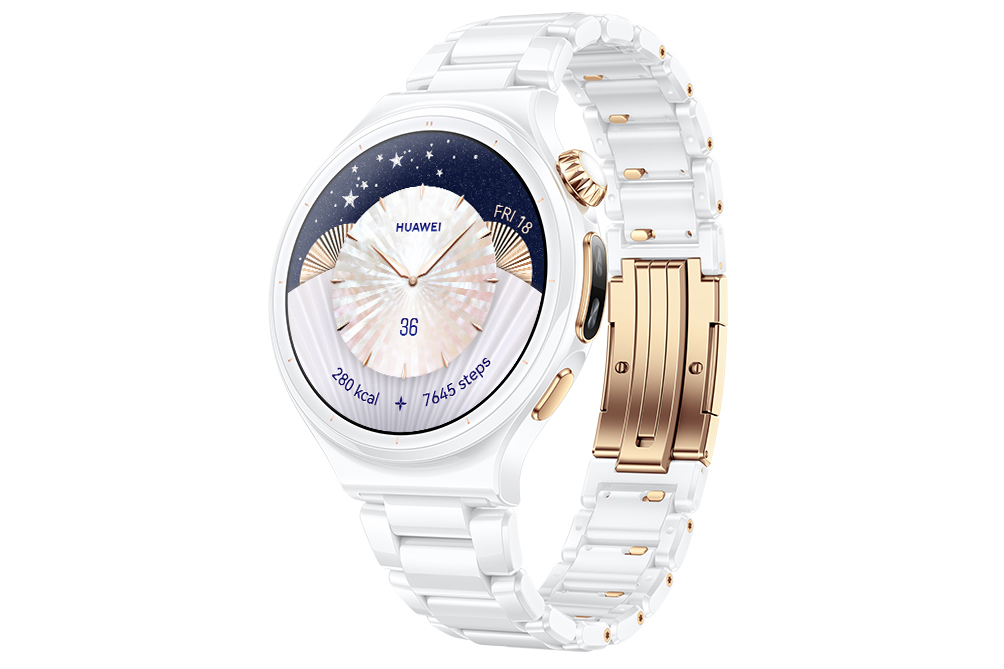
The Watch 6 is the new line-up’s style sweet spot, mixing luxe materials and a brilliantly bright circular screen with extensive exercise tracking and all the smarts you’d expect – plus some of the best battery life you’ll find on a current-gen smartwatch.
Landing in either 42mm or 46mm sizes, the new model makes only minor visual changes from the outgoing Huawei Watch 5. You’re still getting spherical sapphire glass to protect the OLED, which can shine at a maximum 3500 nits, and a choice of stainless steel, aluminium or ceramic finishes. Only now there’s a Watch 6 Pro Space Edition in golden black ceramic and titanium alloy, or a Watch 6 Pro Ceramic Edition with gold accents and matching ceramic bracelet – a first for the series.
The X-Tap health sensor still sits at the side, but has been upgraded to 20 levels of pressure sensitivity. The heart rate-measuring PPG module has also gone from 4-channel to 12-channel, for a boost to accuracy.
Huawei has overhauled the user interface with a bunch of new layout configurations, really letting you get granular with the widgets and watch faces. It also supports new gesture controls now, so you can quick flip and slide a finger along your wrist as well as pinch to interact with it. Add a compatible eSIM and it’ll support independent cloud message notifications too, for staying in contact without bringing your phone along for a workout.
It should survive either three or four and a half days per charge, depending on which size you go for, but the battery saver mode can push that to seven and eleven days respectively.
Prices start from £400 / €449 for the 42mm version, and begin at £429 / €489 for the 46mm model.
Get sweat, go – it’s the Watch GT 7
You don’t give up much functionality by picking the Watch GT 7 over the Watch 6 – but you do get a bunch more workout-focused modes and tracking skills. It lands in 41mm Watch GT 7 and 46mm Pro guises: the former has blue, pink, grey and white colour options in a mix of aluminium, steel and ceramic finishes, while the latter uses stainless steel and opts for yellow, blue, black and grey hues. New for 2026 is a redesigned EasyCross strap, which has a “tuck and under” mechanism that promises a more snug fit.
Huawei has fine-tuned its GPS location tracking algorithms to the benefit of skiiers, adding dedicated modes (including a world-first indoor skiing mode), resort maps and pro-level metrics that should respect your carves through the white stuff, rather than just draw a straight line down the mountainside.
Going in the other direction, cyclists can now plan their climbs down to the gear shift using a route preview, while audible in-climb pacing broadcasts make sure they don’t run out of puff too soon. The Watch GT 7 will also warn about upcoming sharp turns during descents for safer cornering.
The Pro also gets an exclusive professional golfing mode, which records shot distance and a full course scorecard, automatically rotates the course map to match your position, and lets you drop custom green pins for the first time.
This is all on top of the 100+ workout modes and mini-workouts, which have been ported across from the Watch Fit 5 Pro, and a new physical readiness rating that’ll tell you how hard you’ve been working – along with when to take it easy. It sounds a lot like a Huawei take on Garmin’s popular body battery metric.
Battery life is promising, with 12 days of typical use from the 46mm model but as much as 21 days of ‘light’ use. When used in anger it’ll last through 44 hours of continuous cycling (chapeau to anyone whose legs can handle that) or enough trail running tracking for an ultramarathon.
The Huawei Watch GT 7 will start at £280 / €299 for the 42mm model; the 46mm Pro kicks off at £379 / €399.
… and a bit of audio for good measure
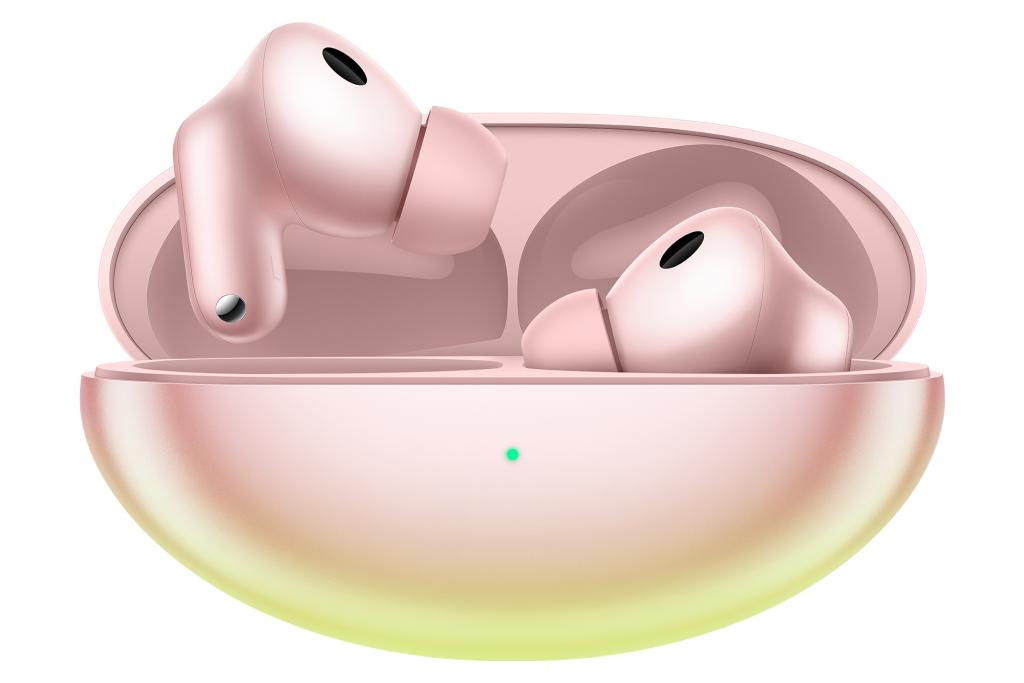
Huawei also used its press conference to reveal a new pair of true wireless earphones. The FreeBuds Neo sit somewhere between stem- and bud-style ‘phones, with sticky-outy bits that are a lot shorter than the equivalent Apple AirPods. They’re arriving in silver, pink, black and white colours, with a matching case that’s been sculpted to slip easily in and out of a pocket.
You get gesture-based playback controls, multipoint connectivity and LDAC streaming from compatible hardware. Updated ‘turbo-drivers’ promise heightened vocal clarity without having to cut back on bass and there’s spatial audio support on board. Huawei’s third-gen ANC chip uses three microphones and a voice pickup unit (VPU) to mute the outside world but keep phone calls sounding clear. The FreeBuds Neo should manage 6.5 hours of playback with noise cancelling enabled, with the case having at least two charges in reserve.
It’s launching at £119 / €129.




Read the full article here


