







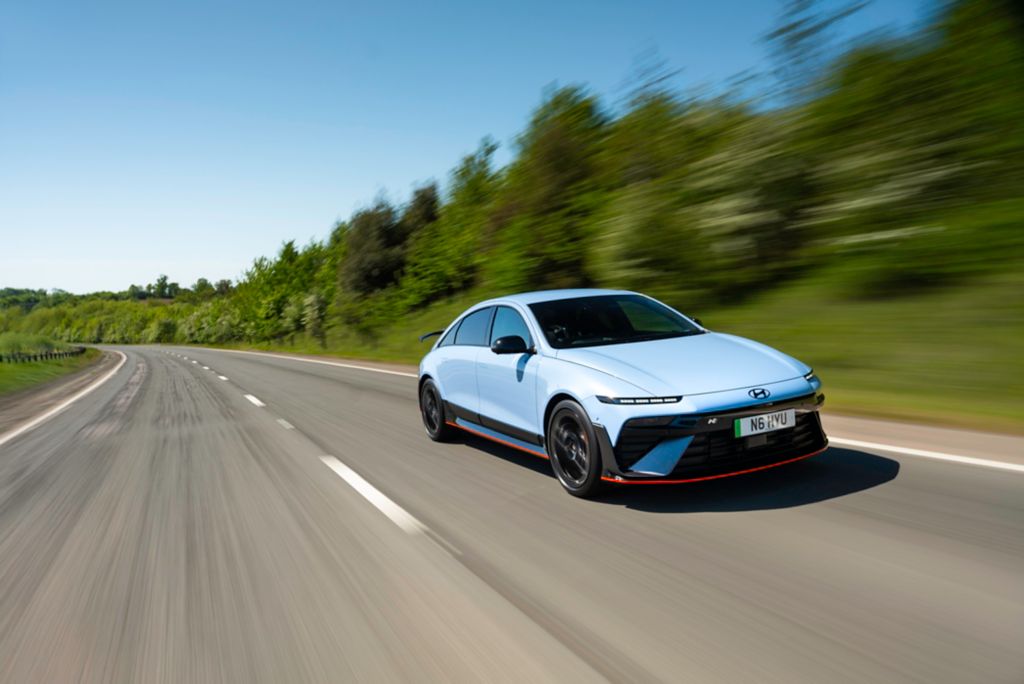
I thought the ferocious but fun twin-motor Hyundai Ioniq 5 N was a real hit when I first drove it back at the tail end of 2023. However, it’s nothing compared to the Ioniq 6 N. This high-performance electric saloon takes all of the best bits of the Ioniq 5 N but adds in even more entertainment and a very distinctive look. The end result is truly dazzling.
Hyundai’s naming conventions gave me a good idea what to expect long before my Ioniq 6 N 84 kWh 650 PS 4WD test car turned up: a beefy battery, lots of oomph and all-wheel drive. The only surprise was the delivery driver’s choice of radio station: Jazz FM. Not what I expected given the aggressive looks. The laid-back vibes coming from the speakers and the N Active Sound+ system (which emulates the sound of throaty V8s so convincingly that you’ll feel like you’re really driving one) were like chalk and cheese.
That was my Ioniq 6 N experience in a nutshell: this EV has dedicated track day driving modes and when you open the trunk two chassis-stiffening red strut braces stare right back at you, yet it’s super easy to live with on a daily basis and will manage over 300 miles of range – if you can resist driving it too enthusiastically, that is…
The styling
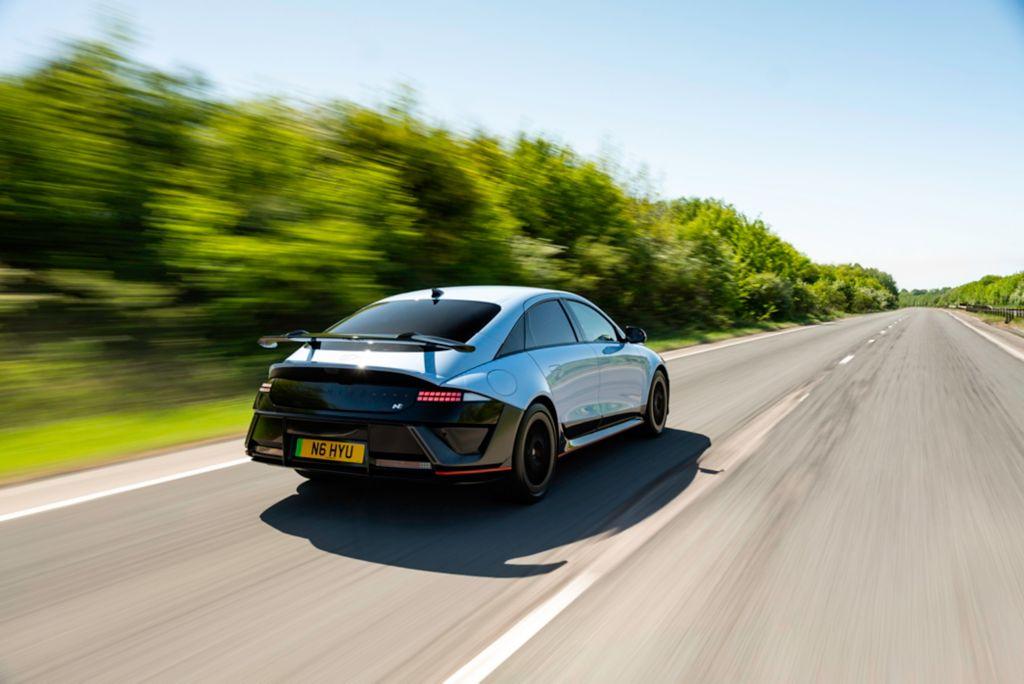
I still haven’t made up my mind as to whether I love the shape of the standard Ioniq 6: it’s cool from some angles and slightly questionable from others. The much hotter N version’s cosmetic tweaks do much to set it apart, with a lower stance, bespoke front and rear bumper sections, chunkier sills and a sizeable rear diffuser. The big and butch rear wing really helps break up the droopy rear end and give the N an altogether meaner appearance.
Distinctive N colour coding pulls it all together, blending the body panels, black accents and meaty 20in alloy wheels. Subtle red lining then instantly tells onlookers which part of the Hyundai stable this car comes from.
The interior, meanwhile, carries just enough embellishments over the regular production offering, including delicious N bucket-style seats up front. The cockpit still feels generously proportioned and thanks to the usual Korean ingenuity, cubby holes, charge ports and general controls that all fall to hand without fuss.
The back seats are excellent, with oodles of legroom on offer, even with the sculpted front seats grabbing more than their fair share. It’s comfy too, with suede-like Alcantara seat coverings that feel more than accommodating.
The drive
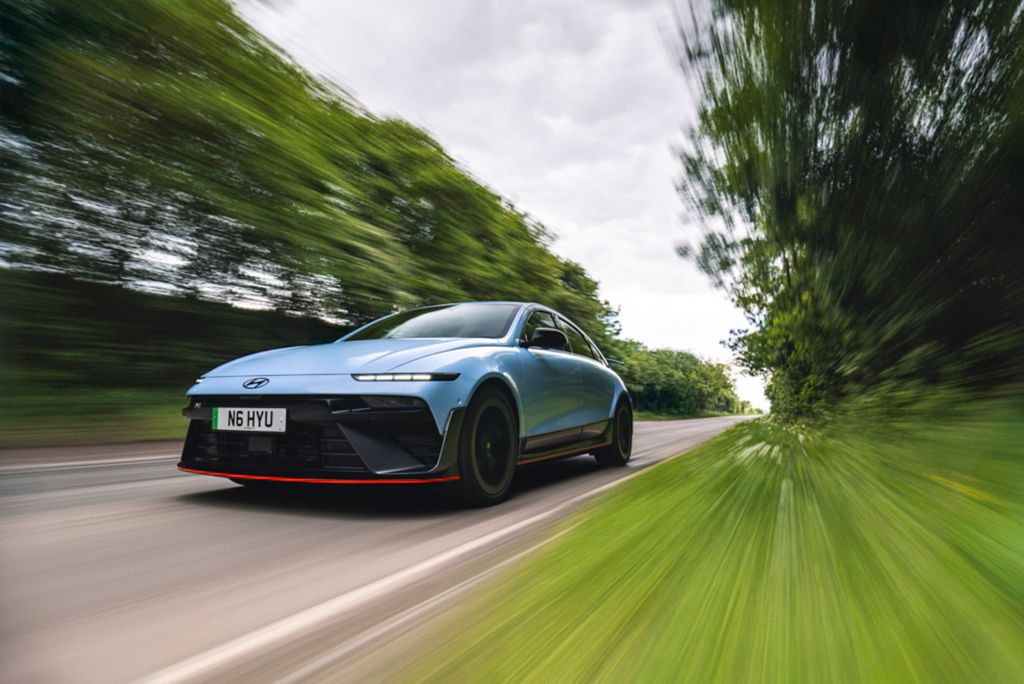
Much like the Ioniq 5 N, the brilliant thing about the Ioniq 6 N is that it still feels like a car that can be used to drop the kids off at school or venture to the supermarket. They sit on the same 800V, E-GMP platform, after all.
There are three drive modes – Eco, Comfort and Sport, all accessed via buttons on the steering wheel. Comfort is perfectly suited to everyday driving, with a smooth power delivery. Here the Ioniq 6 N burbled along in fuss-free fashion; that synthetic engine sound was so good and so convincing that I really did feel as though I was driving a petrol-powered car. Anyone lamenting the demise of ICE really should check out this dream machine.
Driving the Hyundai Ioniq 6 N more enthusiastically though unleashed a whole new dimension. Switching to Sport mode gives the digital cluster racier dials, turns the cabin ambient lighting red, and turns the accelerator pedal into a warp speed button. This doesn’t let you forget that it’s a fast car, with the amount of power being delivered to the front and back wheels shown in real time on the instrument panel.
The instant torque was amazing and it’s easy to see that 0 to 62mph time of 3.2 seconds being easily achievable. There was the NGB or ‘boost’ button too, which gave 10 seconds of up to 641bhp from the dual motors if needed for overtaking, distributed via an electronic limited slip differential. Thankfully, I found the huge brakes all round to be substantial and reassuring in equal measure. I could even go around corners without easing off the throttle much too. The Ioniq 6 N really did feel like it was on rails.
Being a performance car that rides on big wheels and tyres, I did find the suspension quite stiff. Combined with the solid, figure-hugging seats, the ride was therefore rather firm. That is no criticism though because it suits the car’s setup perfectly. Gong fast, or indeed very fast in the Ioniq 6 N requires stability – that wing is there for good reason, and I’d imagine touching 160mph as this car can do will mean the ground-hugging firmness is a necessity. A crop of track-day features also come supplied with this car, including a customisable drift optimiser option and even race track maps.
In the main, the Ioniq 6 N was an easy car to drive, with excellent cameras assisting in tight reversing manoeuvres. Turning it around in tight spots wasn’t quite as good and the turning circle felt a bit limited to me, and it was easy to feel the bulk of the chunky Pirelli P0 Zero tyres on those five-spoke rims during multi-point manoeuvres. That’s a minor grumble though, because overall, the Hyundai Ioniq 6 N was a huge amount of fun to pilot.
The technology
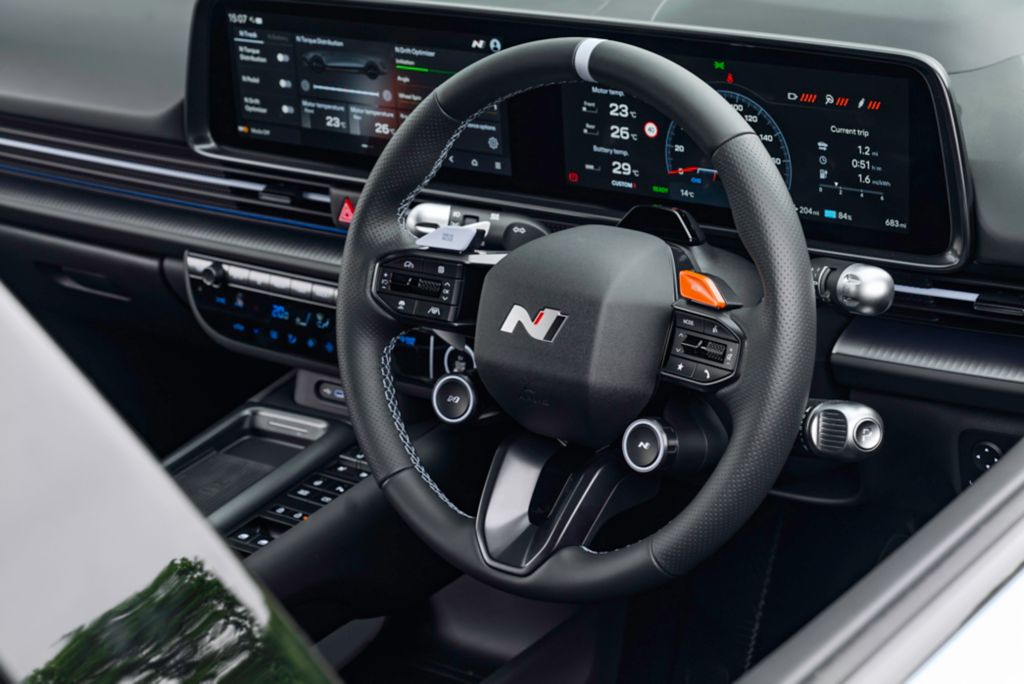
I really do like the Hyundai range for its interior tech options, which are generally comprehensive and work well. The great thing about the dashboard layout is that it combines generous levels of touch controls along with screen options. This consisted of a 12.3in landscape-oriented touchscreen with an array of touch-style button controls below for core controls including climate adjustment. The combination worked extremely well. A head-up display then added to the convenience factor.
A lot of the fun stuff came when I started playing around with the drive mode options, which would change the dashboard and dial setup depending on how sporty I fancied being. The Ioniq 6 N is a great thing to play around with and exploring the different engine sound options (which could also be turned off completely if preferred) gave this car extra novelty appeal.
There were other neat inclusions, like the heated and – crucially – ventilated seats that proved invaluable during a recent hot spell. In fact, they were so good, it was possible to survive using this instead of the air conditioning when wanting to conserve battery power. That said, even when it was on, the A/C didn’t seem to sap power in the same way I’ve seen in other EVs. Elsewhere, the Ioniq 6 N had a host of the usual stuff including Apple CarPlay and Android Auto plus a Bose Premium Audio system, boosted by 8 speakers including a chunky subwoofer.
One thing did grate: the Hyundai shutdown signature was really loud in my car. Every time I thought about fixing it next time I got in I somehow never got around to it.
Hyundai Ioniq 6 N verdict

I’d have the Hyundai Ioniq 6 N over the Ioniq 5 N every time – simply because while the latter is great, the former verges on brilliance. It’s such an entertaining car to drive, but at the same time manages to offer plenty of practical appeal.
Sure, it’s a little bit shouty with those garish styling touches, but that’s what this car is all about. Driving it on the road will never really untap its full potential either, hence all those excellent track day-focused options on board. Nevertheless, for all-round drive appeal, there’s little out there quite like it.
Scroll to see more →
| Specifications | Hyundai Ioniq 6 N |
|---|---|
| Powertrain | Permanent magnet electric motor |
| Battery | 84kWh |
| Power | 641bhp |
| Torque | 568lb-ft |
| 0-62mph | 3.2sec |
| Top speed | 160mph |
| Range | 302 miles |
| Maximum charge rate | 263kWh |
| Cargo volume | 371 litres |




Read the full article here


