







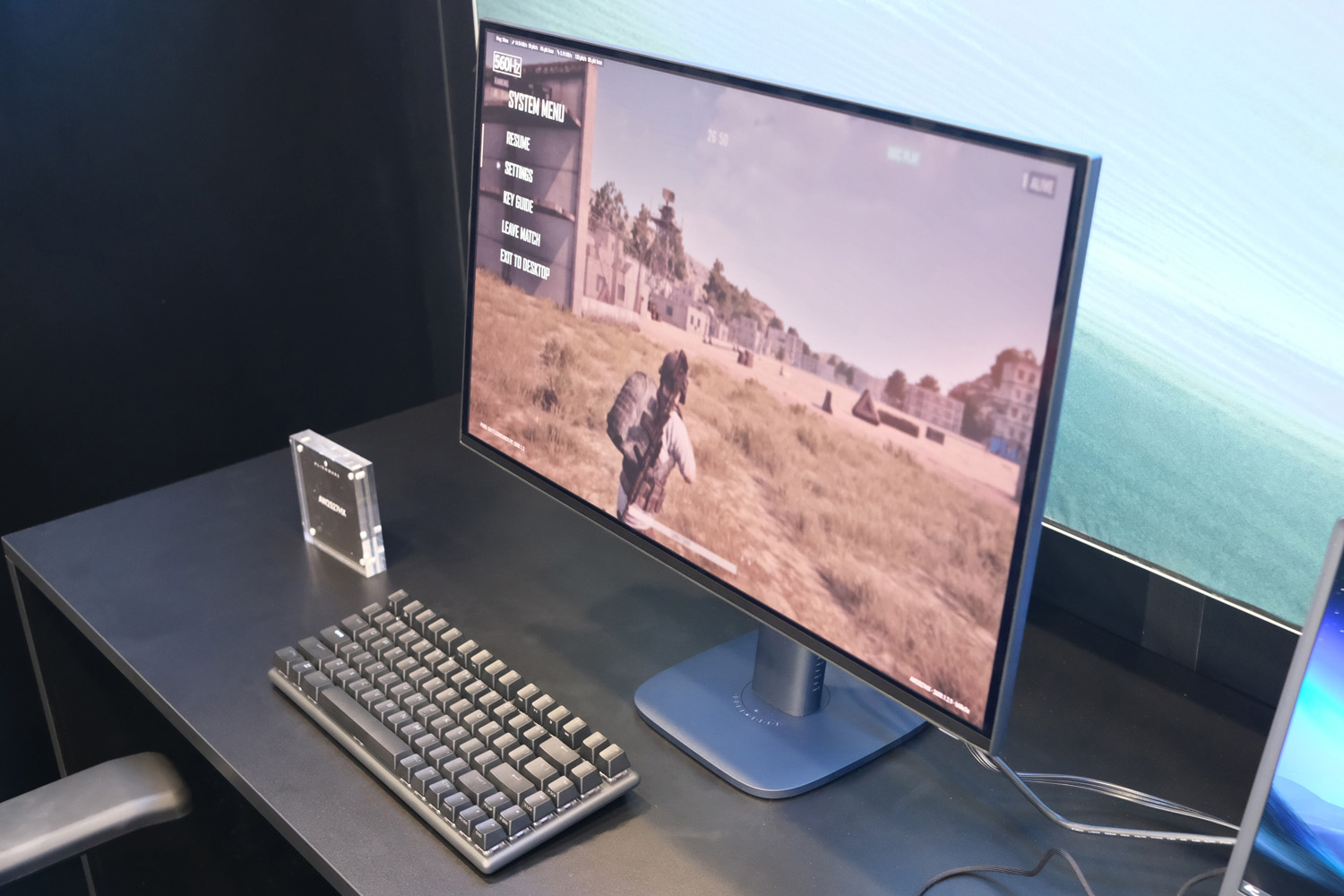
When Dell’s gaming wing used this year’s IFA event to reveal two new OLED gaming monitors, I’ll admit I looked straight past the AW2527HX at first. Why would I want a 25in monitor aimed at the esports crowd? Yet after a brief demo at the firm’s stand, I’m convinced this compact OLED sweats the small stuff better than any rival – enough that even regular gamers ought to take notice.
At 25in, it hits the size sweet spot pro players are used to when on stage at major gaming events. Yet here you’re getting a gloriously colourful Full HD OLED panel, rather than the washed out TN screens that are still the norm for a lot of gamers. It’s the same latest-gen Penta Tandem QD-OLED tech you’ll find elsewhere in Alienware’s extensive monitor lineup, only here it hits a ludicrous 560Hz. Combined with the inherent response times of OLED, there’s really no excuse for sticking with LCD anymore.
The firm consulted with esports greats Team Liquid throughout the design stages, on everything from the stand to the software. It’s why there’s a TN display mode that actively lowers the gamma to something gamers coming from older screens will feel more familiar with, as well as a stretched 4:3 mode for FPS players who swear it makes targets easier to hit.
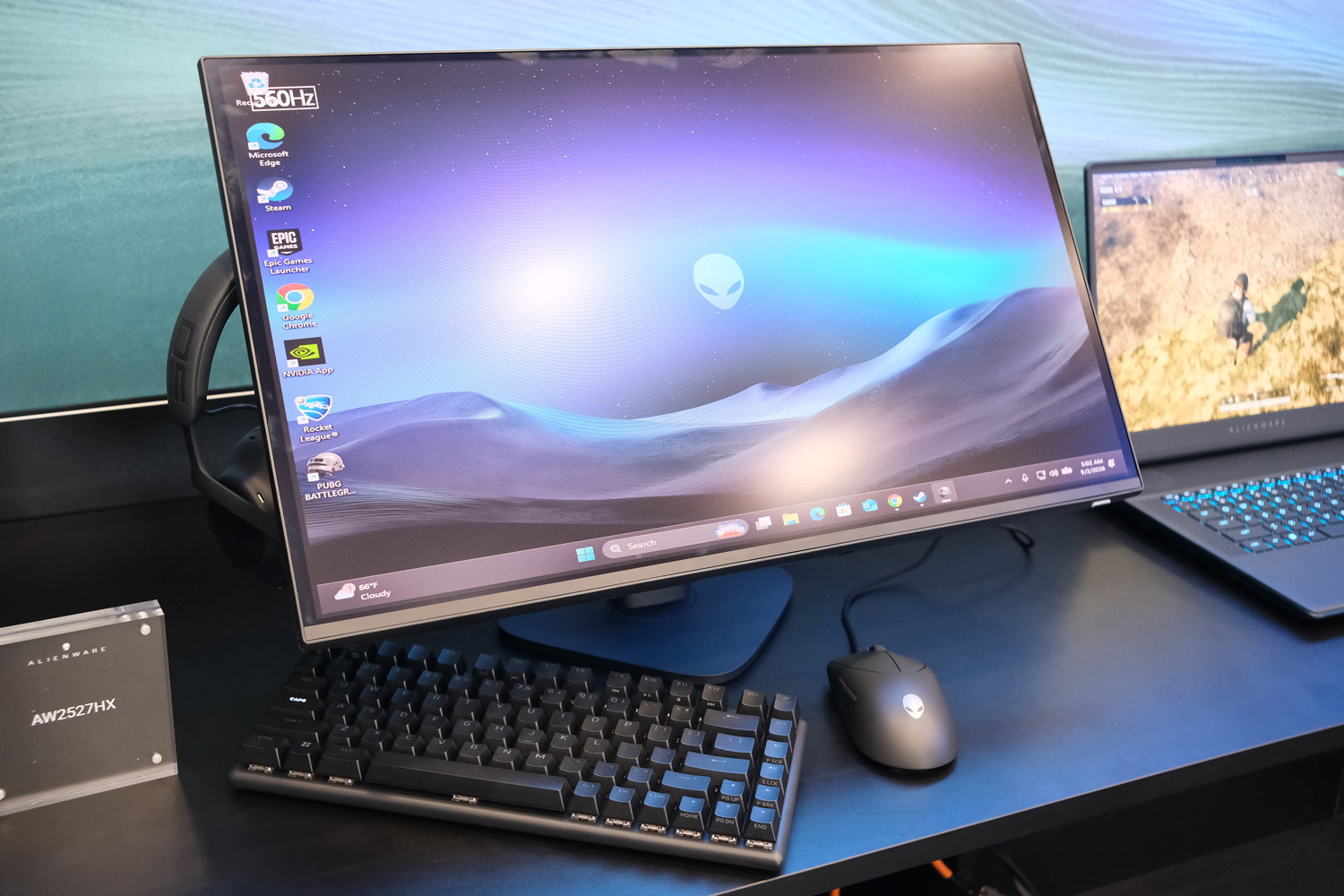
Alienware has done pretty much everything to remove distractions and make the screen the focus, from moving the flick-out headphone hangar from the side of the screen to the rear side, and relocating the USB ports away from the bottom edge so that mouse or headset dongles don’t stick out. There’s not even a name or logo on the front.
The telescopic stand has 155mm of extension, a lot more than usual for a monitor of this size, and there are markings at the side to let you instantly dial in your preferred height. It never pokes out from behind the monitor, even at minimum extension.
More markings on the base (which has the smallest desk footprint in the range) do the same for rotation angle. I joked with a Dell rep that the onscreen display just needed a digital spirit level to get tilt and pivot right too – so if you see those on a future iteration, you’re welcome.
I’ve barely mentioned the panel itself, which is gloriously responsive and has exactly the sort of colours you’d expect of a top tier OLED. Ghosting was non-existent. An RGB Stripe subpixel layout means text fringing isn’t an issue and the matte finish coped well with light reflections during my demo. Full HD isn’t asking too much from your graphics card either, so you’ve got the best chance of supplying enough frames per second to make the most of the 560Hz maximum refresh.
The AW2527HX won’t be for everyone, but I’m expecting them to quickly become a mainstay of esports events and pro gamer desk setups. Wannabe players will appreciate the little things too. It’s going on sale in early 2027, with pricing yet to be revealed.
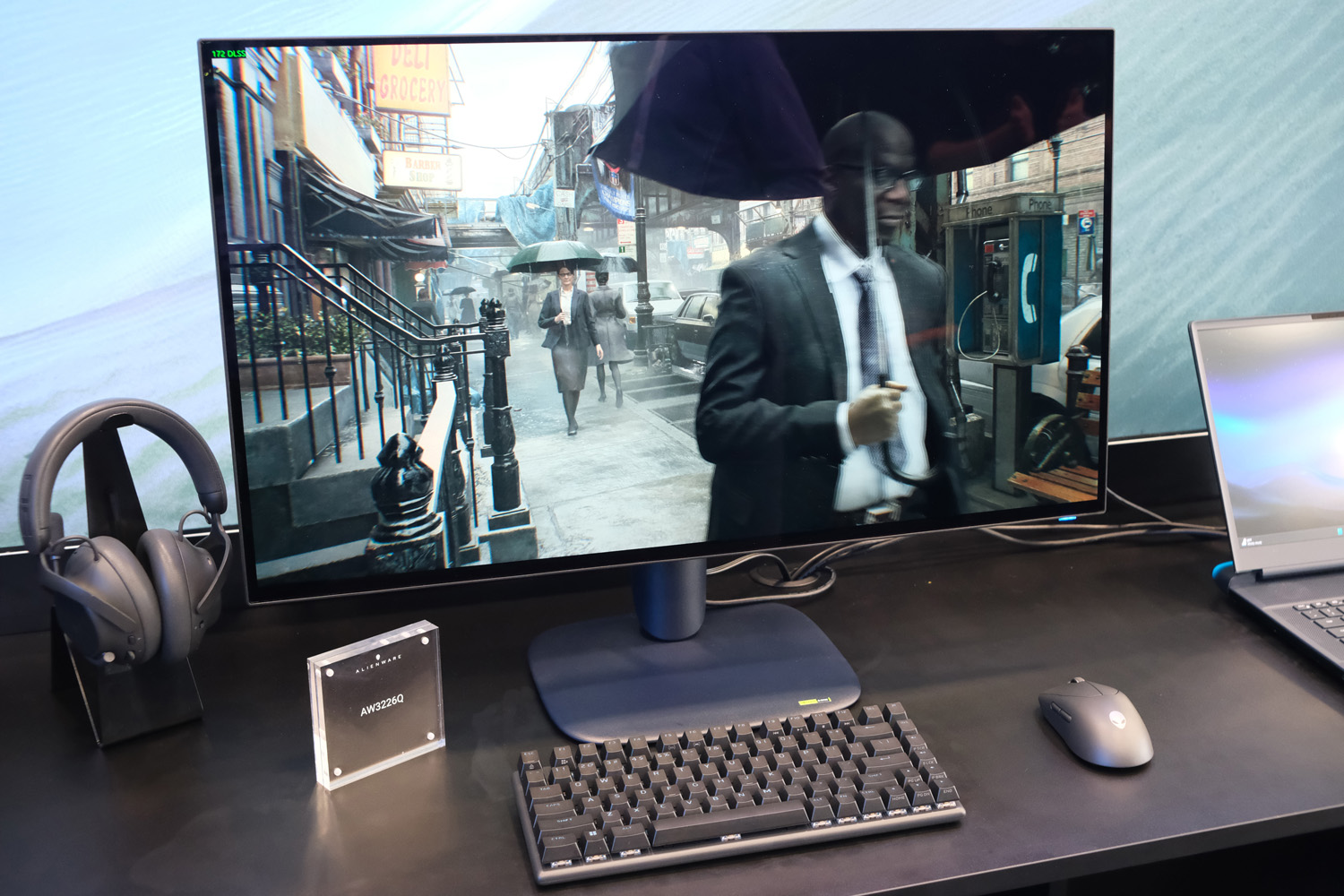
The Alienware AW3226Q is more of an everyman model, with a flat 32in screen in a 16:9 aspect ratio, but it hasn’t skimped on spec. You’re getting a 4K resolution, 165Hz native refresh rate and the same RGB stripe tandem OLED tech found in the firm’s pricier panels. 1000 nit HDR brightness, Dolby Vision support and 99% DCI-P3 colour coverage should be particularly easy on the eyes.
It’s the obvious option for anyone that isn’t a fan of curved displays – something Alienware has been absolutely smashing it out of the park with lately: first with the 34in ultrawide AW3426DW (with latest-gen QD-OLED tech), then the AW3926QW and its gloriously OTT 5K2K panel. I’m expecting this to be a similar performer visually, just in a different ratio.
The AW3226Q is launching in the coming months for a very appealing $699.




Read the full article here


