





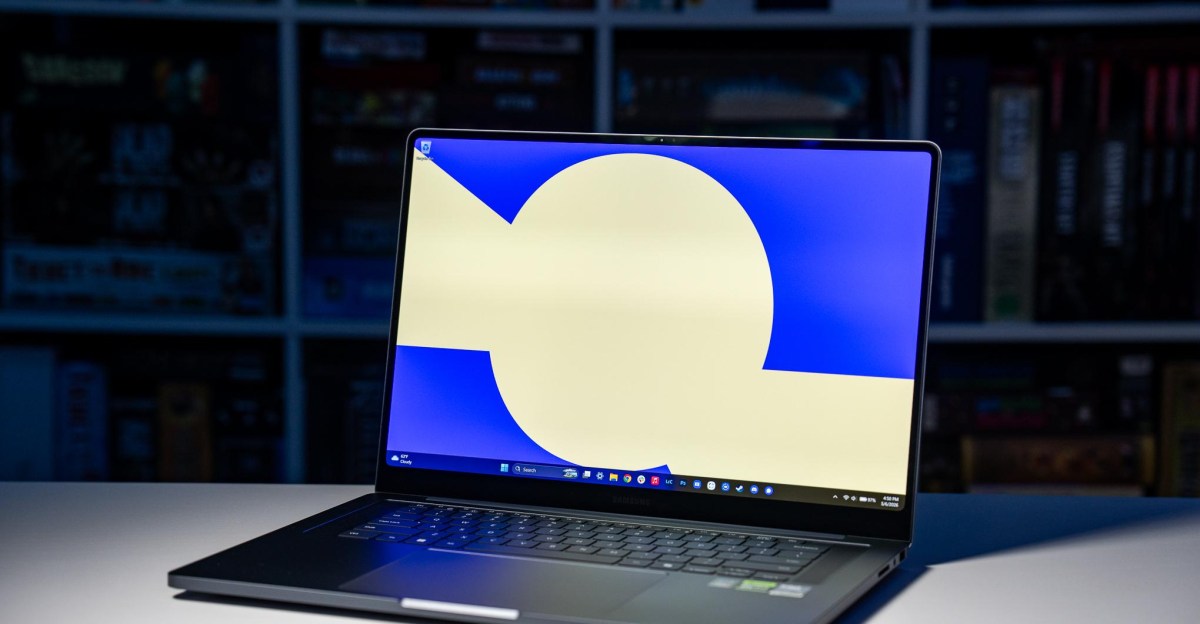
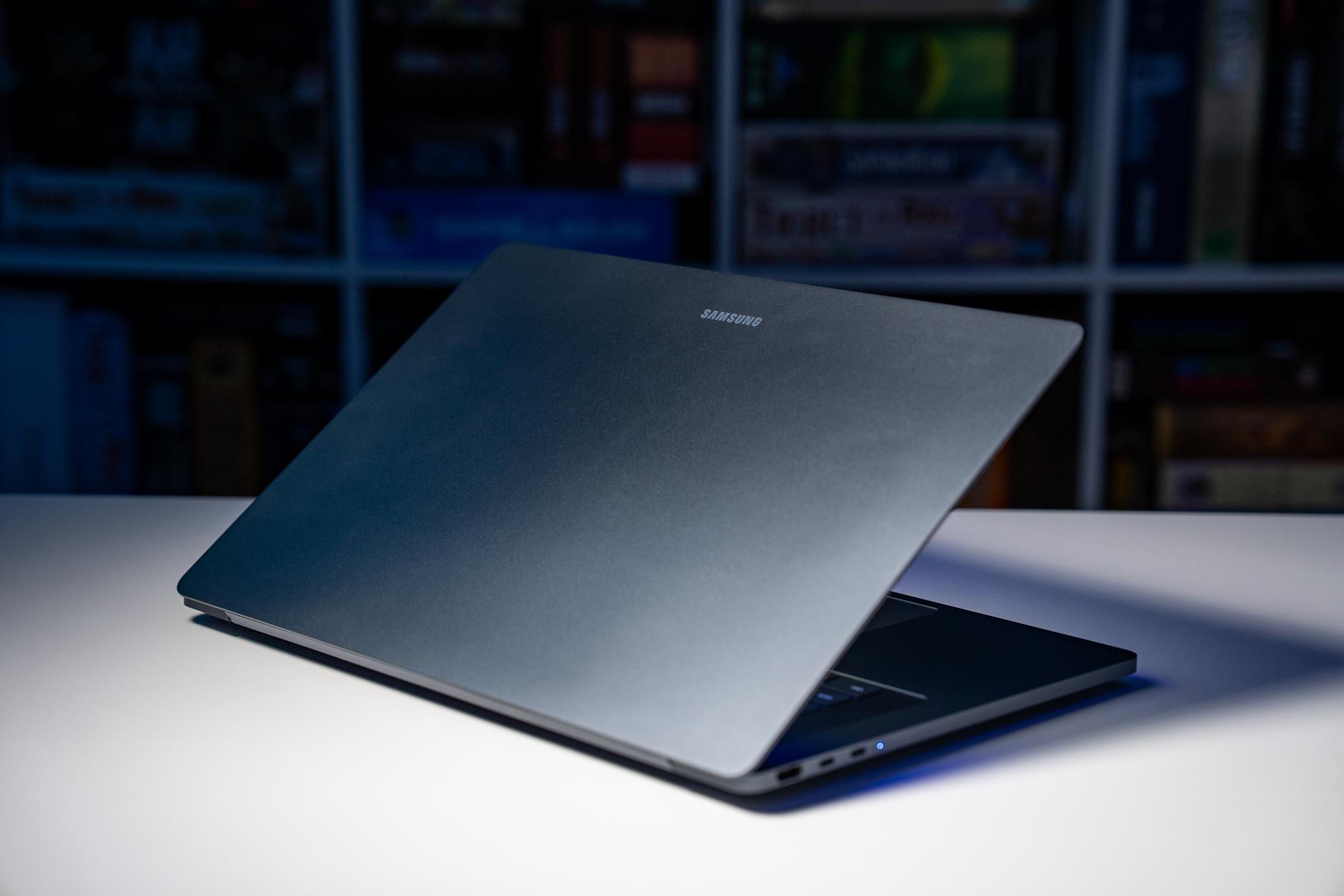
II know I’m not the only person who wants a MacBook Pro for Windows: a sleek, ultra powerful, super portable machine with an excellent screen and high-quality build. Samsung’s Galaxy Book6 Ultra certainly tries. It’s got a beautiful screen and a nice design, and it’s as solidly built as laptops come.
It also looks, well, almost exactly like a MacBook Pro, to the point where I occasionally use the wrong keyboard shortcuts out of habit. Other Windows laptops have at times incorporated some MacBook design influences, but the Galaxy houses so many of them that it’s obvious what Samsung was going for.
Imitating things people want is understandable. But Samsung also repeats some of Apple’s previous failings, like including a terrible keyboard and a surprisingly bad webcam. And it’s charging high-end MacBook Pro money for a device that doesn’t perform like one.
“Good artists copy, great artists steal.” But what if they botch the robbery?

$3800
The Good
- Very nice (and very familiar) build and design
- Bright and contrast-y OLED display
- Good Intel Panther Lake / Nvidia RTX performance
The Bad
- Bad keyboard with short key travel
- Poor webcam quality
- So pricey for such glaring faults
The Galaxy Book6 Ultra starts at $2,900 with a 16-core Core Ultra X7 358H chip and integrated Intel Arc B390 graphics. Our review configuration has a similar Intel Core Ultra 7 356H chip paired with an Nvidia RTX 5070 Laptop GPU. It also has 32GB of soldered RAM and a 2TB SSD. It cost $3,200 before RAMageddon drove prices up. Now, it’s a whopping $3,800 with a 1TB SSD. At that price, it’s just $100 shy of a 16-inch MacBook Pro with M5 Max with 36GB of memory and a 2TB SSD. (Let’s keep that figure in the back of our minds.)
- Screen: A
- Webcam: D
- Keyboard: D
- Trackpad: C
- Port selection: B
- Speakers: B
- Number of ugly stickers to remove: 4 (one underneath)
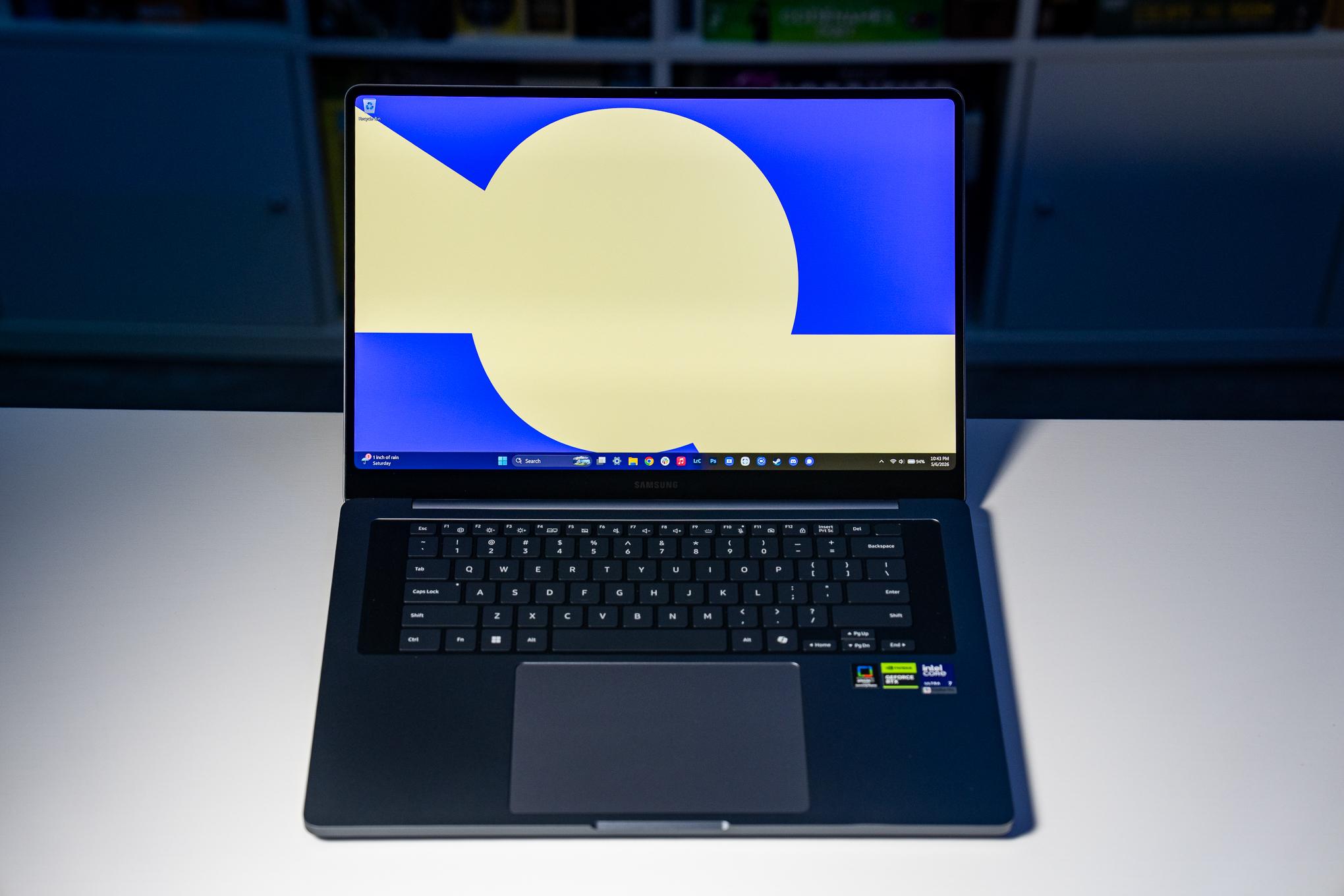
As expected from a high-end Samsung device, the display is gorgeous. The 16-inch, 2880 x 1800 OLED touchscreen is bright and sharp, rendering vibrant colors and perfect contrast. And the 120Hz adaptive refresh rate makes motion nice and smooth.
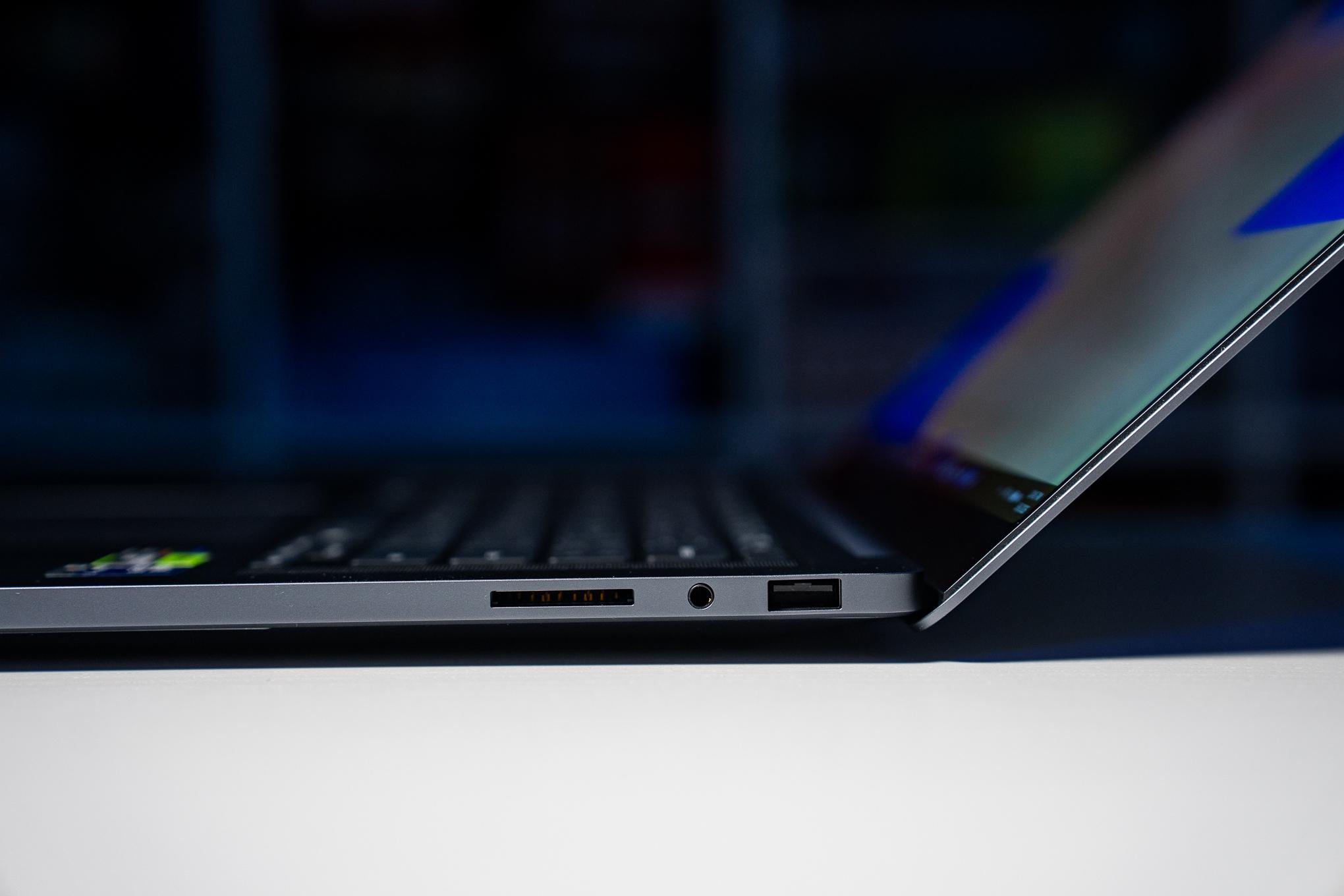
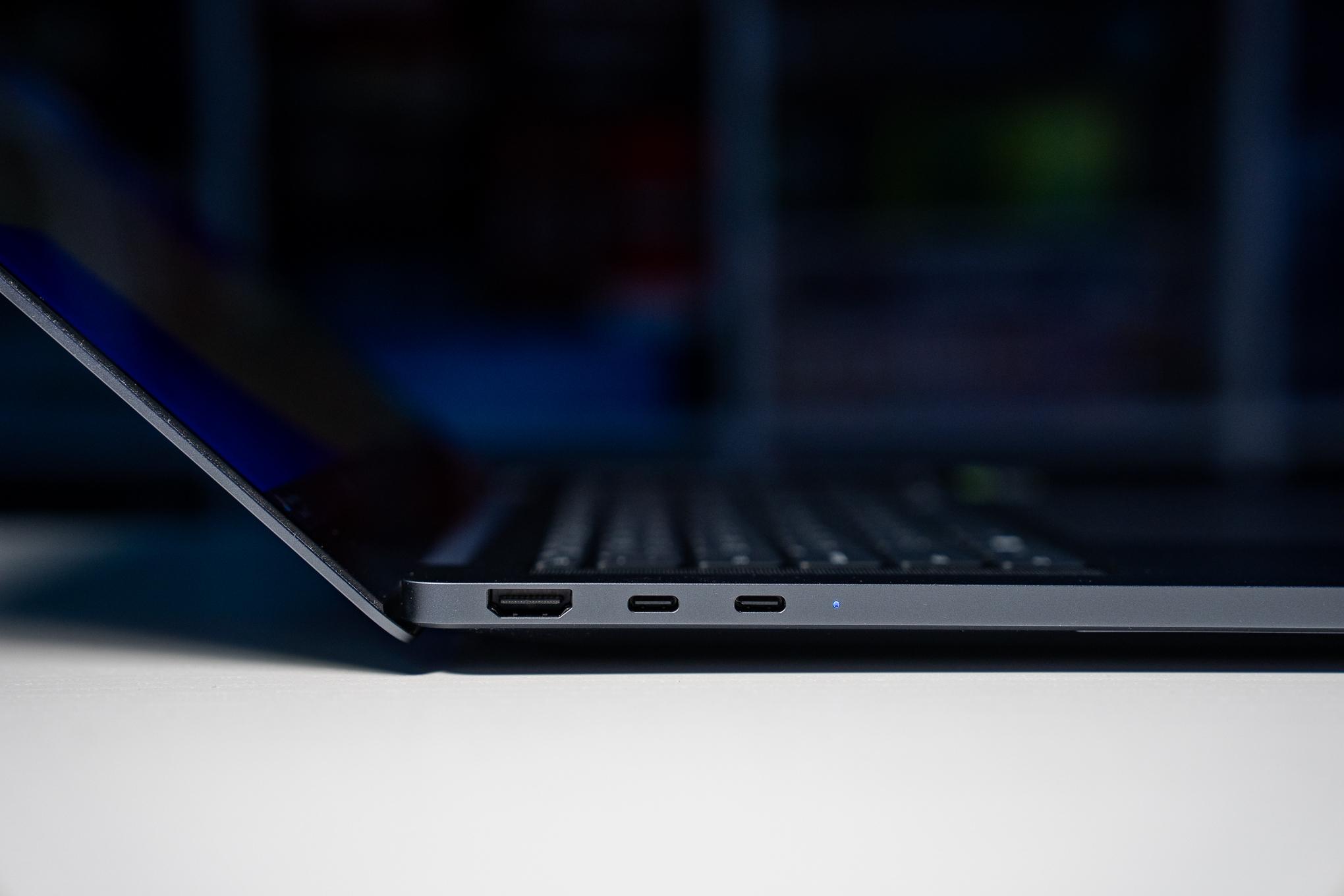
Like a MacBook Pro, the Galaxy Book6 Ultra has Thunderbolt and HDMI 2.1 ports and an SD card slot. While the MacBooks have three Thunderbolt 5 ports, the Samsung has two Thunderbolt 4 and an old-fashioned USB-A. Regardless of USB preference, it’s a good port selection that’s fit for demanding users and content creators. It’d be nice if it were Thunderbolt 5, given the price, but Panther Lake doesn’t have native support for Thunderbolt 5.
When it comes to performance, the Book6 is fast. It’s speedy enough to handle busy multitasking and tackle hefty edits in Lightroom Classic. It slowed down a touch when I made chunky edits using subject and background detection masks, then copied and pasted them across batches of images, but I expect that in most laptops other than high-end Macs with Pro and Max chips.
Thanks to the discrete graphics, I could even play games like Battlefield 6 and Marathon reasonably well (two games you can’t run at all on macOS). In BF6, I typically got a solid 70+ fps by keeping settings modest: medium presets at 2880 x 1800 resolution with DLSS set to Performance. Marathon mustered a passable 50+ fps using Nvidia’s optimized settings. The fans don’t even get super loud, but, in exchange, the underside of the Galaxy Book’s chassis got very hot near the back.
The Intel Panther Lake CPU and Nvidia RTX 5070 GPU combo makes the Book6 a bit of a sleeper gaming laptop. It’s miles ahead of either MacBook for that. But for $3,800 you can get much better performance from the more straightforwardly gamer-looking laptops out there. Or you can remain somewhat stealthy with a Razer Blade or Asus ROG Zephyrus, and get similar gaming performance for a lot less money.
Unfortunately, gaming performance isn’t enough for a laptop that costs almost $4,000. In benchmarks the Galaxy Book6 Ultra is closer to the $1,700 MacBook Pro with the base M5 chip. Benchmarks aren’t everything, but Samsung is charging so much money for a laptop that gets outpaced by one that’s half the price. Where the Book6’s discrete GPU gives it an advantage in some graphics-heavy tests, the much cheaper M5 MacBook Pro isn’t far behind. It even handily beats Samsung’s machine in our 4K video export test.
1/10
This isn’t really Samsung’s fault. Windows laptop makers can’t compete with high-end Macs in raw speed. Intel and AMD don’t have any laptop CPUs that get close to Apple’s single-core performance, which is why a 10-core M5’s multicore performance can beat a 16-core Panther Lake chip.
In related news, battery performance is uneven. I’ve had days of light usage (many Chrome tabs, some stints of music listening, and a bit of photo editing) where it lasted over 10 hours, and then similarly light days where I only got seven. Other Panther Lake laptops I’ve tested have better battery life, but the Nvidia GPU uses more power than integrated graphics. Even though the laptop is supposed to switch to integrated graphics outside of demanding tasks, laptops with both tend to have worse battery life even outside of games.
I love discrete graphics for gaming, but Macs have an inherent advantage in battery life consistency because they sidestep that power dance entirely with integrated graphics going up to a wildly high number of GPU cores. The much cheaper 14-inch MacBook Pro is in “Eh, who cares if you forgot the charger at home” territory — often lasting me 12 hours or more. (Speaking of chargers, Samsung’s chunky 140W power adapter even looks like Apple’s. But its prongs don’t fold down, and the included cable is a little short at 70 inches / 1.8 meters. Who decided less cable is better?)
As for the speakers, they’re good. But they lack a little depth and bass compared to the equivalent six-speaker setups on the MacBook Pros or even the 15-inch MacBook Air.
1/12
But the most egregious misstep is the Galaxy Book6 Ultra’s keyboard. The keys are very flat, with minimal separation from the deck. Samsung claims there’s 1mm of key travel, matching the current MacBook keyboards, but it somehow feels shallower and much worse. Typing on this keyboard gives me flashbacks to the old Apple butterfly keyboards, and that’s not an experience we should be revisiting. Frankly, I don’t know how Samsung achieved this (derogatory). I make more typos and mistakes on this keyboard than usual, and I dislike it so much I sometimes place a mechanical keyboard over it. I’m sure you could get used to it, but that’s not good enough on a laptop this expensive.
I wish that was the only problem, but the haptic trackpad can also be frustrating. I usually love haptic pads since you can register a click anywhere, and the Galaxy Book offers a generously sized area for clicking — much like the Force Touch trackpads on a MacBook. But this one’s just okay. It’s usually fine, but I sometimes experienced delayed clicks and repeated inputs when clicking and dragging things or highlighting cells in a spreadsheet.


And then there’s the webcam. I have no idea what processing Samsung is doing, but the 1080p camera somehow makes you look simultaneously grainy and smoothed out. My best guess is it’s a noisy image sensor and Samsung has some noise reduction or skin smoothing going on — or both. It’s a bad sign when the first thing my colleagues ask me in a video call is what laptop I’m using.
Samsung wants its flagship laptop to be a MacBook Pro for Windows so badly. It has a nice chassis and screen, and good performance for a Windows laptop this thin, but it whiffs on too many of the fundamentals. It’s priced like an M5 Max MacBook Pro, has the performance of a MacBook less than half its price, and lacks the excellent battery life of either. Just get the genuine article.
Samsung Galaxy Book6 Ultra specs (as reviewed)
- Display: 16-inch (2880 x 1800) 120Hz OLED touchscreen
- CPU: Intel Core Ultra 7 356H
- GPU: Nvidia GeForce RTX 5070 Laptop GPU
- RAM: 32GB LPDDR5X (soldered)
- Storage: 2TB NVMe SSD with second storage slot
- Webcam: 1080p
- Connectivity: Wi-Fi 7, Bluetooth 5.4
- Ports: 2x Thunderbolt 4 USB-C (DisplayPort / Power Delivery), 1x USB-A 3.2, HDMI 2.1, full-size SDXC card slot, 3.5mm combo audio jack
- Weight: 4.17 pounds / 1.89kg
- Dimensions: 14.05 x 9.76 x 0.61 inches / 356.9 x 248 x 15.4mm
- Battery: 80.2Wh
- Price: $3,799.99
Photography by Antonio G. Di Benedetto / The Verge
Benchmarks comparison table
Samsung Galaxy Book6 Ultra / Intel Core Ultra 7 356H (Panther Lake) / 32GB / 2TB |
MacBook Pro 14 / Apple M5 / 16GB / 1TB |
Asus Zenbook Duo / Intel Core Ultra X9 388H (Panther Lake) / 32GB / 1TB |
Razer Blade 16 (2025) / AMD Ryzen AI 9 HX 370 / RTX 5090 / 32GB / 2TB |
Asus Zenbook A16 / Qualcomm Snapdragon X2 Elite Extreme X2E94100 / 48GB / 1TB |
MacBook Pro 16 / Apple M5 Max / 128GB / 4TB |
|
|---|---|---|---|---|---|---|
| CPU cores | 16 | 10 | 16 | 12 | 18 | 18 |
| GPU | Nvidia RTX 5070 Laptop GPU (4,608 CUDA cores) | Apple M5 (10 cores) | Arc B390 (12 cores) | Nvidia RTX 5090 Laptop GPU (10,496 CUDA cores) | Adreno X2-90 | Apple M5 Max (40 cores) |
| Geekbench 6 CPU Single | 2802 | 4208 | 3009 | 2968 | 3643 | 4330 |
| Geekbench 6 CPU Multi | 16471 | 17948 | 17268 | 15922 | 22044 | 29143 |
| Geekbench 6 GPU (OpenCL) | 117306 | 49059 | 56839 | 213016 | 41101 | 145613 |
| Cinebench 2026 Single | 499 | 736 | 528 | Not tested | 628 | 734 |
| Cinebench 2026 Multi | 4369 | 4486 | 3993 | Not tested | 6327 | 8952 |
| PugetBench for Photoshop | 8057 | 12354 | 8773 | 8679 | 10931 | 15716 |
| PugetBench for Premiere Pro (2.0.0+) | 81989 | 71122 | 54920 | Not tested | Not tested | 154829 |
| Blender classroom test (seconds, lower is better) | 40 | 44 | 61 | 18 | 198 | 15 |
| Blender cosmos test (seconds, lower is better) | 223 | Not tested | 204 | 121 | 670 | 35 |
| Premiere 4K Export (lower is better) | 4 minutes, 25 seconds | 2 minutes, 47 seconds | 3 minutes, 3 seconds | 1 minute, 56 seconds | 6 minutes, 38 seconds | 1 minute, 10 seconds |
| Sustained SSD reads (MB/s) | 7049.86 | 7049.45 | 6762.15 | 6726.25 | 7092.91 | 13638.91 |
| Sustained SSD writes (MB/s) | 5819.38 | 7317.6 | 5679.41 | 4931.41 | 5694.94 | 17814.19 |
| Price as tested | $3,799.99 | $1,949 | $2,299.99 | $4,499.99 | $1,699.99 | $6,149 |
Read the full article here


