

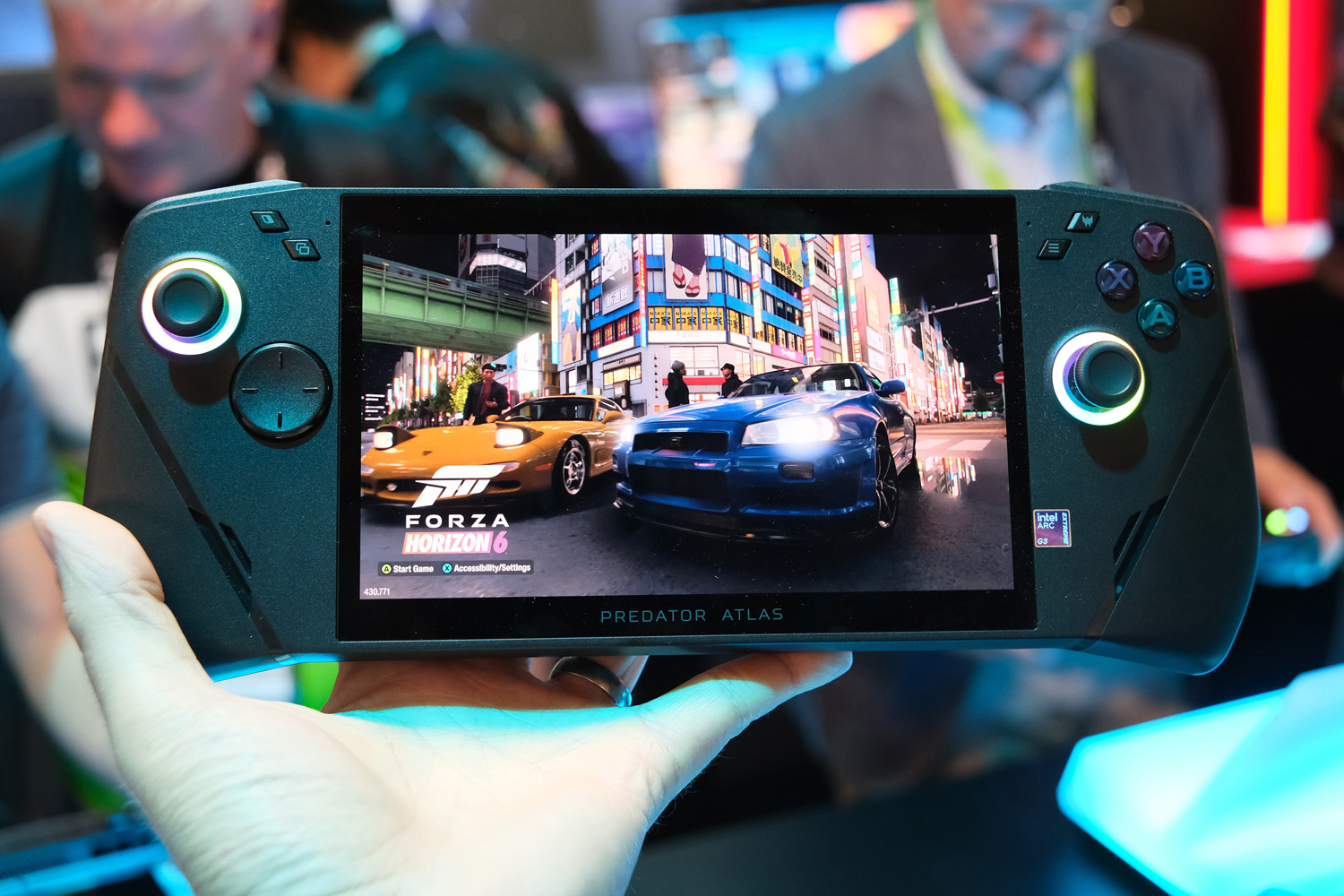
When Intel’s souped-up Arc G3 Extreme chipsets went public back in June, they were mostly spotted in large gaming handhelds with 8in or larger screens. Fans of (slightly) smaller devices will be happy to hear Acer’s new Predator Atlas 7 bucks that trend, with a display that’s more compact but the same beefy innards for playing new titles at smooth frame rates.
After spending some time with one on Acer’s booth at this year’s IFA show, I think there are a few features I’d love to see copied elsewhere – but also a few I’m not so keen on.
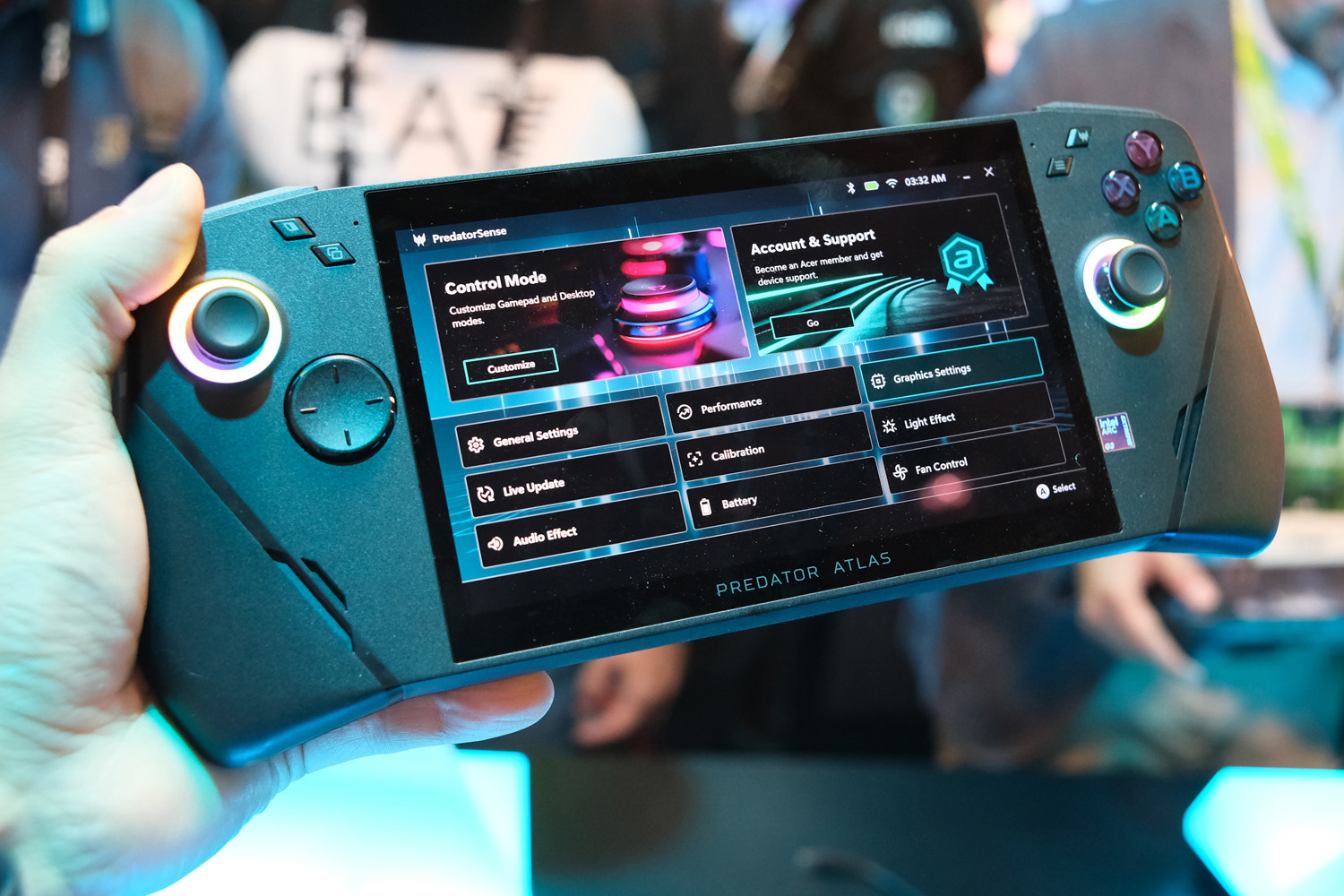
Essentially packing all the performance muscle of the Predator Atlas 8 revealed earlier this year at Computex into a more compact shell, the Predator Atlas 7 draws its oomph from an Arc G3 Extreme CPU, Arc B390 integrated graphics, up to 24GB of RAM and as much as 1TB of speedy PCIe storage. Forza Horizon 6 played very smoothly indeed on the demo unit I tried, at Full HD and largely High detail settings.
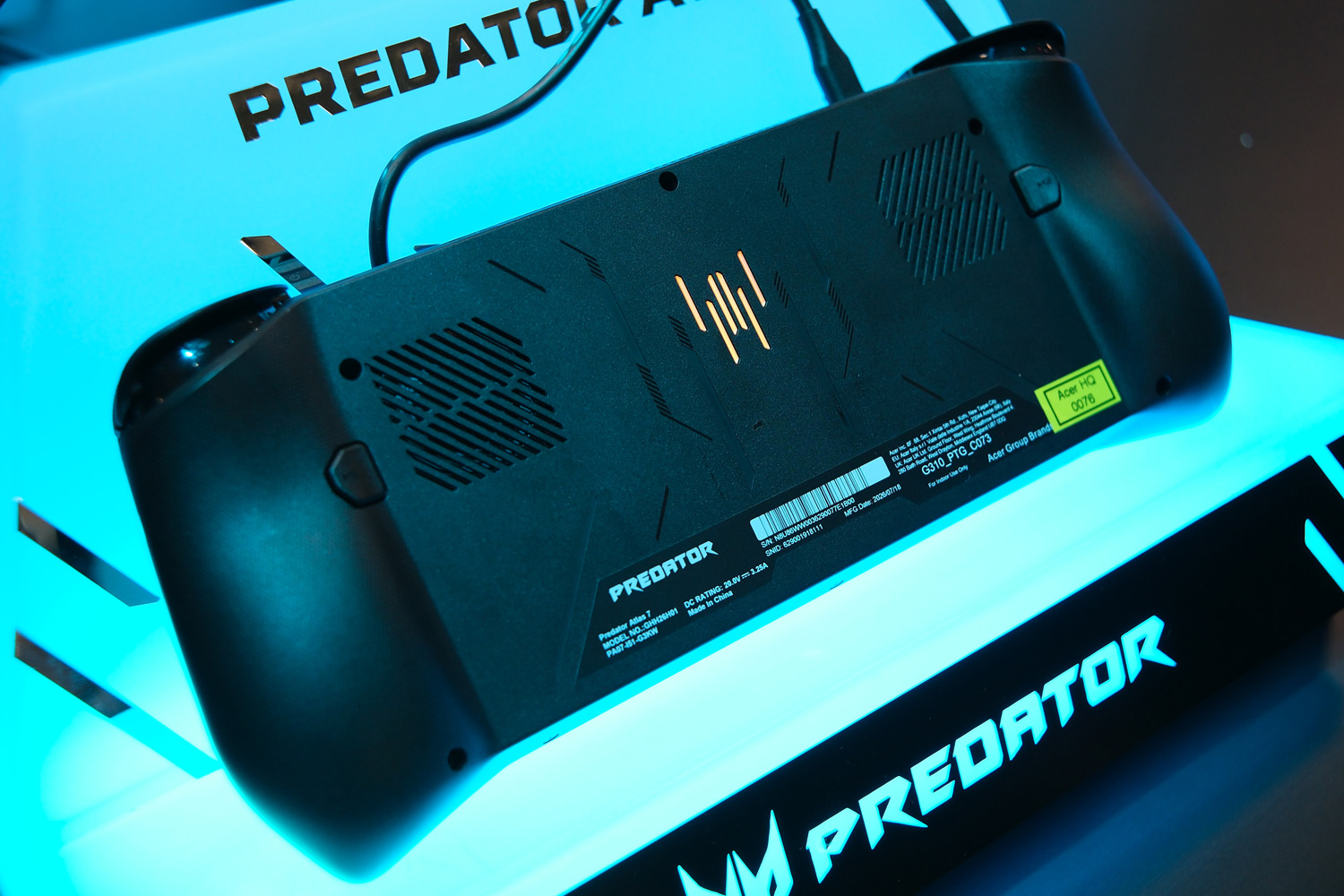
Acer reckons its 89-blade, all-metal AeroBlade fan gives 10% more airflow than a traditional plastic one – which the Predator Atlas 7 also has, for some clever vortex tunnelling to force hot air out of the chassis and keep the components cool. The unit didn’t feel hot to touch, despite being used for gaming pretty much non-stop all afternoon, and it wasn’t obnoxiously loud either.
That could partly be because the components are only tasked with rendering frames on a 7in, Full HD resolution display here, rather than the 8in, 1200p panel seen in its bigger brother. That should spell even smoother gameplay at the maximum 120Hz refresh rate, helped by variable refresh rate (VRR) support and Intel’s XeSS 3 upscaling.
The touch-sensitive screen should hit 500 nits peak brightness, uses Corning Gorilla Glass Victus with a bespoke surface treatment to minimise screen glare, and ships with a tempered glass screen protector. It’s then mated to a set of 2W stereo speakers with DTS:X Ultra support. I can’t give a verdict on the audio, but the screen had great viewing angles, punchy colours and was plenty bright enough for Acer’s demo area.
Acer has learned a few things from the Predator Atlas 8, giving this new model more contoured grips, a larger palm rest area and an anti-slip texture for more confidence-inspiring purchase. The smaller size makes it that bit easier to hold one-handed, even if weight isn’t all that far removed from its bigger brother.
I admit I struggled to get properly comfortable with the grips, which were wide yet shallow – my hands felt that bit too far from the triggers, at least at first. I did eventually find a comfortable position where I could reach every input just fine, but still wish Acer had made the grips a bit deeper – even if that would’ve compromised portability a little.
The analog triggers are Hall-effect, for more fine-grain pressure sensitivity, while the joysticks can be had with tunnelling magnetoresistance (TMR) tech for heightened precision and zero stick drift over time. Both felt snapper, responsive and accurate.
It might be smaller but Acer hasn’t had to cut back on connectivity: the Predator Atlas 7 still packs dual Thunderbolt 4 ports (good for video output as well as charging and plugging in peripherals) and a UHS-II microSD card slot for adding extra storage capacity. Intel Killer wireless chip supplies Wi-Fi 7 and Bluetooth 5.4, while the power button doubles as a fingerprint sensor for Windows Hello biometrics.
An 80Whr battery ought to put it on par with the longest-lasting handhelds out there right now, while the 65W power brick should get it back up to full in double quick time between play sessions. A big thumbs up there.
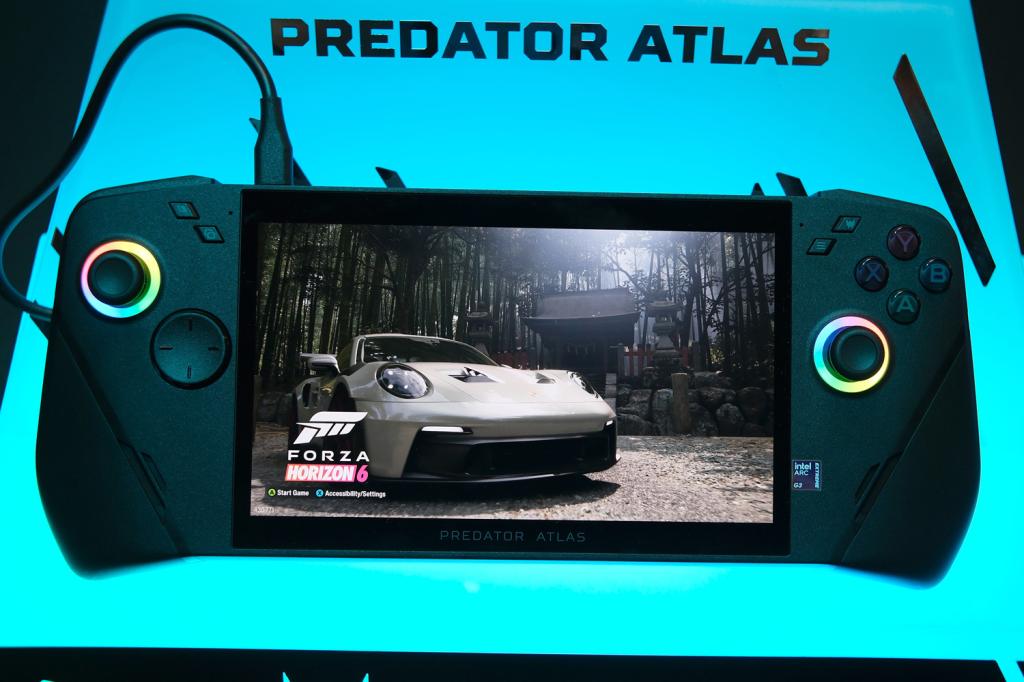
You might forego things like touchpads and thermals have yet to prove themselves with truly demanding games, but I’m glad to see at least one firm proving more powerful hardware doesn’t have to go hand in hand with a larger handheld. Hopefully a full review will follow closer to release.
Acer will launch the Predator Atlas 7 first in North America, at the start of Q4, followed by Europe, the Middle East and Africa in November. Pricing has yet to be confirmed – but given the ongoing high cost of consumer memory, I’m betting gamers will still be looking at parting with a four-figure amount in order to take one home.


Read the full article here
