

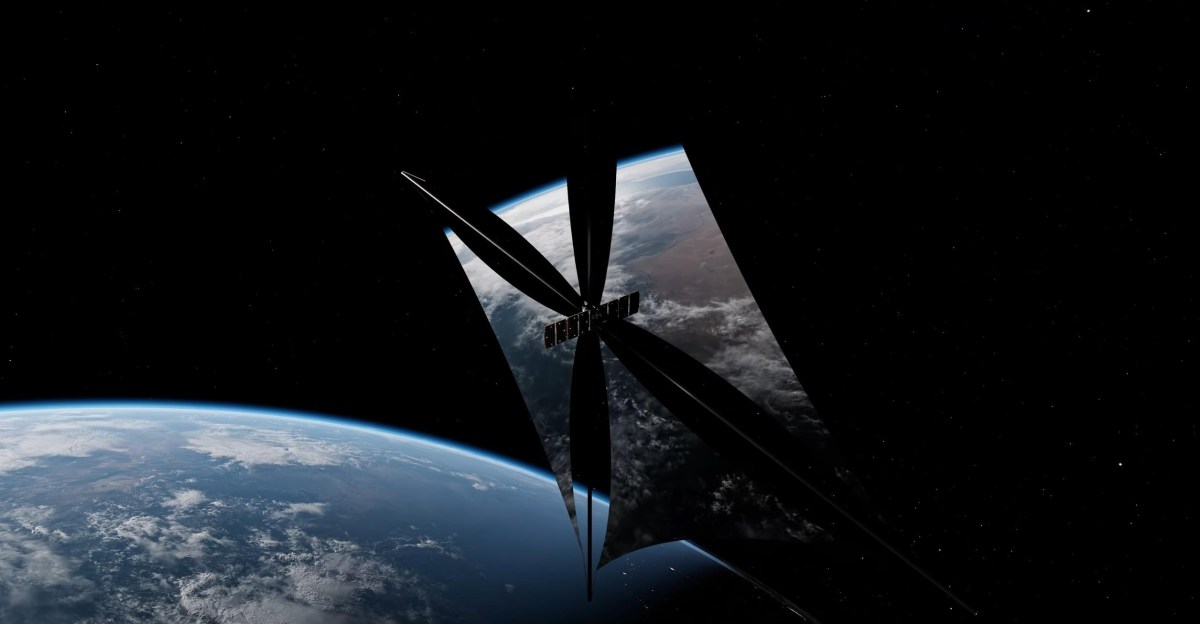
Reflect Orbital has been given the green light to launch its first space mirror that aims to redirect sunlight down to Earth at night. The US Federal Communications Commission (FCC) has authorized the California-based startup to build and operate a single prototype satellite in low-Earth orbit later this year, despite concerns over how the technology could impact optical astronomy.
The satellite, named Eärendil-1 in reference to a Tolkien character, will attempt to redirect sunlight to specific areas on Earth after dark using a 59-foot (18-meter) reflective surface. If successful, Reflect Orbital plans to launch and operate a constellation of 50,000 satellites by 2035, with enough reflected light to illuminate areas up to 3 miles (5 kilometers) on the ground. The company says this technology will be available “on demand” and could be used across a variety of industries, including solar energy, agriculture, and emergency response sectors.
“Imagine the endless possibilities when sunlight is not limited by geography or time of day,” Reflect Orbital says on its website. “A search-and-rescue team locates a missing person in minutes. A city has safer, evenly-lit streets without the carbon emissions. Construction projects complete in half the time with teams able to work through the night safely.”
The growing number of satellite constellations orbiting Earth are driving concerns regarding space junk and light pollution. Reflect Orbital’s plans are already facing objections that the space mirrors could make astronomical observations more difficult. There are also concerns about how the reflected light could interfere with wildlife that depend on natural light cycles and impact the safety of aircraft pilots.
Wired reports that the FCC received nearly 2,000 public comments opposing the space mirror plans, with the American Astronomical Society, DarkSky International, and the Royal Astronomical Society among the most notable critics. “For optical astronomy, this is an existential threat, and we hope that the regulators will share that view,” Betty Kioko, institutional affairs officer for the European Southern Observatory (ESO), said to Wired, ahead of the FCC clearance.
Read the full article here
