






The annual car tax bill on my Honda S2000 is now well on the way to being £500; hardly good value considering the thousand or so miles I do on it during the summer months. I’m looking for something cheaper and the Honda Super-N might just be it. The boxy little electric car may not look like the obvious alternative to a two-seater roadster, but it offers similar levels of fun – and crucially is affordable to run.
At £18,995 (given some American SUVs are more than four times the Super-N’s size, it’s unsurprisingly not sold in the US) it falls into the same ball park as the forthcoming – and very good – Renault Twingo, the Citroen e-C3, the Fiat Grande Panda and the Leapmotor T03. All are small EVs that offer funky designs and a whole lot of fun for not too much cash.
At just over 1,000kg the Super-N is lightweight and feels nimble enough around town. It can carry four people. Better still, it looks great, with styling flourishes that stand out from the crowd without looking daft. Buying one couldn’t be simpler either, with just one trim and a few colour options. Hopefully that’s enough to overlook the very limited electric range…
The styling
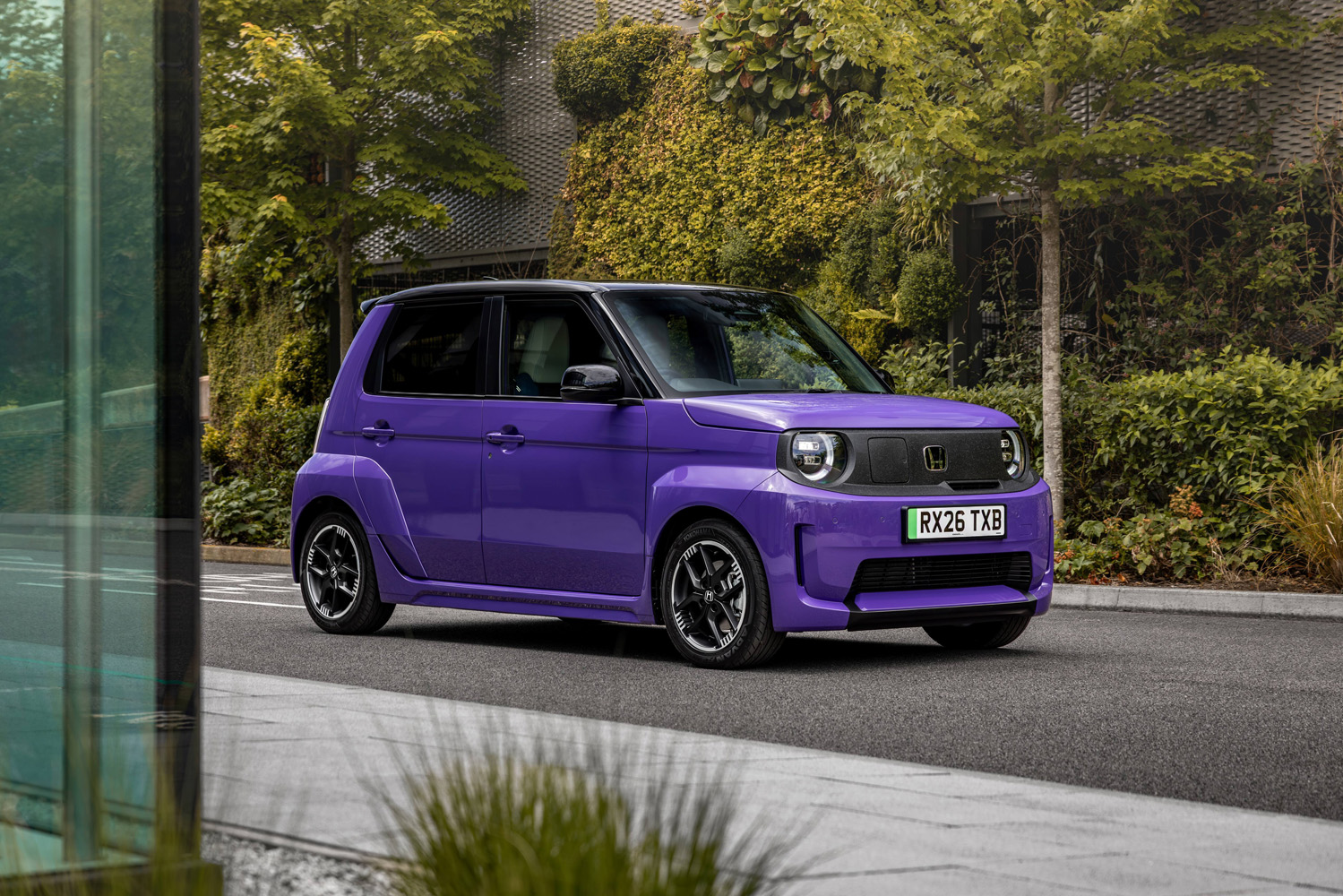
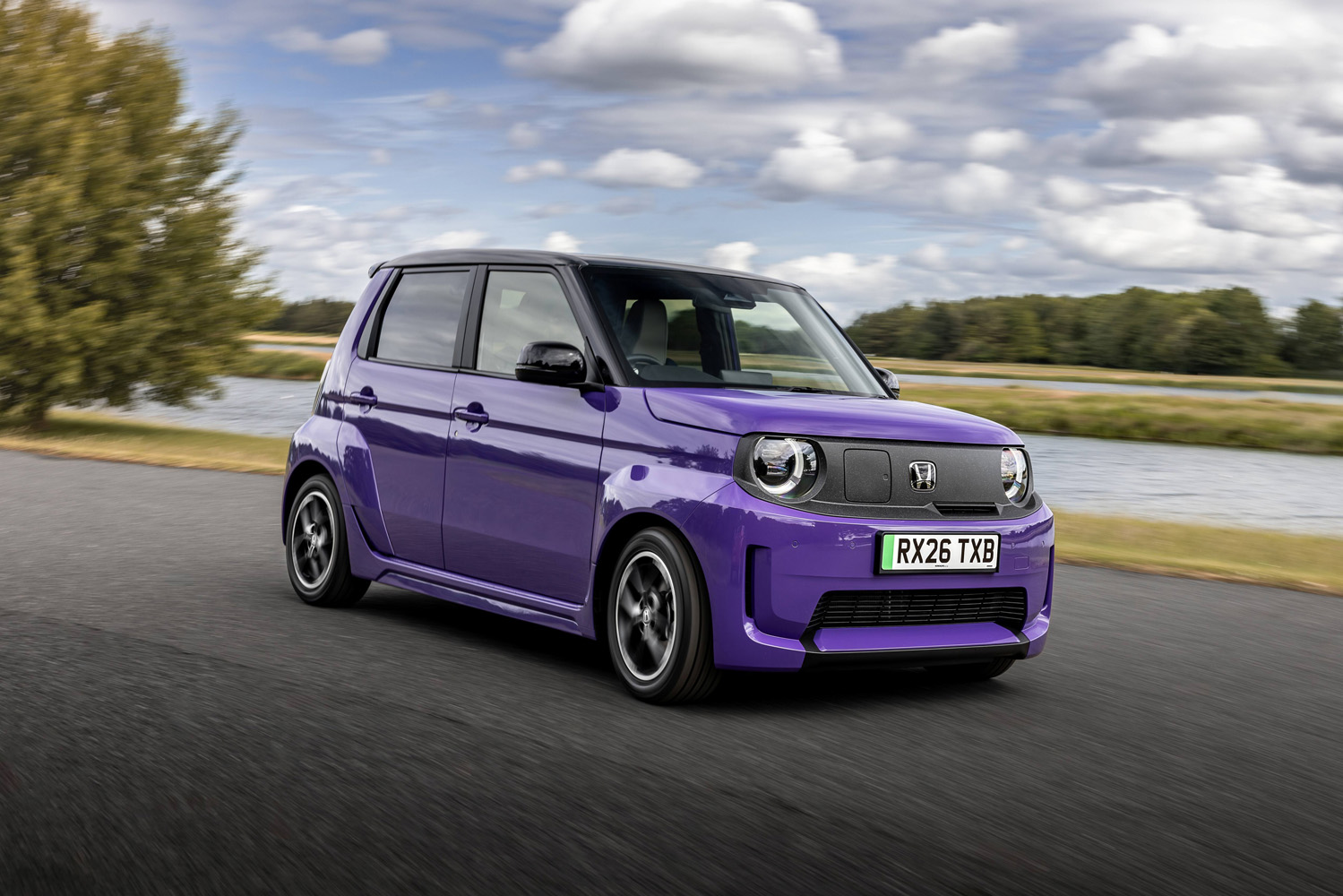
The Honda Super-N is based on Japan’s famed Kei car category – more specifically the petrol-powered Honda N-One – with compact dimensions and low power to reduce tax and insurance rates. Except this one has been given everything needed to make it work for the UK market, including suspension that’s more suited to the roads.
This is a very small car, which at just 3.6 metres long and 1.5 metres wide is brilliant for cities, streets and tiny lanes. Even with cool bulbous arches over the proper 15in alloy wheels and a squat stance, the Super-N is still super compact and can be parked just about anywhere.
My test car came packing racing stripes, which is just one of a series of options that allows buyers to accessorize their ride and personalise it a touch more. This also extends to seat coverings along with other cosmetic tweaks. Those seats, incidentally, are ‘magic’ and work in much the same way as those found in the Honda Jazz. That meant I could increase the load carrying capacity from just 162 litres right on up to 967 litres if I wanted to fill the back right up. This was easily done too, thanks to a low and practical opening at the rear.
I thought the interior was pretty good. The seats were nicely styled and, despite being quite flat, very comfortable both in the front and the back. Space in the rear was impressive too, with the high roofline giving any adults on board, front or back, plenty of space. The Honda Super-N is a narrow car though, so chunky types might find shoulder rubbing will occur. A flat floor helps the interior space and layout.
Cubby holes and storage were fairly meagre., but up front I liked the neat little cup holder on the top right of the dash. I would have liked a rubber liner on the dashboard shelf for my phone though, as the hard plastic meant it would slide around in transit. Small cost-saving irritations aside, the interior was a success.
The drive
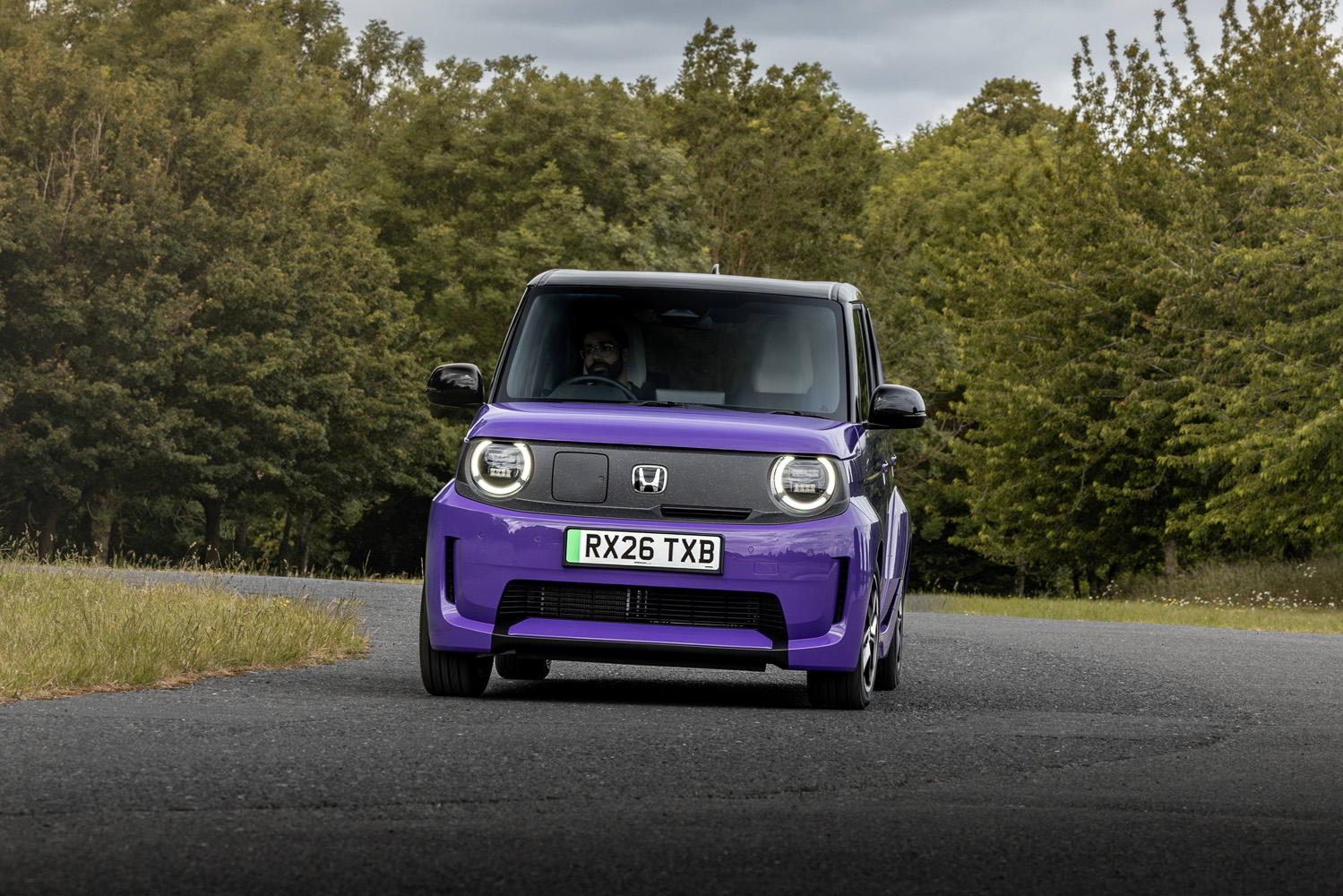
The 1097kg Honda Super-N is light by electric car standards. While not a fast machine by any stretch of the imagination, its small size and low weight meant that it was surprisingly agile. Around town, I found the Super-N nigh on perfect: it was surprisingly quick away from the lights, even before I discovered the Boost’ button mounted on the steering wheel.
This effectively unlocks more power from the electric motor, adds gear change options (either automatically or via the paddles on the steering wheel) and throws in a simulated engine noise for good measure. I thought it was great fun, especially when the three small dials appeared on the dashboard display to add a little theatre to proceedings.
Boost made the Super-N very sprightly too, offering 94bhp instead of the standard 63bhp and reducing the 0-62mph time from 14.5 to just 10 seconds. It also made overtaking and motorway slip roads much easier to handle. Meanwhile, driving around country roads with it engaged added a wodge of extra fun to the driving experience. Given its high-looking stance, the little Honda Super-N went around corners very nicely indeed. I had to keep more of an eye on the range using Boost, but it didn’t sap the power as much as expected.
I did also manage a 100-mile plus motorway journey in the Super-N. It fared surprisingly well and the efficiency levels reached a respectable 4.5 miles per kWh. The charger port hidden in the nose section was practical too. Naturally, I needed a stop to top up, which took the same amount of time as it did to use the loo and buy a sausage roll. The same went for the 100-mile journey back. The Super-N felt surprisingly assured on the motorway, with no major buffeting to worry about and just some tyre hum to contend with.
Parking was a doddle due to the short wheelbase and dinky proportions, plus there were parking sensors and a reversing camera that made the task even easier. Less impressive was the turning circle, which wasn’t as great as I’d been expecting. Still, despite the small wheels, the Honda Super-N could hop over speed bumps easily enough and the very long tailgate was another practical touch that meant bags could be easily lifted into the boot after I’d been to the shops.
The technology
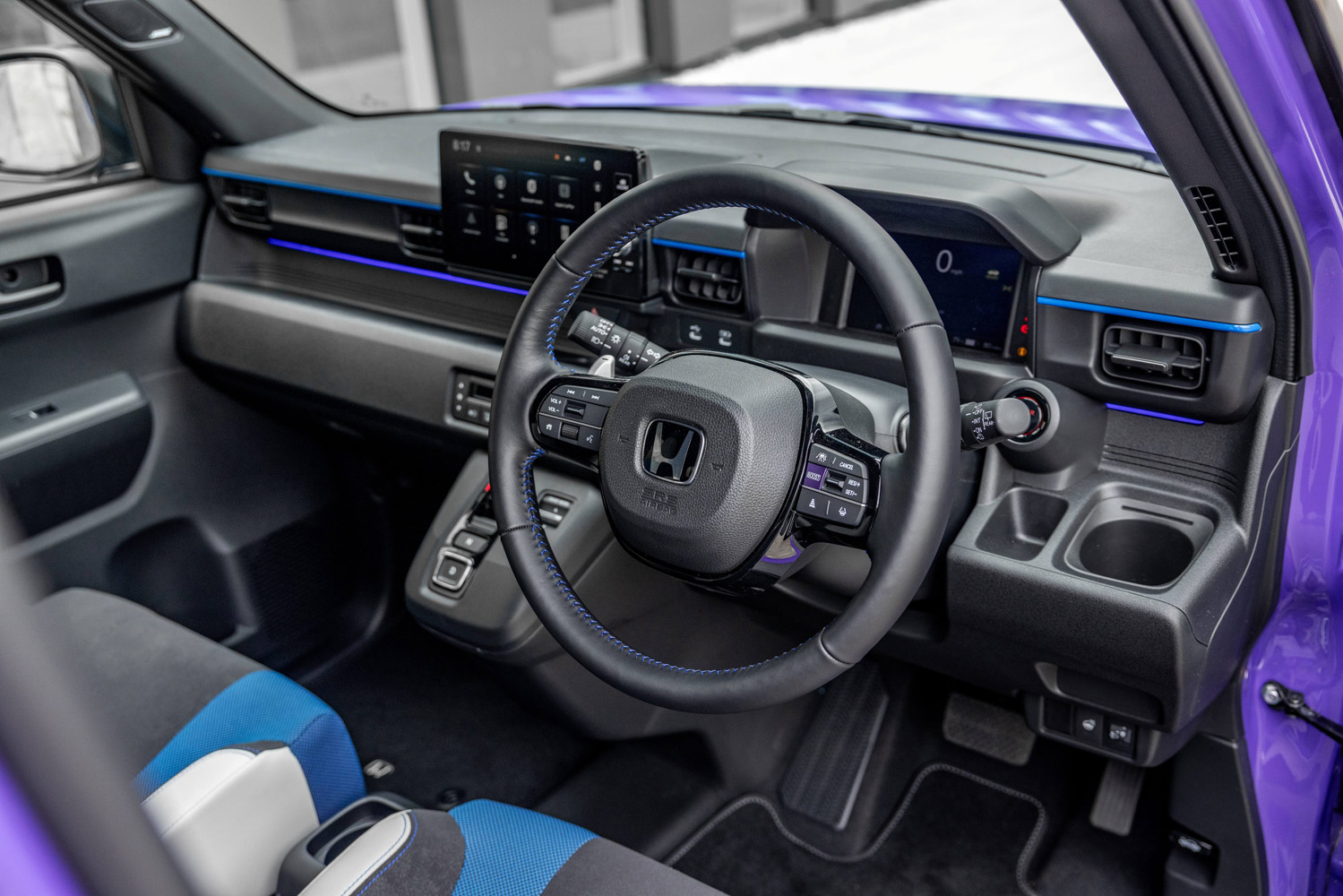
To be honest, the Honda Super-N feels a bit basic on the technology front. It comes fitted with the same 9in infotainment screen seen in other models across the Honda range and much like most other Japanese cars I’ve driven of late, the look and feel was on the old-fashioned side. The graphics are chunky and not particularly eye-catching, but they were easy to use and worked, so it wasn’t all bad.
Some functions took a bit of digging to find, but I did like the way I could use the steering wheel controls to change the 7in digital driver display to suit my needs. Range and efficiency settings were invariably the main option I chose, just to keep close tabs on how well that small battery was doing. I also liked the way I could cable connect my iPhone to use Apple CarPlay (Android Auto is also offered), which also gave me access to navigation because the car didn’t have any.
A real high point was the Bose audio system, with speakers that delivered excellent quality sound across the range including lots of bass. Helped perhaps by the interior space of this car maybe, as well as a subwoofer under the floor of the boot. If anything, the sound was a little too bass heavy and I couldn’t find a way of changing the levels. Nevertheless, the audio system was far more impressive than in some compacts I’ve driven, and it’s supplied as part of the standard package.
Honda Super-N verdict

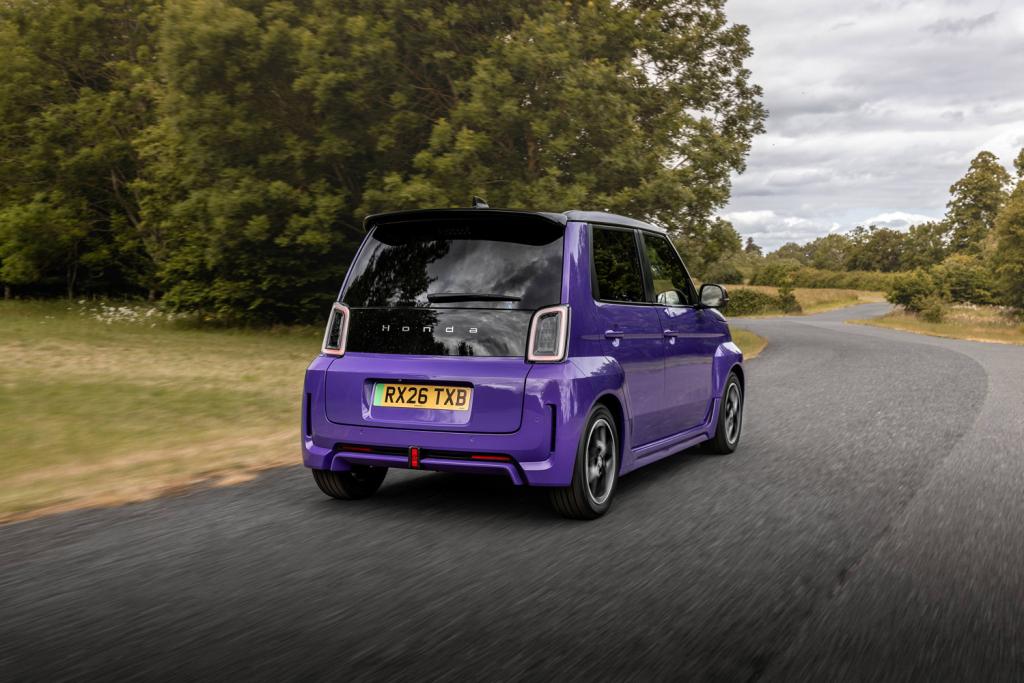
I was super smitten with the Honda Super-N and really didn’t want to hand it back. I think I could live with its stingy range as even a longer run wasn’t really all that much of a hassle thanks to much improved motorway charging stations.
I Ioved its drive appeal, plus the small size made it perfectly suited to congested town and city streets and the interior was generously proportioned all things considered. This car has a personality too. It’s cute, but with that Boost button engaged, it also provides the driver with heaps of fun. Yep, I seriously think I’d buy one.
Scroll to see more →
| Specifications | Honda Super-N |
|---|---|
| Powertrain | Permanent magnet electric motor |
| Battery | 29.6kWh |
| Power | 63bhp (94bhp boost) |
| Torque | 120lb-ft |
| 0-62mph | 10sec |
| Top speed | 83mph |
| Range | 128 miles |
| Maximum charge rate | 50kWh |
| Cargo volume | 162 litres |




Read the full article here


