








When Brian Fantana slathers himself with ‘Sex Panther’ cologne in Anchorman, he’s convinced his suave new scent will prove irresistible to the ladies, not least because he’s fallen for the hilarious hype that “60% of the time it works all the time.” But as anyone who has watched the film knowns, the scent does not have the desired effect (and it seems there is a very good reason why Sex Panther is illegal in nine countries).
Perhaps humans are often offended by very strong scents because we have great noses. Granted, not as great as dogs, for example, but good enough to smell more than one trillion smells. This is pretty impressive, but potentially a little annoying if you’re easily offended by smelly socks and strong aftershave, for example.
While Fantana’s cologne choice was intentionally absurd in the film, his mistake is worryingly universal – we often become blind to our own smell, including BO.
Why can’t we smell ourselves?
We have specialised sensory cells in the nasal cavity that detect odor molecules and convert them into electrical signals for the brain. Simply put, when we become accustomed to common smells (even nasty ones… wet dog, damp, body odor) these olfactory receptor neurons become less responsive to them, and our brain circuits also adapt, prioritising novel stimuli, so that constant smells are filtered out. This is called olfactory fatigue, or colloquially, noseblindness (or going nose blind). But the receptors can become responsive again – perhaps after a break from a certain common smell.


No-one knows (or should that be nose) exactly why humans become nose blind, although it is widely thought to be an adaptive filter that prevents sensory overload and keeps the olfactory system tuned to new or potentially important smells.
While there may be benefits to blocking out the smell of a damp dog or a teenager’s sports bag, body odor can be really useful and tell experts all sorts of secrets about our health. For example, BO can be used to detect disease, with diabetes allegedly smelling like rotten apples and cholera smelling strangely sweet. There is also the idea what smell can help us pick a mate. While the science is still a little iffy in this area, experts do know that men typically think women smell more attractive when they are most fertile, while men’s testosterone levels might help them smell sexier too. However, like a tempestuous romantic relationship…it’s complicated.
A lot what makes us smell like us – our own personal pong if you like – is down to genetics. But unfortunately, we can’t usually blame our parents if we smell unpleasantly pungent.
So, what causes body odor?
While wearing an overwhelming cologne is almost always a bad choice, sweating isn’t optional – for most of us at least. Interestingly, sweat doesn’t have a smell, but body odor happens when bacteria come into contact with the perspiration that our apocrine glands release.
The NHS says that exercise, hot weather, hormonal change, being overweight and certain types of medicine can make body odor worse, as well as having certain medical conditions. It can also be linked to excessive sweating. Hygiene, environment and diet are also key factors.


Sometimes, certain foods can change the way we smell. For example, veg like broccoli, cabbage, cauliflower, onions and garlic release sulphur-like compounds – e.g. allyl methyl sulphide (AMS) for garlic – that waft out through our pores, causing a pong.
“As the saying goes, you are what you eat; almost anything you eat will have some impact on your odor. But chances are, if it’s a common food amongst people you associate with, you’re less likely to notice the body odor from it, if at all,” said James Hayes of the University of New South Wales.
If you’re wondering what you smell like, there is a way of overcoming nose blindness. One way is to smell your worn clothes away from your body and other competing aromas. Why not seal a worn t-shirt in a bag for a few hours and give it a sniff? Another is to run your hands though your hair, over your scalp and smell your fingertips, apparently.
What can we do about it?
The simplest way to eliminate body odor is to shower or bathe to remove bacteria from your skin. The NHS recommends washing armpits, groin and feet twice a day with soap, and drying them thoroughly. But for some people, showing a few times a week -particularly after exercise – may be enough to banish BO without drying out or irritating their skin.

Antiperspirant or deodorant is the next step. Some antiperspirants contain aluminium-based compounds that temporarily block the openings of sweat ducts, reducing how much sweat reaches the skin, while deodorants inhibit or mask odor causing bacteria and often smell quite nice too. Then of course there are an array of natural options to choose from that some people love and others not so much. Like a penchant for Lynx – it’s personal.
Other basic advice given by the NHS (and every sex ed/PSHE teacher ever) includes changing and washing your clothes regularly and wearing natural fibres and wool rather than acrylic and nylon. For anyone with smelly feet, moisture-wicking socks changed at least twice a day should help. The NHS also recommends avoiding smelling or spicy food as well as alcohol. So, no Vindaloo and four pints in a tight nylon jumper on date night.
But, on a serious note, if BO is affecting your self-esteem, you notice in sudden change in your smell, or start sweating much more than usual, it’s worth talking to a pharmacist or doctor.
Cologne is probably not the answer
In a blow to Brian Fantana’s infinite wisdom, Dr Hayes said that masking BO with scented personal care products like cologne won’t necessarily make you smell nicer. He explained that this is because of the ‘strawberry problem’. Strawberries have about 24 chemicals that are responsible for their delicious smell, but our bodies don’t tell us we are smelling separate chemicals – just a strawberry. By comparison, the tangy smell of lemon mostly comes from a single chemical – limonene. Interestingly, if you have a lemon and a strawberry in a bowl, you can smell them both separately thanks to how our brain processes smells.
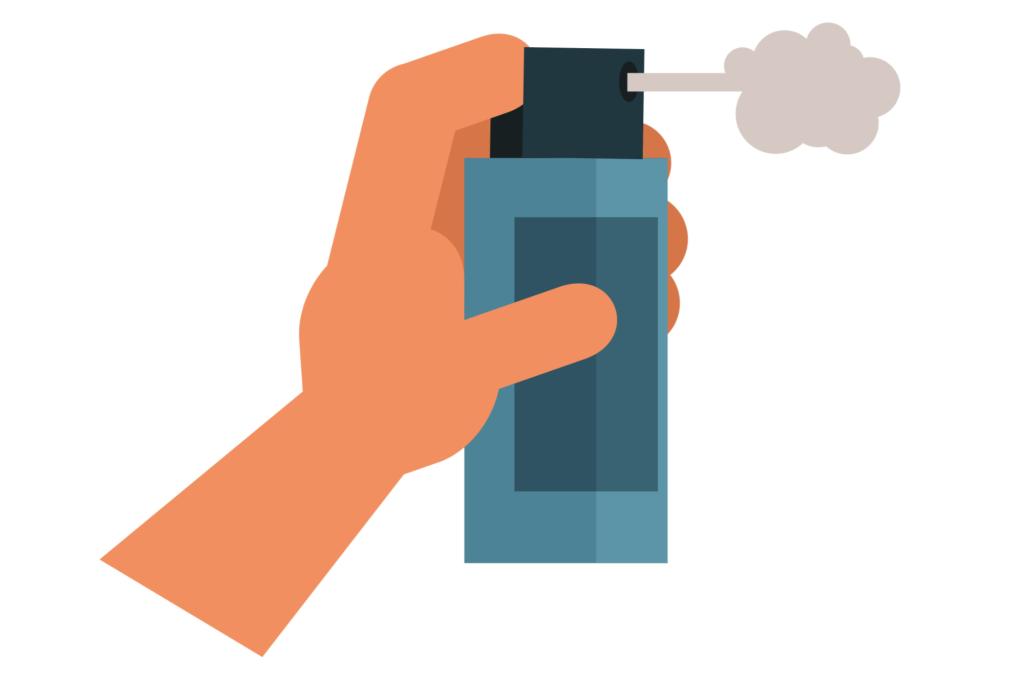
How is this relevant to BO? Well, the same principle applies to mixing cologne or a punchy deodorant with body odor. “Deodorant could be made of multiple chemicals and you detect it as one particular scent, even if it’s overwhelming your olfactory receptor neurons. Your brain, however, is still capable of putting the deodorant scent to one side and also noticing body odor at the same time,” Dr Hayes said. If you cast your mind back to the changing room after PE (where enough deodorant and body spray was probably used to create a small hole in the ozone layer above the school) you could still smell the BO, so ‘strawberry problem’ makes sense.
There’s another problem with trying to mask smells too. If you regularly encounter someone with strong BO who uses a particular deodorant or perfume, you can start to associate that smell with a bad experience linked to their natural smell. It’s what psychologists call classical conditioning.
So, the best thing to do is to practice some classic hygiene instead and leave the aggressively smelly cologne to 1970s news anchors. “Time to musk up”? We think not.
Liked this? 5 incredible things to look for in the night sky this winter, from meteor showers to supermoons




Read the full article here


