







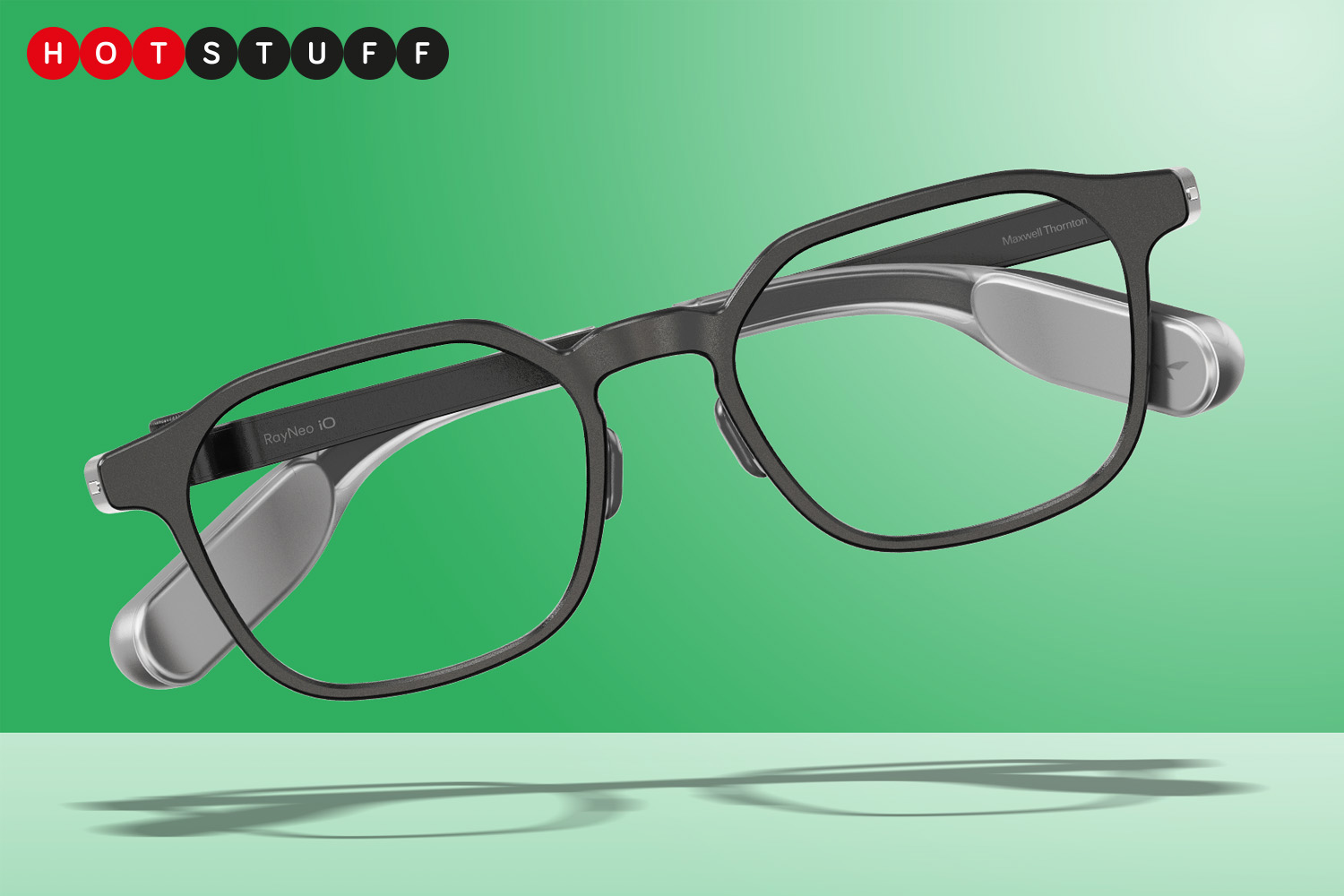
With all the hoo-ha around Meta Ray-Ban specs being “pervert glasses” – to the point they’re now being banned in pubs and theatres – I completely understand why RayNeo has gone down a different route with its new pair of wear-all-day smart specs. The iO Smart Glasses don’t have onboard cameras at all, yet should still be rather clever thanks to a built-in display. RayNeo is also primed to take on augmented cinema specialist Xreal with the RayNeo GT series.
Built from a mix of magnesium-aluminium alloy and aerospace-grade titanium, the ultra-light iO Smart Glasses weigh in at just 33g, with a 50:50 distribution to keep them perfectly balanced on your bonce. They look a lot more like a regular pair of glasses than any of Meta’s efforts – mostly because RayNeo has decided to ditch the cameras and built-in speakers.
Instead, a small head-up display puts simple text right in front of your eyeballs, from real-time foreign language translation to a teleprompter for presentations and speeches. You can expect a 23.5-degree field of view, with monochrome green text that should be readable in all conditions given it can shine at a peak 1300 nits.
The focus is on audio, with four integrated mics and a bone conduction sensor for listening for voice commands. RayNeo’s Ambient AI Productivity Suite is the clever bit; the firm says it listens out for “action items” and suggests things like calendar updates on the fly. It can apparently understand 55 languages and 109 accents in real-time, with a second of latency.
I’m not sure the average person will be able to tell the iO Smart Glasses’ indicator light (which turns on when recording or translating audio) isn’t also a sign they’re being photographed, though – and they’re still being recorded in another sense.
Battery life is pegged at 18 hours of continuous recording, 6.2 hours of translation, or two days of typical use.
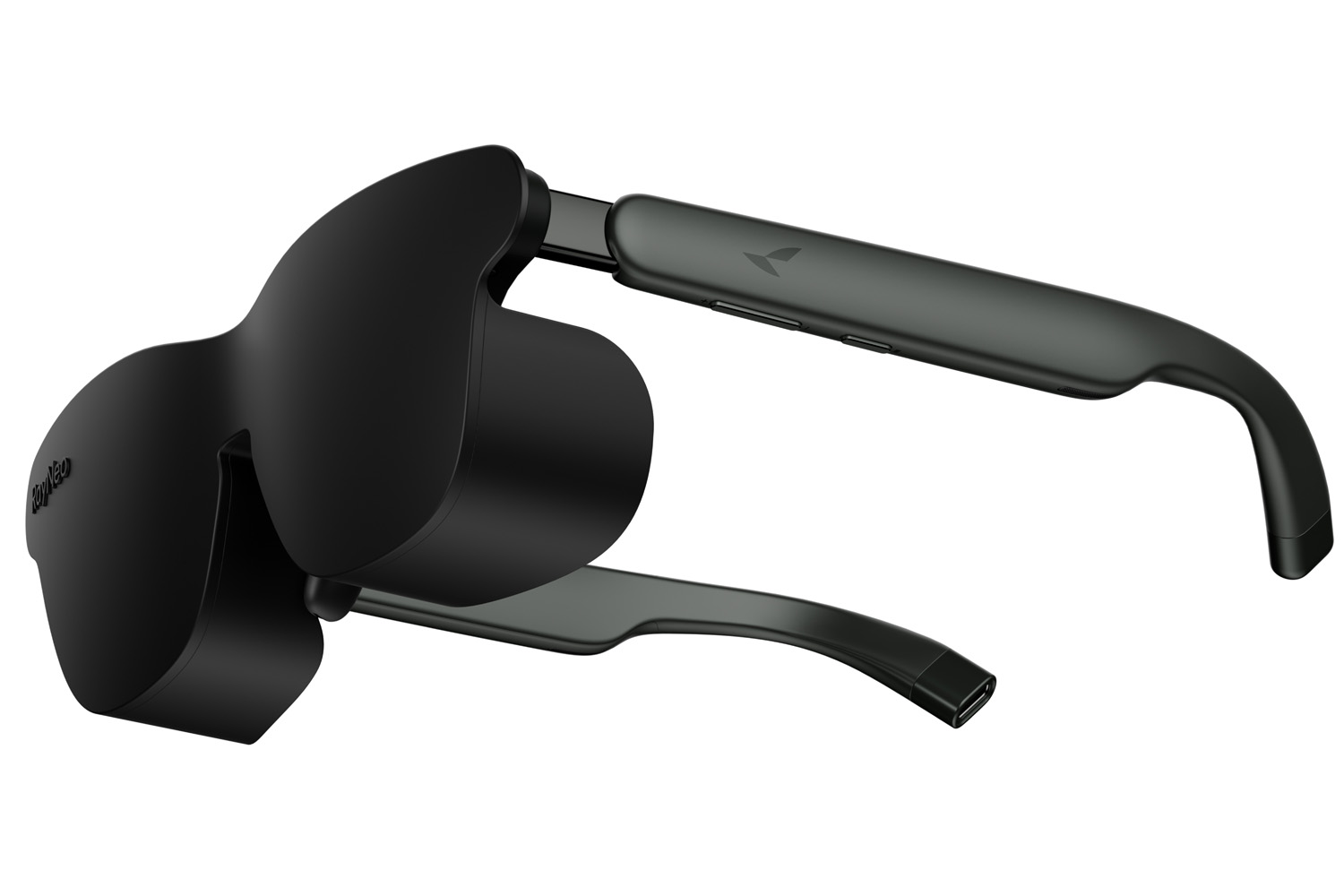
At the other end of the spectrum, the RayNeo GT and GT Max are mini home cinemas for your head; the GT has a 231in screen with a 46-degree field of view that the firm says is ideal for AR gaming and media viewing, while the GT Max has a “cinema grade” 307in screen and much wider 59-degree field of view. Dolby Vision HDR playback is on board once connected to the RayNeo Pocket TV Pro portable streamer, which runs the Google TV software.
Each also packs quad speakers tuned with help from Bang & Olufsen and 3DoF head tracking to lock the screen within virtual space.
They’re made from a mix of titanium alloy and lightweight nylon, for a shape that RayNeo reckons is 29% thinner than traditional AR glasses.
The RayNeo iO Smart Glasses will land in Polar Night (Dark Grey) and Dune (Gold) colours. The RayNeo GT and RayNeo GT Max are one hue only, but will be offered with official prescription lens inserts for glasses-wearers. There’s no word on pricing just yet – I’m expecting to learn more at Berlin’s IFA show in early September, when RayNeo shows them off in public for the first time.




Read the full article here


