



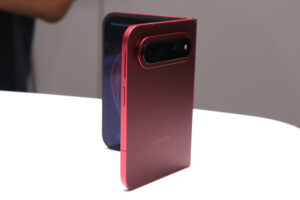


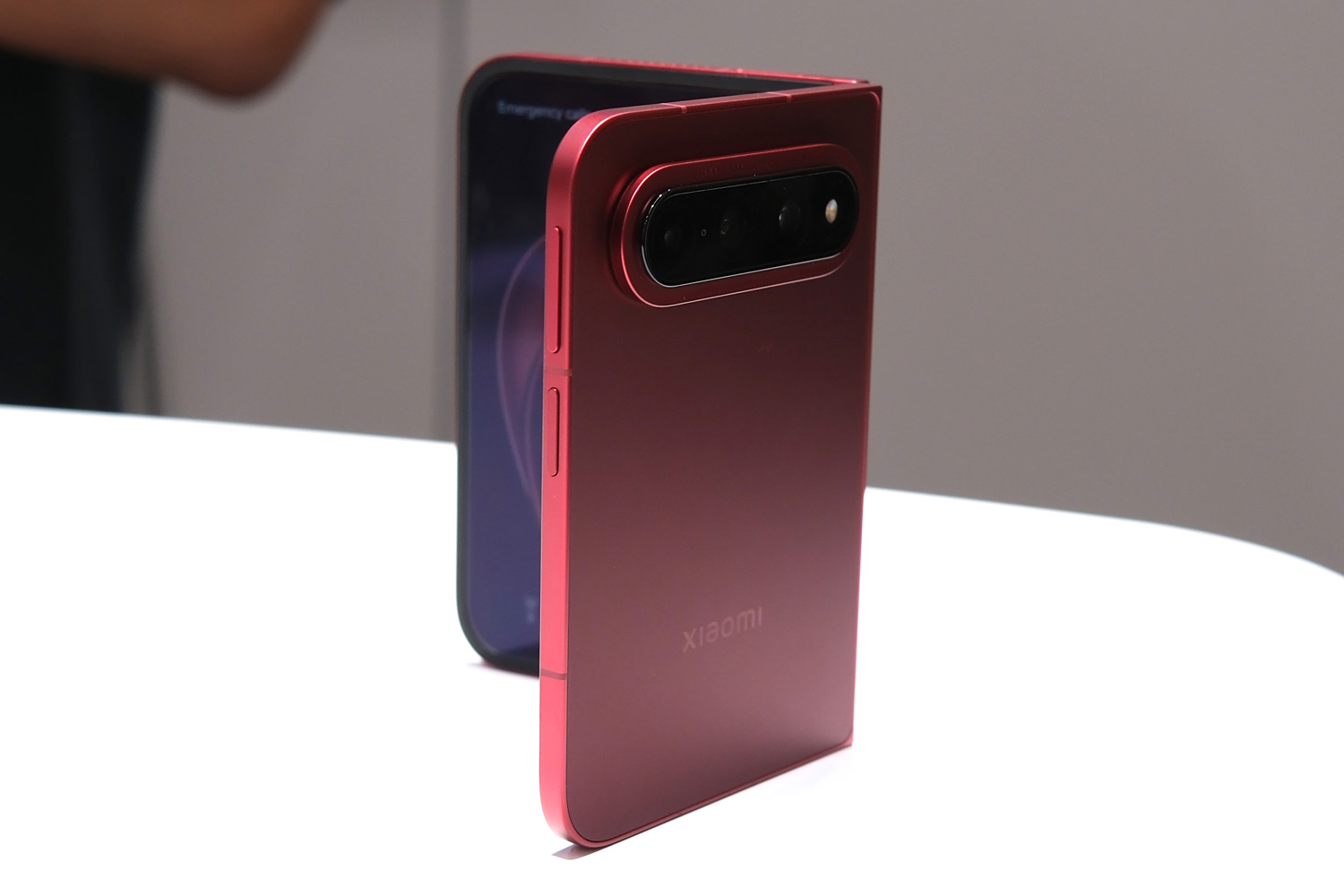
Samsung might’ve gotten there first, but Xiaomi just put a big smile on the faces of wide-style foldable phone fans that’ve been holding out for a true hardware hero. The Xiaomi 18 Fold squeezes a triple lens rear camera setup and a significantly bigger battery into a compact, passport-sized foldable – and crucially also scoops the imminent Apple iPhone Fold by a full 24 hours.
It was first revealed to the public at Berlin’s IFA show, but strictly behind glass. Xiaomi saved the launch proper for China, where the phone will predominantly be sold. I managed to get my hands on one ahead of time; after just a brief demo session, I’m wondering if this is now the wide-style folding phone to beat.
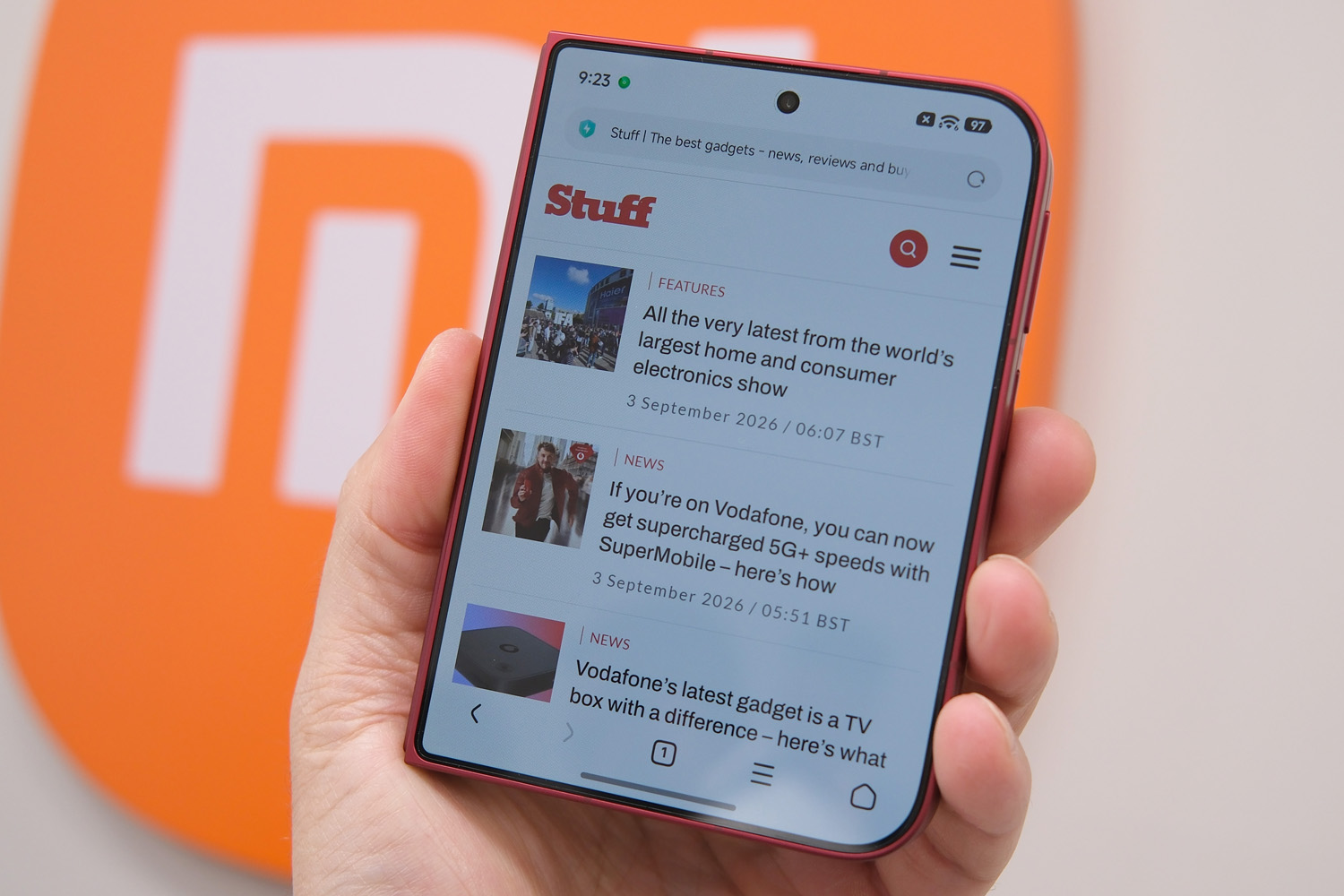
The Xiaomi 18 Fold is surprisingly small, being shorter than even the stubby Galaxy Z Fold8. I thought it looked gorgeous in cherry red, with sharp corners on the side neared the hinge and rounded ones on the outer edge that reminded me of the original Google Pixel Fold. Except here the bezels are impressively slim, letting the 5.38in OLED panel fill almost the entire front face.
Just like Samsung’s foldable the 18 Fold is passport-sized when shut, but opens out into a multimedia-friendly 7.58in form factor. Both panels have the same 2:1 aspect ratio, which should make transitioning between the two that much smoother. A 4000 nit peak brightness should make them both perfectly legible under strong sunshine and the 1-120Hz LTPO refresh rate should be silky smooth at all times. An RGB sub-pixel structure is a first for any foldable, too.
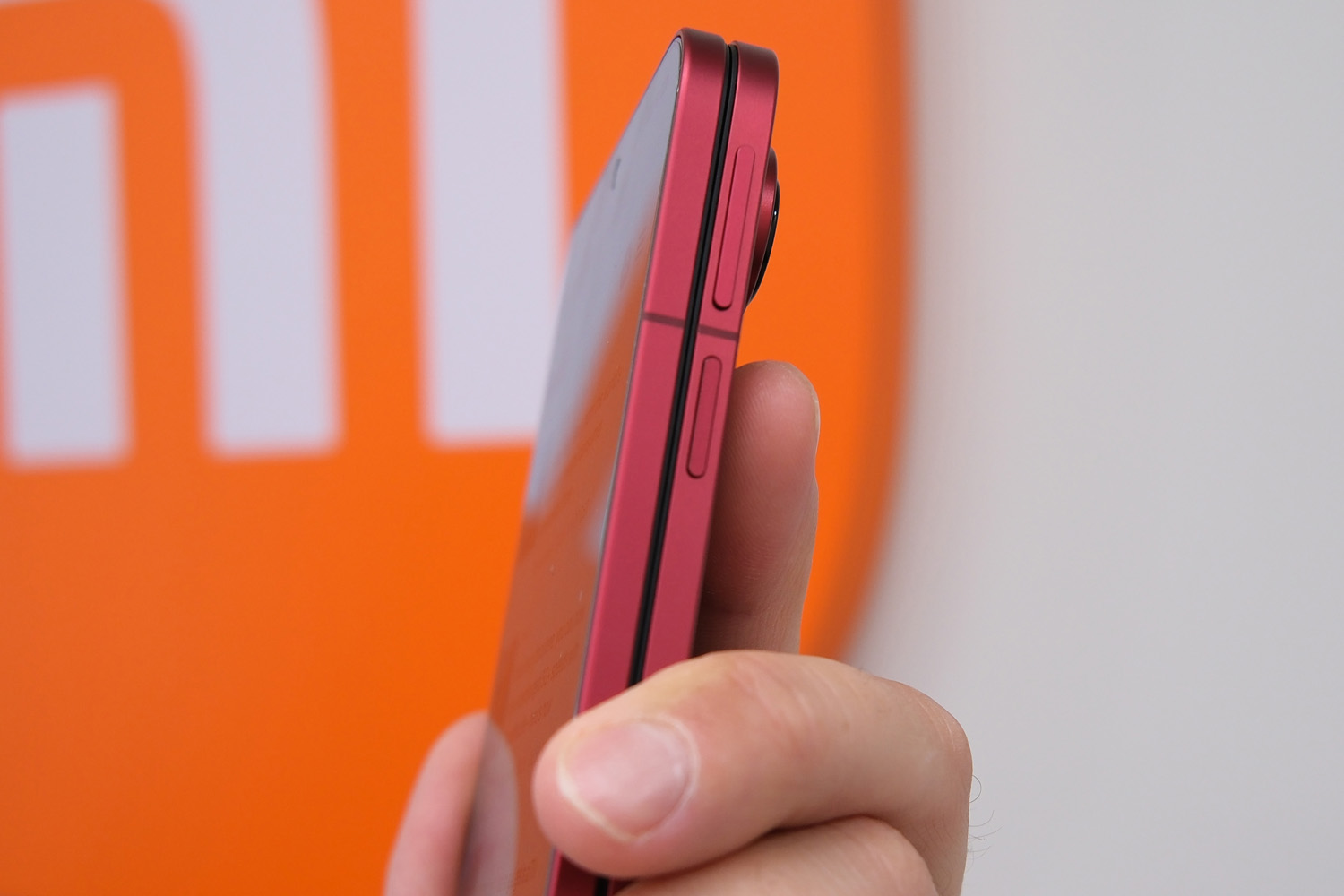
The hinge felt strong and secure, opening and closing with a satisfying snap. There’s a fingerprint sensor built into the power button and stereo speaker grilles at the top and bottom – though both are on the left half of the phone, which could make media playback feel a little lop-sided. I’ll have to wait for a full review to confirm. At 219g it felt no heavier than my current non-folding flagship phone.
At 5.02mm when unfolded it’s slightly thicker than the Galaxy Z Fold8, even before you take the phone-spanning camera bar into account. Xiaomi has opted for better battery life over a slimmer chassis, making room inside for a 6000mAh cell that should comfortably outlast anything Samsung or Google has on sale right now. It’ll also support 67W wired charging for speedy top ups.
Photography fans will be very happy to hear Xiaomi has added a dedicated telephoto lens – something the Galaxy Z Fold8 lacks and the iPhone Fold is rumoured to skip. Here you’re getting portrait-friendly 3.5x magnification on a 50MP sensor, which should then be able to manage near-lossless 7x snaps through sensor cropping.
The main snapper has a 200MP sensor, which at 1/1.56in is one of the largest found in any foldable right now. There’s also a 50MP ultrawide in support. As usual, the lenses and image processing algorithms were developed with help from Leica.
I can’t vouch for image quality just yet, but Xiaomi has made some of the best phones for photography in recent years, so I’m hopeful it can compete with non-folding flagships for clarity.
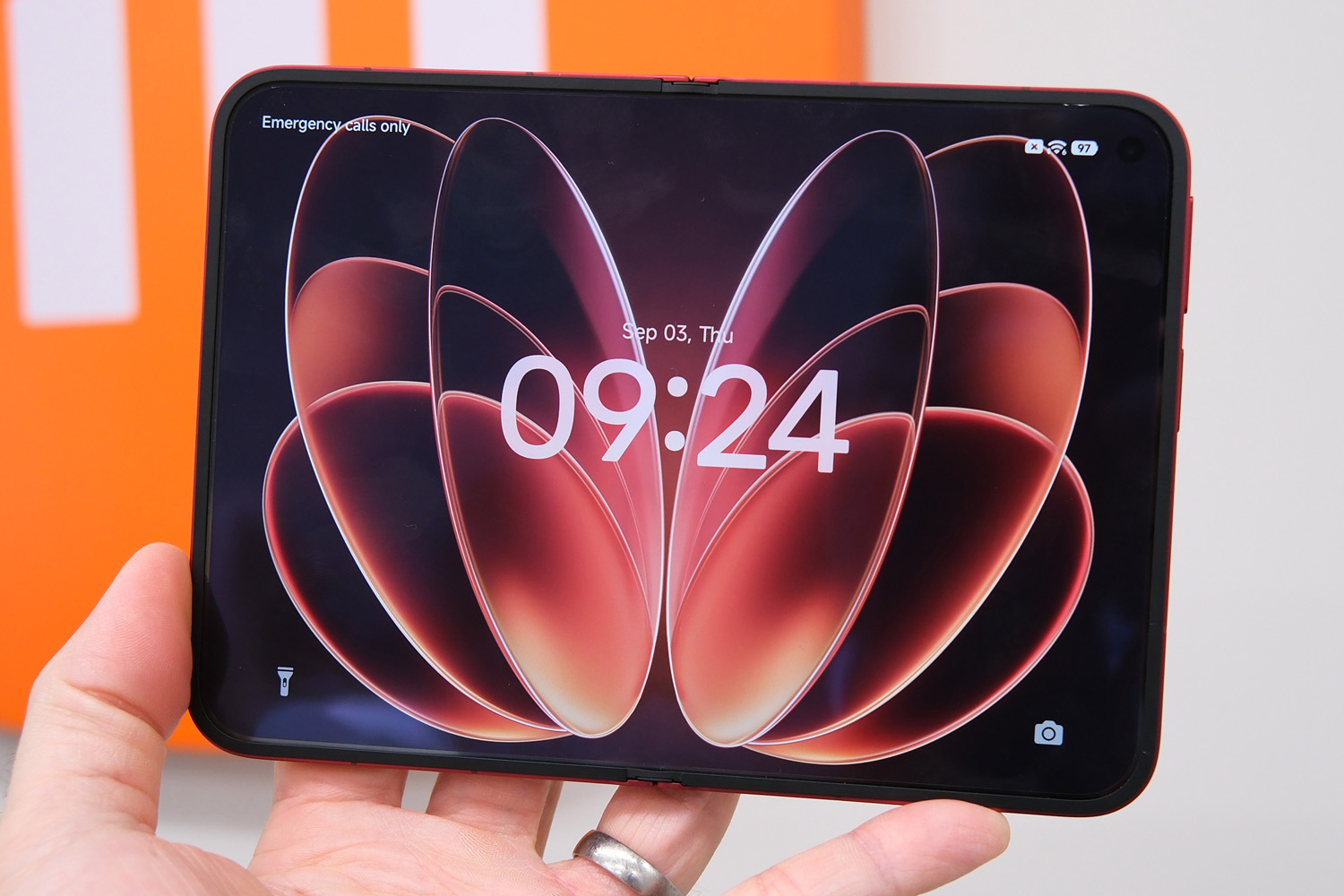
Inside, the 18 Fold is powered by Xiaomi’s home-grown X-Ring 03 chipset. It’s built on a 3nm process using ARM cores – ten of ’em, in a 6+4 configuration – and has a 4.35GHz clock speed. With no chance to run benchmarks or play any games I can’t vouch for its performance just yet, but Android 17 felt perfectly responsive. My demo handset was equipped with 12GB of RAM and 256GB of storage, but there will almost certainly be higher variants for those willing to part with more cash.
My demo was with a handset destined for the Chinese market, filled with apps I didn’t recognise and lacking the floating app bar seen on most Android foldables sold in the West. Split view multitasking was done via gestures that I couldn’t always get to work first time – perhaps the pre-release software still had some kinks. It’ll do two- and three-way splits.
As to whether there will be version sold in other territories, running a global version of HyperOS? That remains to be seen. The Xiaomi 18 Fold is currently only up for pre-order in China, where it’ll cost 10999 Yuan (roughly $1650/£1200) for the base 12GB/256GB variant. There’ll also be an exclusive Ceramic model, which swaps the glass rear panel for one made of silicon nitride ceramic – it’ll ship exclusively with 16GB of RAM and 1TB of storage for 15999 Yuan (around $2400/£1750). If it makes its way to Western countries in any form, I’d expect the retail price to be higher still.




Read the full article here


