

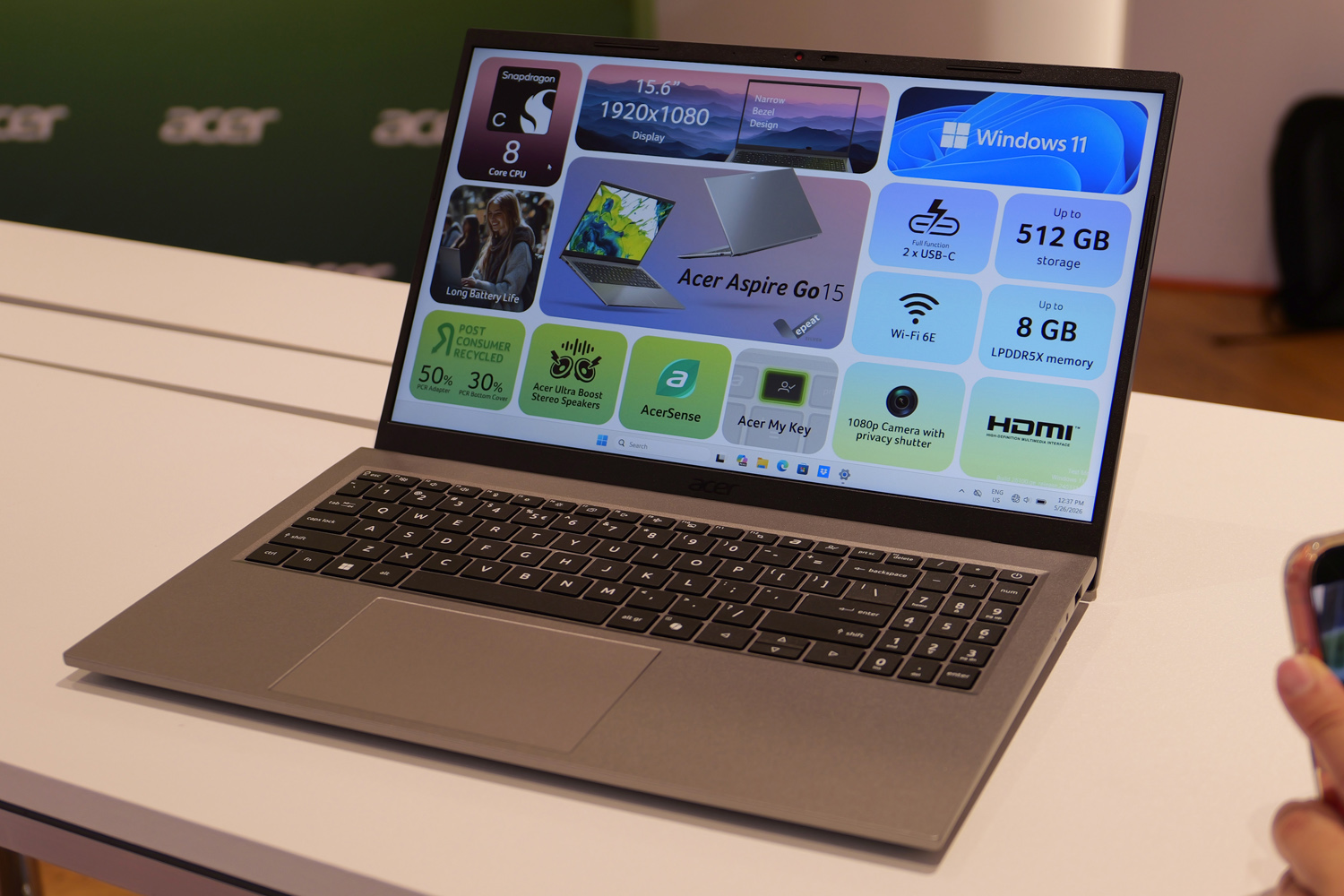
Qualcomm needs Snapdragon C to be a hit. The firm’s first foray into truly affordable laptop territory comes while the cost of memory and storage are still intergalactic (denting at least some of the appeal of its higher-end Snapdragon X2 silicon) and as Apple is turning heads with the budget-minded MacBook Neo.
While HP and Lenovo have confirmed they have Snapdragon C laptops in the works, Acer’s Aspire Go 15 was my first chance to try one out in person.
I walked away from a brief hands-on session ahead of this year’s Computex tech show thinking the foundations of a student-friendly machine were there – but also with a few questions left unanswered.
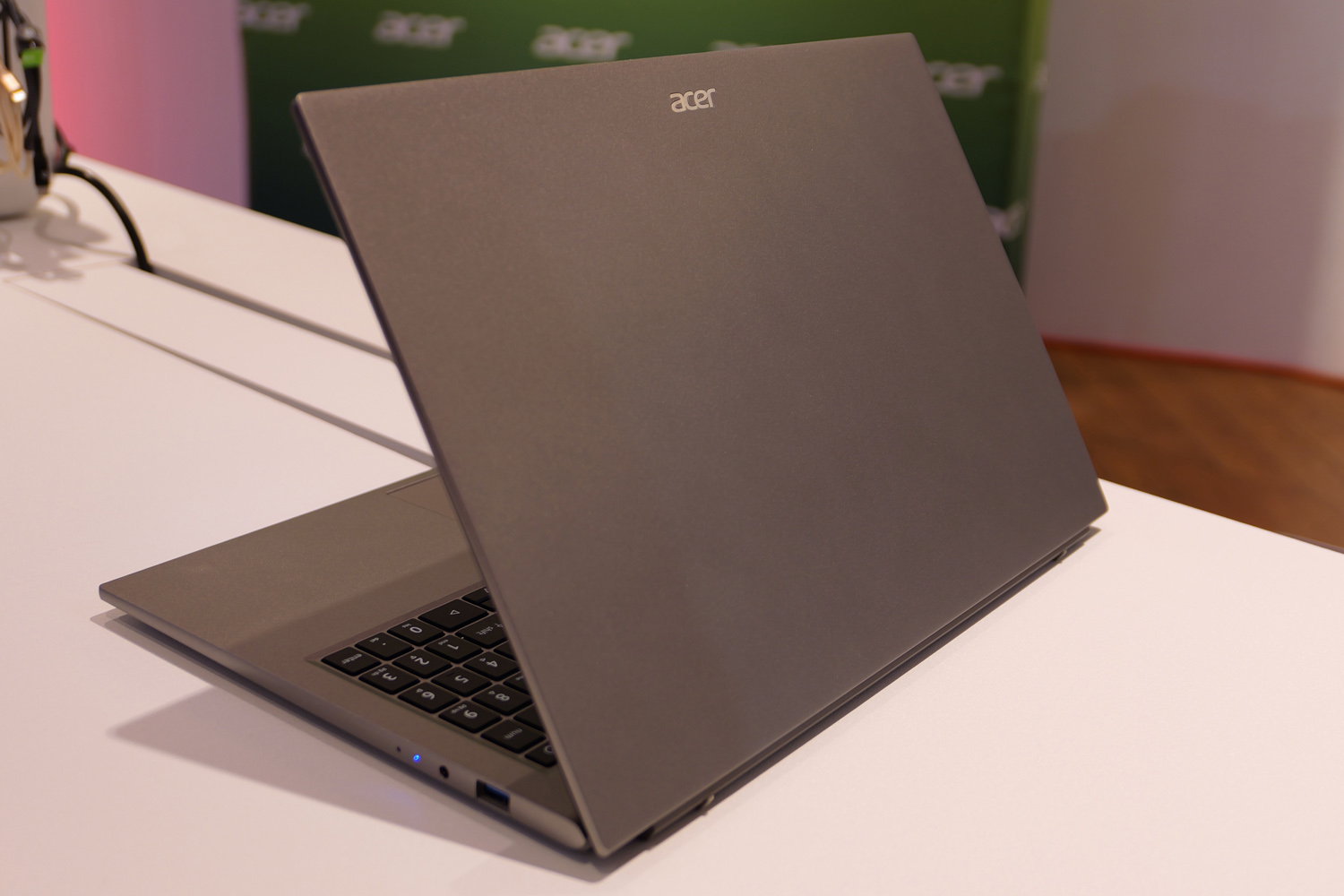
The Aspire Go 15 hardly breaks the Acer cheap laptop mould: it’s a silver wedge of metal and polycarbonate (mostly the latter) that’s reasonably slim and satisfyingly light. The materials weren’t final on the prototype I tried, which is probably a good thing – there was a noticeable amount of flex to the chassis. Here’s hoping Acer toughens it up between now and launch.
Branding is minimal and I like the way the hinge props the base of the laptop up as you open the screen, giving the cooling vents plenty of room to vent out hot air. Not that I expect Snapdragon C to run especially hot, as the internal fan’s exhaust vent is a teeny one. It was hard to hear at all during my hands-on, though Acer’s demo area wasn’t exactly library-levels of silence.
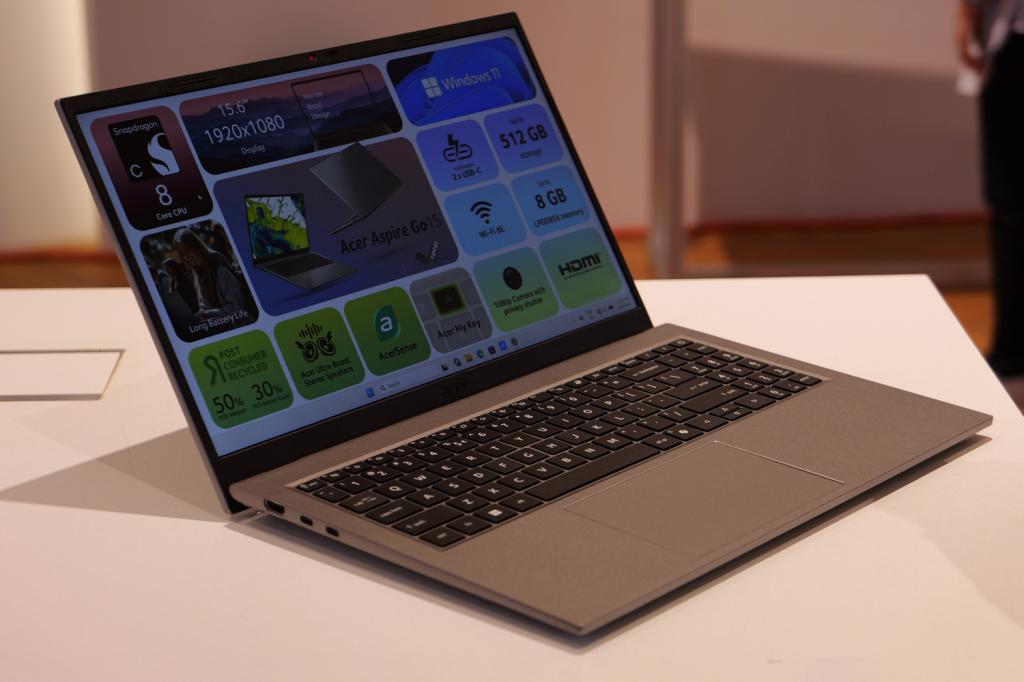
There’s a decent selection of ports at the sides, including two USB-Cs, full-size HDMI video out, 3.5mm headphone port and a single USB-A. That there’s no card reader isn’t a huge surprise. I did like that Acer avoided pinching the pennies too hard, so still managed to include a physical privacy slider for the webcam – which has a 1080p resolution to boot.
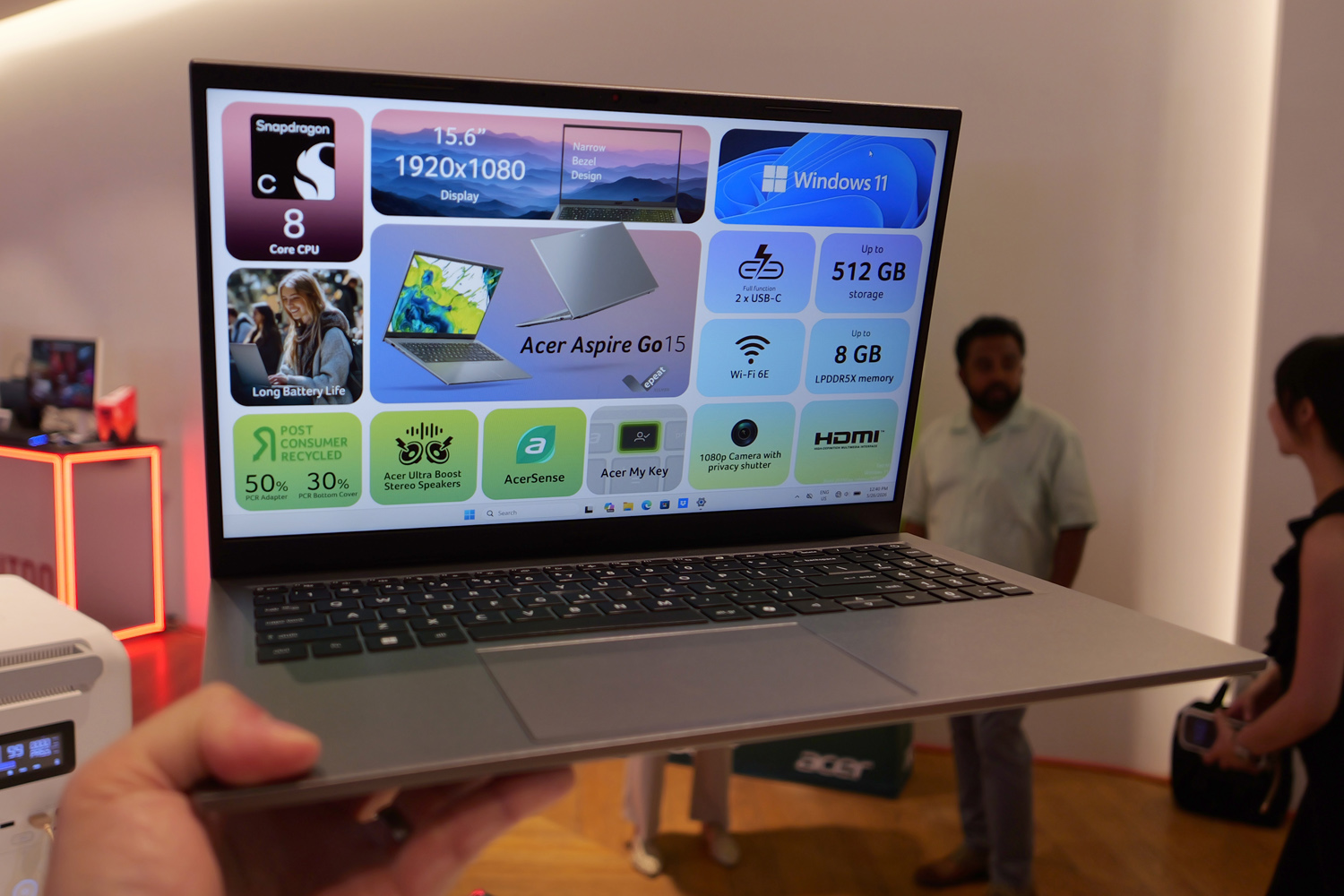
I can’t speak for the built-in speakers or go into too much detail on the 15in display, as we were restricted from doing much very beyond click around the Windows desktop. The Full HD resolution looked reasonably detailed, while viewing angles and brightness seemed on the money for a budget-conscious LCD panel. Colours seemed alright too.
How well Snapdragon C performs is also a mystery for the time being. With no benchmarking available and nothing of note preinstalled on the demo units, all I can say is that Windows 11 felt as nippy as I’d hoped. I’m expecting it to cope just fine with web browsing, multimedia playback, document work and light image editing – all the sorts of jobs you’d expect to task a low-cost machine with.
The fact you’re getting Windows here is a big deal; rival Chromebooks may be just as affordable, but Chrome OS simply doesn’t have the software support that Windows does. The ARM architecture does tighten the spread a little compared to laptops running x86 hardware, but not nearly as much as it did even a year ago.
All we really know is that the Aspire Go 15 will pair its 8-core Snapdragon C with 8GB of RAM and 512GB of storage. It’s unclear if there’ll be variants with more RAM and larger SSDs, although that does go against the spirit of “affordable computing” Qualcomm is keen to push for this new silicon. There’s a small amount of dedicated AI hardware here too, but not enough to earn Microsoft’s Copilot+ PC branding.
The 52Wh battery is expected to get you through most of a working day, although neither Acer or Qualcomm were willing to give me an exact figure.
At least the keyboard – an island-style affair with a numerical keypad and respectable amounts of key travel – was comfortable to type on. The touchpad wasn’t especially huge but was responsive enough to taps and swipes.
Whether the Aspire Go 15 (and Snapdragon C laptops in general) will prove popular with tech bargain hunters will depend on how low Acer manages to keep the price – though I also think the fact it runs Windows adds some extra appeal over similarly affordable Chromebooks. Windows remains the better choice for anyone that needs specific software, even with the restrictions an ARM platform brings.
With a launch not expected for a few months yet, however, we’ll have to wait and see if Acer can deliver the value that Qualcomm has only hinted at so far.
Thanks to Qualcomm for inviting me to be their guest at Computex 2026. All experiences were hosted but no additional compensation was received.


Read the full article here
