





Samsung has a been a giant of the modern flip phone resurgence pretty much from day one, but has stayed there by playing it safe. The Galaxy Z Flip8 might be the firm’s most restrained (some might say boring) effort yet, but this year’s effort does refine the formula in a few key places.
I got an early look at the Flip8 ahead of Samsung’s Galaxy Unpacked reveal event. While it doesn’t have the freshness factor of the short’n’wide Galaxy Z Fold8 or the high-end hardware of the Galaxy Z Fold8 Ultra, I still walked away impressed by how Samsung is finally making proper use of that outer display, and continues to slim down the dimensions year-on-year.
A thinner but familiar face
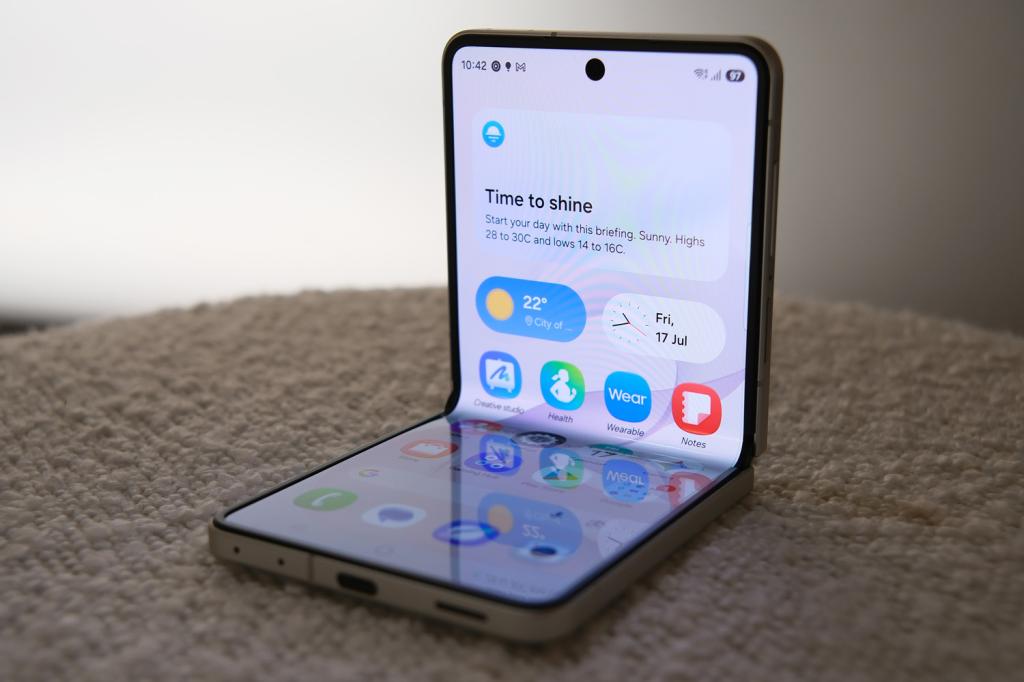
You’ll have to bust out the calipers – or be very familiar with Samsung’s colour schemes – to spot the difference between the Galaxy Z Flip8 and it’s Z Flip 7 predecessor. The overall look and feel hasn’t changed, but the firm has managed to trim a few fractions of a millimetre of bulk. It now measures 6.1mm thick when opened (not counting the camera lenses), down from 6.5mm. It’s also eight grams lighter at 180g.
It’s still a sharp looking flip phone, all sharp angles and flat surfaces, but one that doesn’t really do anything different from last year. Samsung’s ‘Armor aluminium’ frame returns, while the hinge uses a new “high strength material”. I couldn’t tell the difference. It still opens part-way to use clamshell-specific features like Flex Cam and split view, and still slams shut with plenty of force. It’s even easier to slip into a pocket now too.
The colour options are definitely more restrained this year. Graphite, Cream and Pink just don’t have the impact of the Flip7’s Blue Shadow; the Mint model is exclusive to Samsung’s web store but even that is on the subtle side.
Finally, a usable outer display
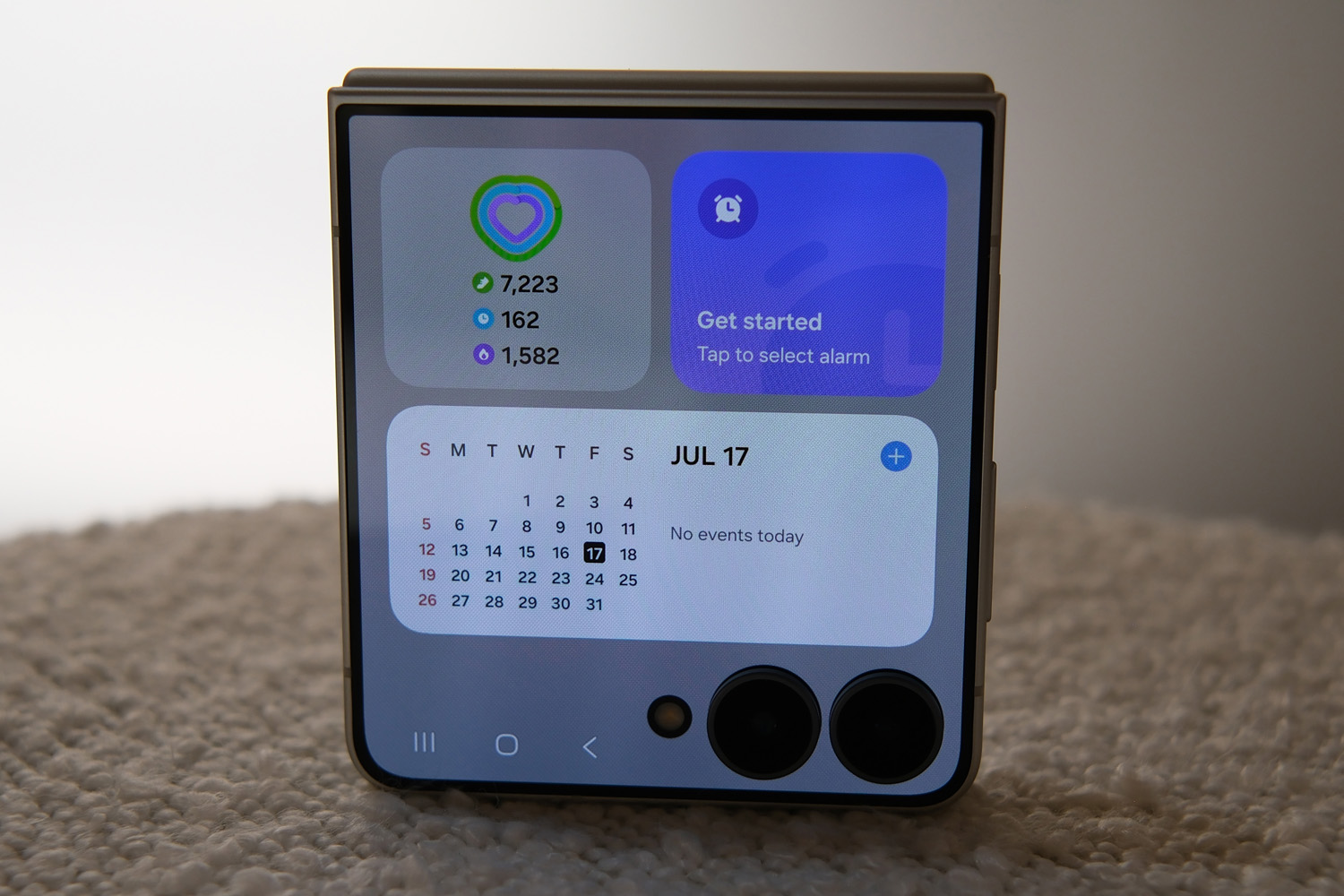
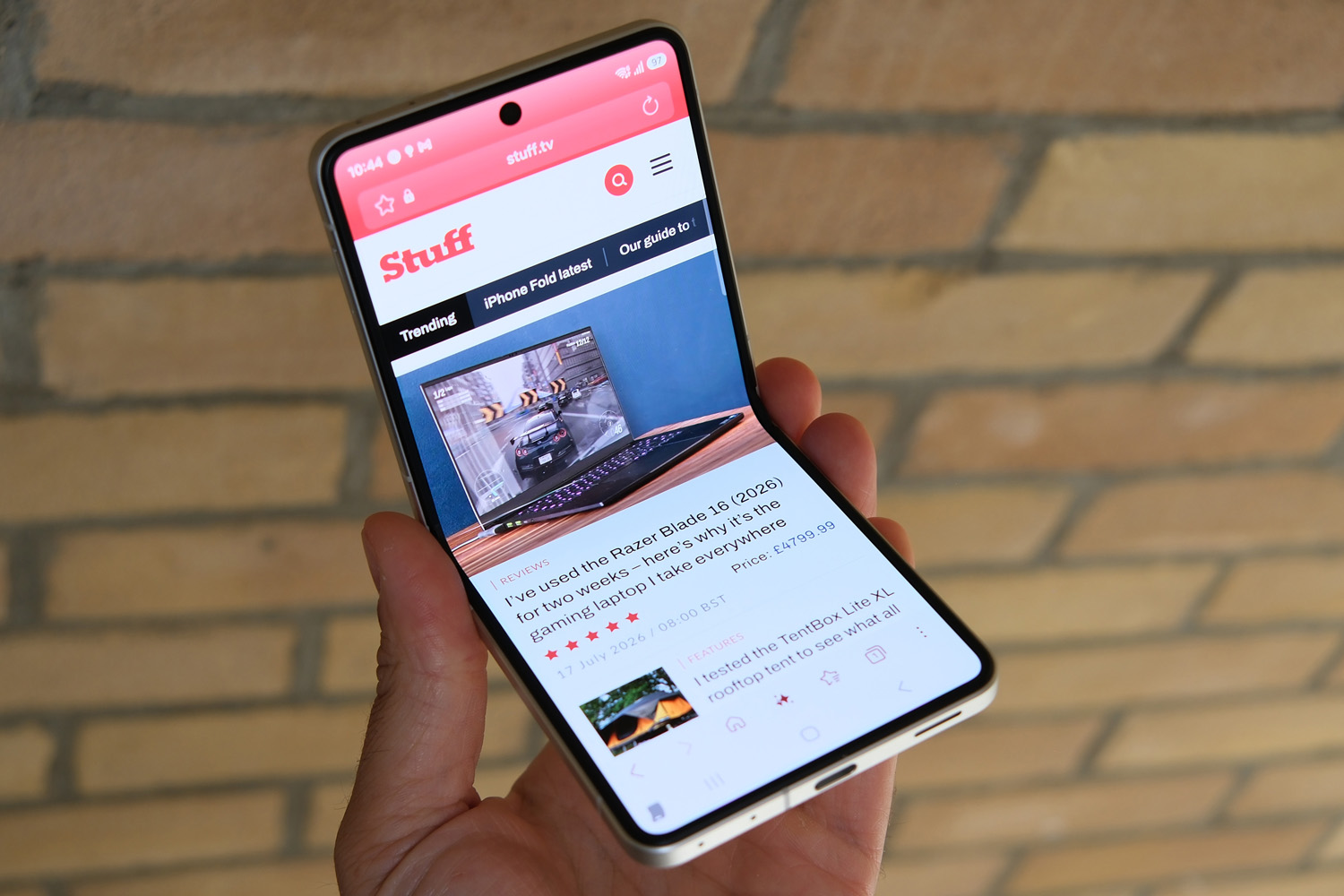
The screens themselves haven’t changed, so you’re still getting a 4.1in AMOLED up front and a 6.9in, 21:9 ratio panel inside. They’re just as bright, just as high resolution and just as quick to refresh as last year. It’s what you can do with the outer screen that will make all the difference.
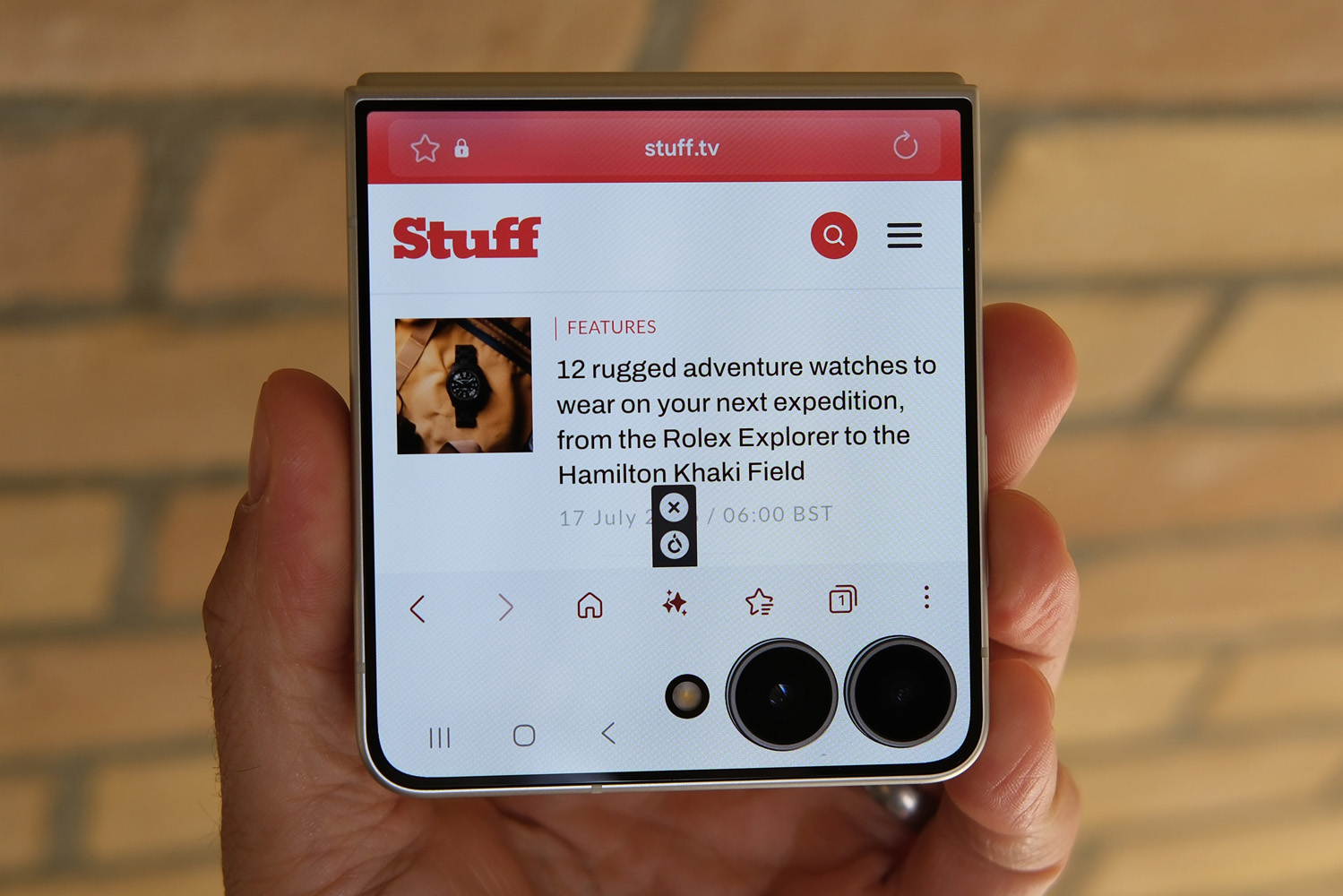
On previous Flips, the outer screen was a glorified widget viewer. Samsung made you jump through hoops to get apps to function, either by digging in the menus or downloading one of its Good Lock power tools modules. Here, you finally get full versions of Samsung’s photo gallery and web browser, along with a full-blown app drawer and a recents menu. Notifications and quick settings are here too.
It’s essentially entirely usable now without opening the phone up. I’m genuinely excited to see if it transforms how I use a flip phone in the same way Motorola’s recent Razrs – which have offered full app compatibility on the outer screen for multiple generations now – did.
Of course Samsung couldn’t let this change be devoid of AI, so Now Nudge and Now Brief have been updated to make better use of the outer screen. I’ll need to see them in action properly before I know if they’re worthwhile inclusions or not.
Phone photographers won’t be thrilled
A quick look at the spec sheet paints a picture that’s very similar to last year. An Exynos 2600 might be a generation newer than the chip seen in the Flip7, but it wasn’t much of a speed demon when I tried it in the Galaxy S26. Then again, the Flip has never been about power – you step up to the Fold or Ultra if you want maximum performance muscle in Samsung land – and it felt perfectly responsive during my brief demo.
You get 12GB of RAM and 256GB of base storage, with 512GB being an option if you need extra capacity. That should be plenty for most people. Same goes for the 4300mAh battery, which while very small compared to non-folding flagships should still be good enough for a full day of average use. Unless Samsung has worked miracles with software optimisation, however, I think the bigger battery Motorola Razr 70 Ultra may have the longevity lead.
There’s also little to get too excited about on the camera front, with the same 50MP main snapper and 12MP ultrawide as the Z Flip7. These were middle of the road sensors last year, but did enough to earn the win over Motorola – the only direct flip phone competition in Western markets. I’ve yet to try the new Razr 70 Ultra, but its LOFIC lead lens could give it the low light lead. That said, Samsung’s image processing is usually more consistent. Horizon lock stabilisation for the Flex Cam video recording is the most interesting new addition for 2026, which is to say there’s very little here we haven’t seen before.
Samsung Galaxy Z Flip8 initial verdict

If the rumours are true and this is indeed Samsung’s last clamshell-style phone, it’ll be a real shame. On first inspection the Galaxy Z Flip8 appears to finally make good use of its outer display, while keeping the clean lines and sensible specs that made previous iterations a go-to ‘first foldable’ for many. A slightly thinner and lighter build is welcome, as is the tougher hinge.
However, such minimal hardware changes everywhere else are hard to stomach given the higher starting price. The blame can’t be laid entirely at Samsung’s feet – the ongoing electronics component cost crisis is industry-wide – but £1149 (no US pricing was confirmed at the time of writing) is a big jump from when the Flip was a viable alternative to the non-folding Galaxy S. Then again, the Motorola Razr 70 Ultra is even more expensive.
Foldable fans may be tempted to save a bit more cash and move up to the new passport-sized Z Fold8, but if you can’t get enough of clamshells, I expect this will still fit the bill rather nicely.




Read the full article here


