


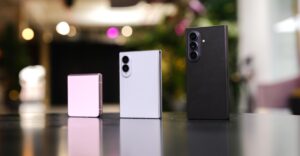


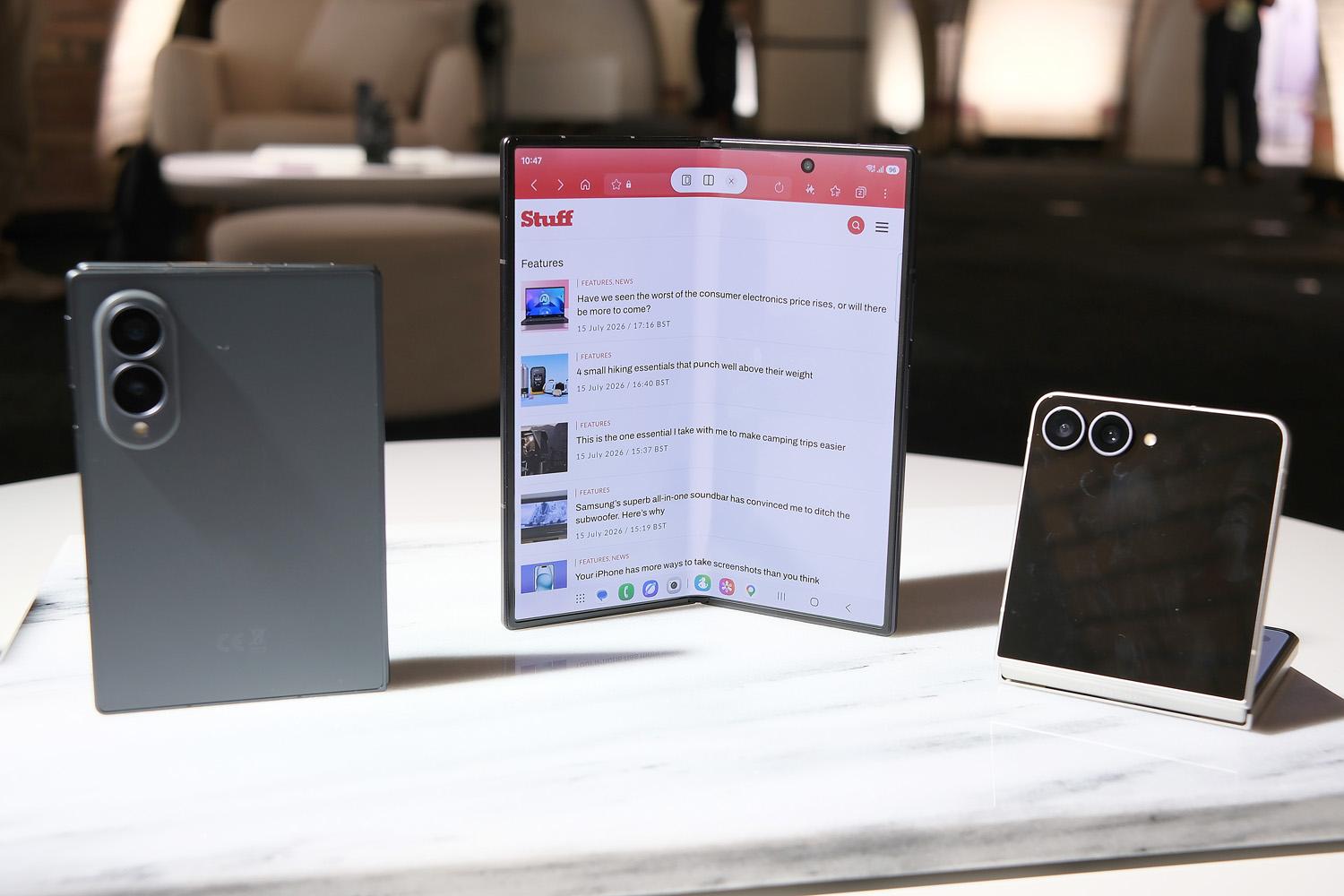
The foldable phone faucet has just been well and truly opened. Samsung just unleashed three new models at its London Unpacked event: two familiar faces and one all-new arrival. The Z Fold8 Ultra, Z Fold8 and Z Flip8 are three distinct takes on the foldable formula. Now that I’ve fondled all three, there’s a clear front runner that I’m genuinely excited to live with.
While it’s great to see Samsung finally letting the Z Flip8 run apps on its outer screen and the Z Fold8 Ultra’s bigger battery is a bonus, it was the pocket-friendly Galaxy Z Fold8 that I kept going back to in my pre-announcement demo session. The new shorter, wider shape is unlike anything else out there right now – and also feels like a return to the small phones many tech fans thought had gone forever.
Passports, please
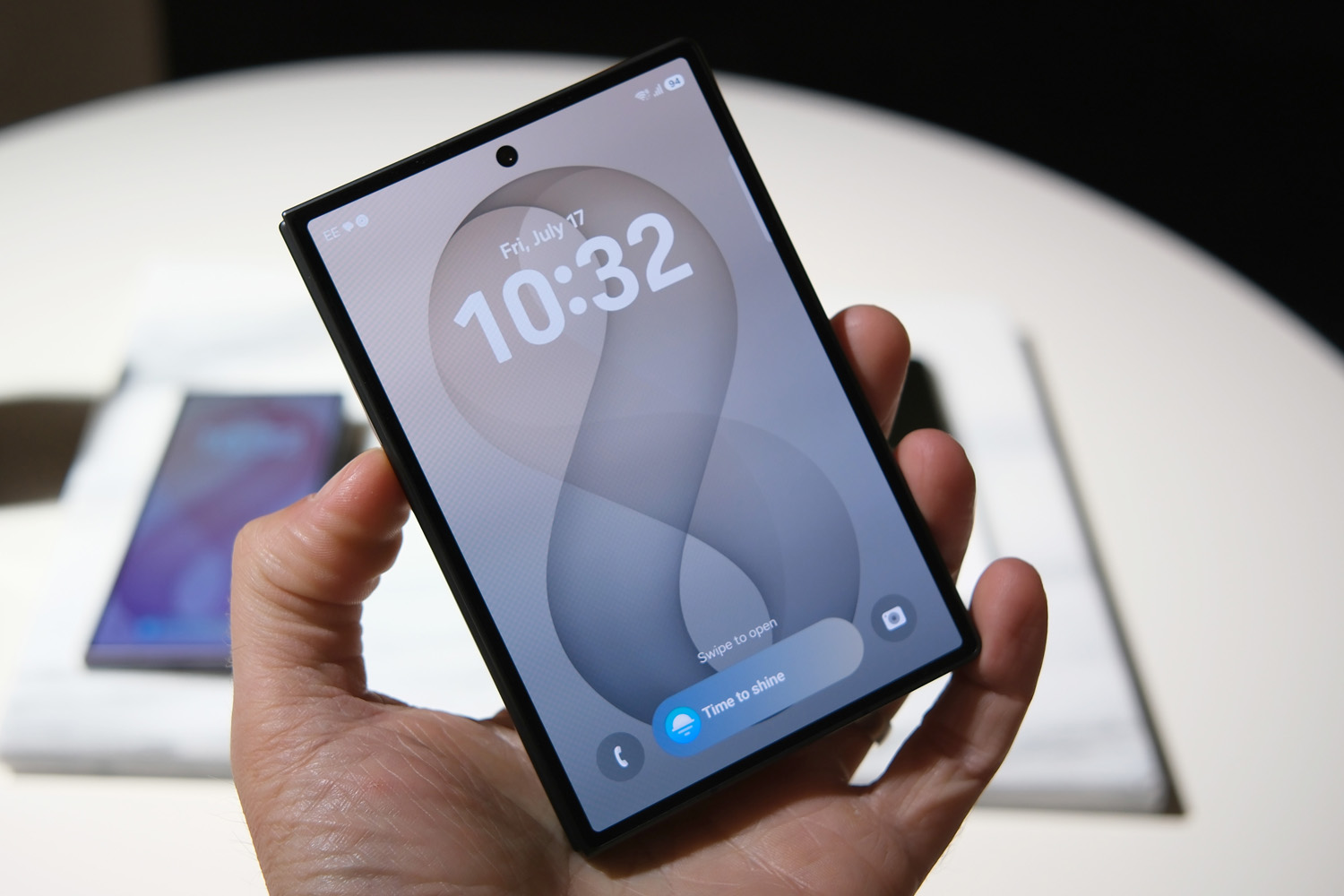
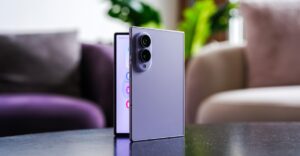
Styling-wise the Z Fold8 is a dead ringer for its larger sibling, which in turn isn’t that far removed from the outgoing Galaxy Z Fold7. Both keep Samsung’s angular shape, boxy corners and conservative colour choices (Graphite, Cream and Lavender make the cut this year, and even the online exclusive Pistachio isn’t too in-yer-face).
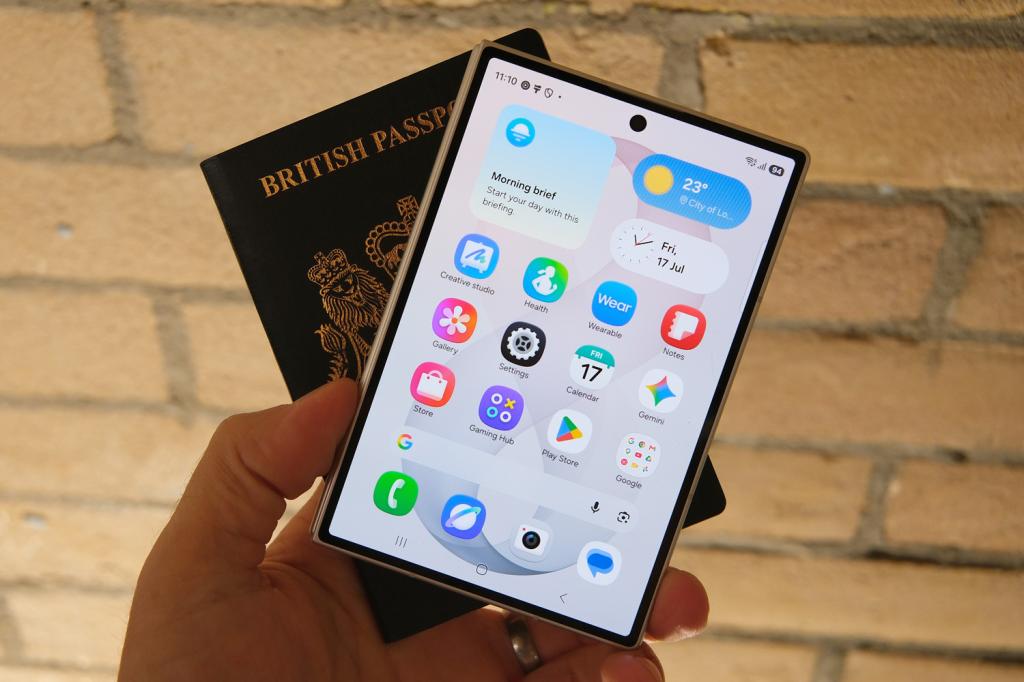
It’s the dimensions that make the Fold8 feel unique. The 5.5in outer display has a 10:16 aspect ratio, making it a dead ringer for the passport I’d left in the travel bag I brought to my briefing session. It’s wide, but not uncomfortably so – I could still hold it securely with one hand while being able to reach the majority of the screen with my thumb. With less vertical room apps might require a bit more scrolling, but the interface never felt squashed like it did on the slender Galaxy Z Fold7.
This phone feels properly compact in the hand while folded shut and is impressively light at just 201g. It slips perfectly into a pocket. I unsurprisingly had a few flashbacks to 2014’s BlackBerry Passport, just without a physical keyboard hogging up half the screen space. The onscreen ‘board felt wonderfully roomy; final judgment will have to wait for a full review but I reckon I was able to type out sentences faster here than on any traditional phone.
Strong magnets keep the two halves firmly held together while folded; prising them apart reveals a 7.6in inner display with a 4:3 aspect ratio. An all-new hinge design snaps open with some force, meaning you can’t hold the Z Fold8 open at narrower angles like some rival foldables, but it does help minimise the crease. It’s among the hardest to spot of any folding phone I’ve used.
The tablet-like landscape display is a departure from the square-ish ones I’m used to. I was again impressed by how much roomier apps felt compared to a regular book-style foldable. Web browsing was a dream and I imagine it will make for a fantastic e-book reader. Even with letterboxed 16:9 content you’re getting plenty of screen space for videos, and apps won’t feel cramped when opened side-by-side in split view – something you might be more inclined to do now that Samsung’s Now Nudge suggests useful app pairs based on context.
Both screens are typically gorgeous, high resolution affairs with fast refresh rates, punchy colours and wonderfully deep blacks. A 3000 nits peak brightness and an anti-reflective coating will apparently help maximise outdoor visibility, though I wasn’t able to test the theory in Samsung’s indoor demo area.
The bezels aren’t as astonishingly skinny as some rivals, but I like that they gave me somewhere to rest my fingers without obscuring what was onscreen. Missing out on the Galaxy S26 Ultra‘s privacy display is a shame though.
The hardware seems suitably high-end

Samsung has decided to reign in the Z Fold8’s system specs a little in order to help its bigger brother earn the ‘Ultra’ moniker. It’s packing a Snapdragon 8 Elite for Galaxy – not the newer 8 Elite Gen 5 – along with 12GB of RAM and 256GB of base storage. That puts it on par with last year’s slimmer Z Fold7 and behind the current crop of 2026 flagships.
Still, last year’s phone was hardly a slouch and unless the silicon has to throttle massively to stay cool inside the Z Fold8’s thinner case, it should be a speedy little thing. Nothing I tried on my demo unit felt slow or sluggish, with apps opening in a blink and side-by-side multitasking proving no trouble. I’ll need to wait until I’ve tried some demanding games to see if it can withstand the heat.
I’m in two minds about the battery. A 4800mAh capacity is usefully bigger than the Z Fold7 and Samsung says it should let you make it through an entire day without needing to refuel, but the fact remains that Chinese rivals are squeezing 6000mAh or higher cells into their foldables. Hopefully under-the-hood software optimisations mean it’ll be closer contest than the numbers suggest.
45W wired and 20W wireless charging speeds are decent rather then spectacular, but still a welcome step up from last year. Qi2 magnets don’t make the cut though.
Can the cameras cut it?
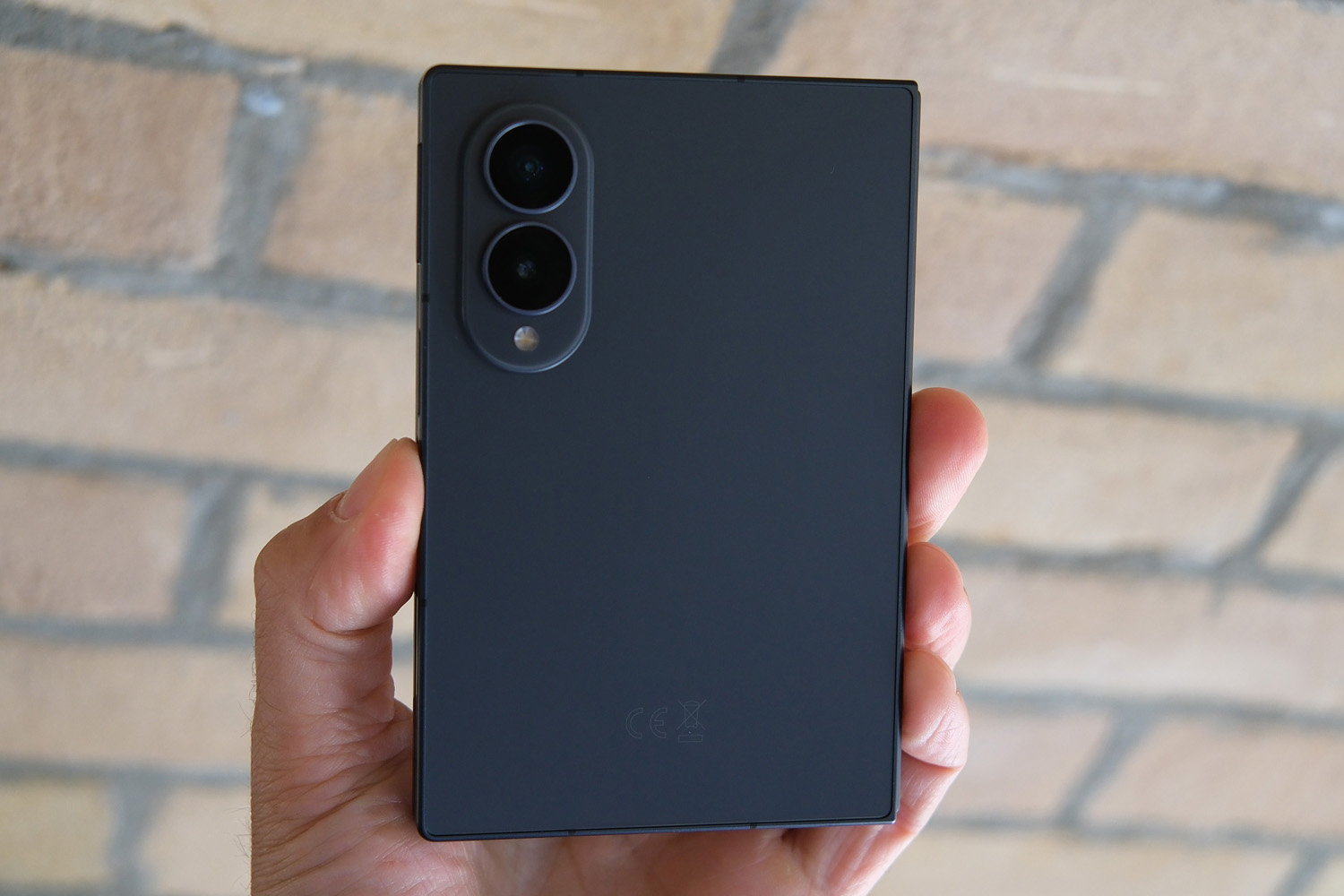
The Z Fold8’s two rear cameras seem cherry-picked from Samsung’s previous top sellers. The 50MP main snapper is on par with the vanilla Galaxy S26, while the 50MP ultrawide was last seen on the Galaxy S26 Ultra. Only the more expensive Z Fold8 Ultra gets a dedicated telephoto lens, leaving this phone to rely on sensor cropping and digital zoom. The Ultra also takes the lead on pixel count with a 200MP main camera.
Samsung’s image processing algorithms seemingly haven’t had any major updates, with the newest softwares addition Dual Recording (for capturing your live reactions as well as the scene in front of you) and My FanCam. This is essentially subject detection recording with smart pan and zoom, locking onto your subject and keeping them in frame without you having to constantly move the phone.
I’ll need convincing there’s enough here to persuade photography fans away from their more capable candybar-style handsets, or even the likes of Honor Magic V6 and Motorola Razr Fold, which each have three rear cameras.
Samsung Galaxy Z Fold8 initial verdict
Could this be the most exciting new Samsung phone we’ve seen in years? Anyone that found the Z Fold series too skinny up to now will love the new form factor. The small size when folded is a bit of a throwback in the best way, while the inner screen is wonderfully expansive. It feels new and exciting in ways the more powerful Z Fold8 Ultra and software-streamlined Z Flip8 simply don’t.
The fact there’s no Western rival with a similar shape – yet – mean the slightly diminished specs compared to other book-style foldables don’t matter as much. And while Samsung’s OneUI hasn’t seen any significant additions from last year, it was already the most fully-featured Android skins going. Being cheaper than the range-topping Z Fold8 Ultra also helps.
Blimey it’s still expensive, though: $1899/£1699 for the base model, so the 512GB and 1TB models are going to really stretch your wallet. With no direct Android rivals, it’ll be impossible to say if this is good value or not until September, when Apple will almost certainly reveal the iPhone Ultra foldable with a similar form factor.
Until then, I’m not sure there’s an Android phone I’m looking forward to living with more.
What are the Galaxy Z Fold8’s technical specifications?
| Screen | 5.5in AMOLED (outer), 7.6in AMOLED (inner) |
| CPU | Qualcomm Snapdragon 8 Elite for Galaxy |
| Memory | 12GB RAM |
| Cameras | 50MP + 50MP ultrawide |
| Storage | 256GB |
| Operating system | Android 17 |
| Battery | 4800mAh |




Read the full article here


