





Downsizing is rarely a good thing, but when it comes to robot vacuum cleaners you won’t hear me complaining. Roborock has slimmed down the Saros 20 Neo (which is also known as the Qrevo Edge 3 Pro in the USA) even further than its rangemate, courtesy of a retracting LIDAR sensor that lets it navigate with the best of ’em in the open, but also sneak under sofas and tackle spots other robot vacs couldn’t squeeze into.
It also brings back pretty much everything that made the regular Saros 20 stand out, including seriously uprated suction, warm water mopping for maximum stain-removing potential, and a climbing arm that can help it tackle taller thresholds.
At $1500/£999 this is an undeniably expensive robot vacuum, but one that needs the bare minimum of human help to keep it cleaning. After patrolling my house for the best part of two months, I’m convinced this could be the ideal vacuum for homes with unconventional layouts or where the floors are rarely free from clutter.
Has the Saros 20 Neo’s styling changed much?
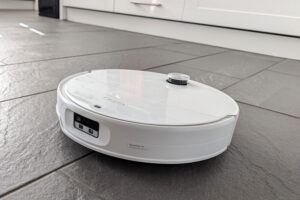
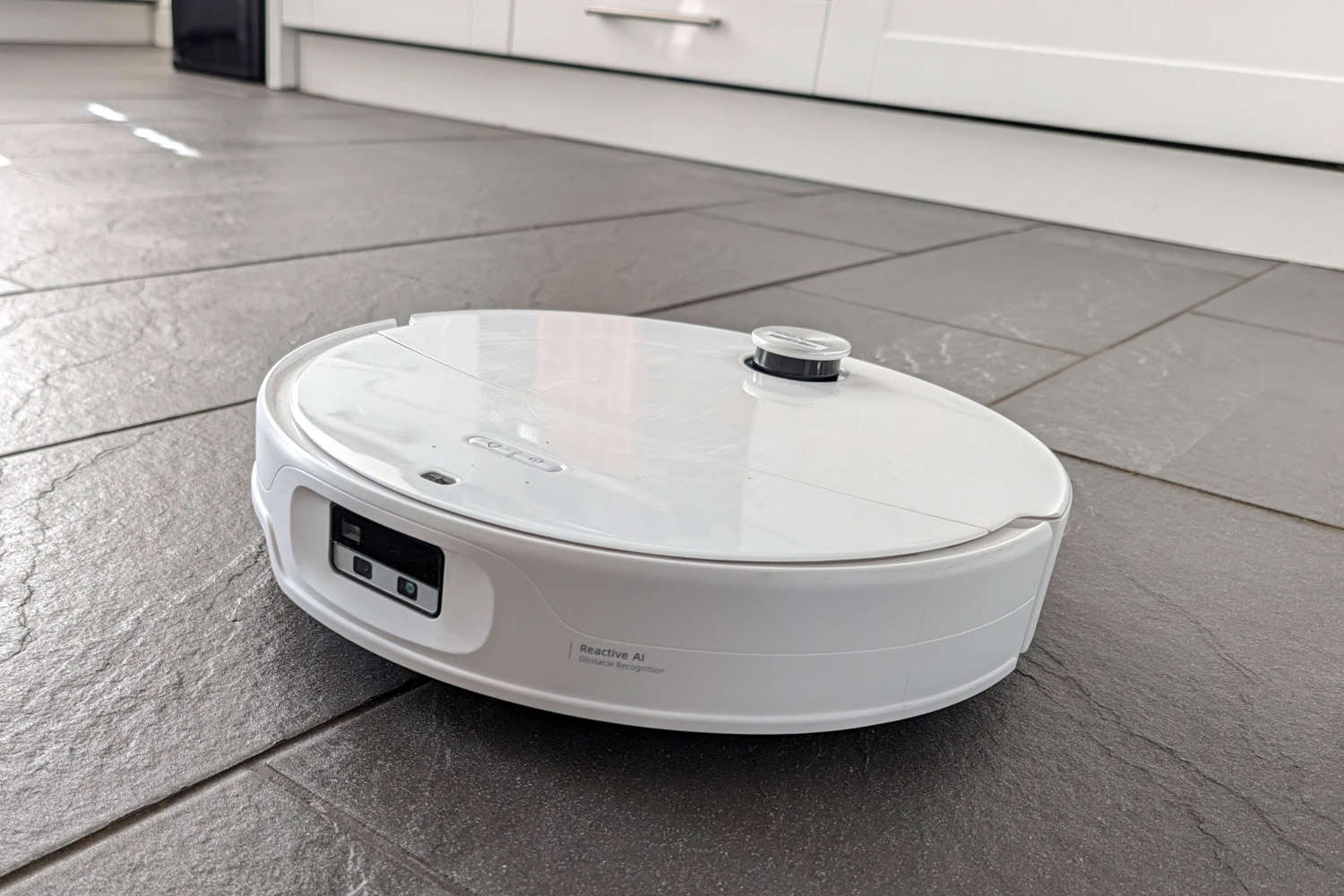
It doesn’t look all that different from the robot vacuum norm when you get it out of the box, but the Saros 20 Neo is hiding all kinds of clever tech. As well as front-, rear- and upward-facing sensors, there are drop sensors on its underside and a physical bumper at the front to help it navigate your house.
Power it on and a LIDAR module extends out from the top to aid with navigation. The robot itself has a very low profile, meaning it can enter gaps just 7.95cm high. The LIDAR ducks down as it enters, with a small window giving it a rear view in order to extract itself once the cleaning pass has finished. For the most part this worked like a charm; it could get under my sofa, something my older iRobot vacuum was forced to avoid.
There’s also a camera, microphone and speaker on board, which work with the “find pet” mode and can create a photo album of candid snaps whenever they’re detected. The app even lets you pilot the vacuum directly and talk to your pets through it – though my cat quickly learned the vacuum couldn’t follow it up the stairs.
Cleaning coverage is excellent, through a combination of wide main brushes and an extendable side sweeping brush that could get into the trickier kitchen corners that defeated my usual robot vac.
The Saros 20 Neo’s party trick is a climbing arm that can raise the whole chassis up to navigate taller thresholds. It had no issues getting across the small lip to my downstairs toilet, and even managed the temporary step I put between the kitchen and living room. It’s rated to tackle two-part obstacles of less than 4.5cm and less than 4.3cm, as long as there’s 10cm or so of flat space between them; we’re still a way off it being able to tackle entire staircases, but it’s a definite improvement over earlier models.
What features make the docking station stand out?
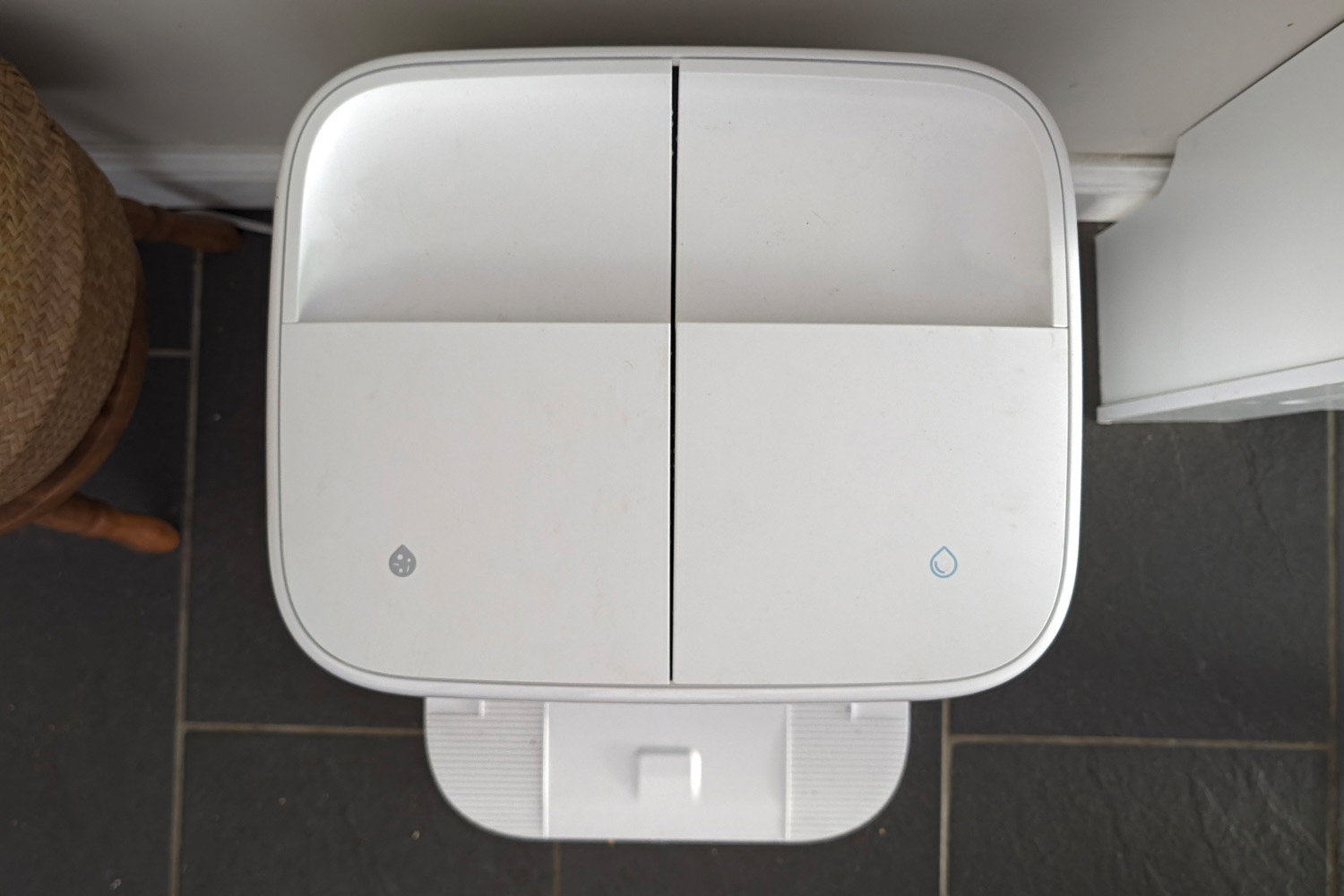
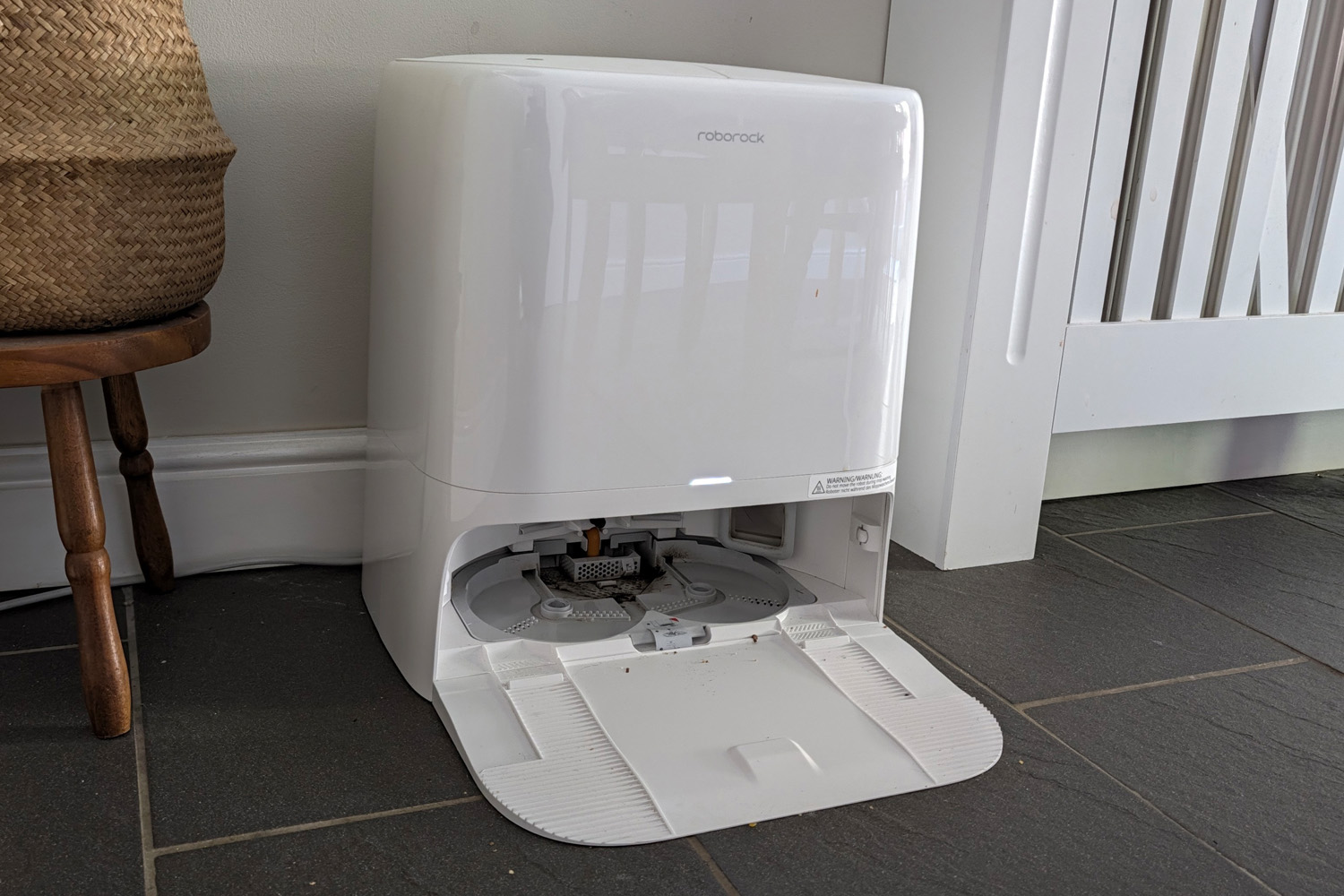
The docking station has a softer, more rounded look than previous efforts, which were a bit boxy. You won’t mistake it for any other bit of kitchen tech, but I didn’t feel the need to hide it away either. The white colour paired well with my kitchen cabinets, though it was quick to pick up dirt; I spent more time wiping the thing down down than I did emptying or refilling. It takes up a fair bit of floor space and needs room above it to remove and refill the clean and dirty water tanks, as well as in front so the robot can get in and out.
Those tanks are pretty large, holding 4 litres of clean and 3.5 litres of dirty water. They’ve been filled and emptied a handful of times each since the Saros arrived and I’ve only filled the detergent container once. At the time of writing the vacuum bag was almost full, suggesting an official six-pack (around $30/£30) should get you through a year of vacuuming. Everything slides in and out with little effort, while a single LED on the front glows read when it’s time to refill or empty.
Because the robot ejects its mopping pads for the base station to clean and dry them, smells are kept to a minimum; it’s really just the dirty water tank that’ll begin to whiff as it approaches being full. Emptying the vacuum is quite the racket though, so I avoided using the Saros once my young son had gone to bed. Quiet times are easy enough to program through the companion app.
How easy is the companion app to use?
Roborock’s companion app is straightforward enough, if you just want the basics. After the brief setup (which mainly gets the robot connected to your Wi-Fi) an initial floor scan took around ten minutes. The resulting map correctly identified carpets and floors; I then added furniture and set a no-go zone around my cat’s food bowls. It can memorise up to four maps, in case you want to clean multiple floors of a house.
The Saros can then vac and mop simultaneously, vac first and mop after, solo mop, or solo vac across the entire floor space, separate rooms, or specific zones that get dirty quickly. You can also set routines to automate cleaning after meals.
Dig deeper, though, and you’ll find multiple suction power modes as well as how thorough a route you want it to take and a whopping 30 different levels of mop water flow. It gets even more granular beyond that, which can be a little dizzying at first. Thankfully you can largely ignore the in-depth customisation and let the vacuum go about its business – the default settings are almost entirely on the money.
Buttons on the robot itself let you bypass the app, starting a cleaning cycle and sending the robot home to the dock with a single press. Then there’s the “Hello Rocky” voice assistant, which can be toggled off if you’re not a fan. It works with Apple Home, Google Home, Amazon Alexa and Samsung SmartThings via Matter too, so pretty much anyone with a smart speaker can go hands-free.
How well does the Saros 20 Neo mop and vacuum?
I really can’t fault the Saros 20 Neo’s cleaning ability. Starting with carpeted floors, its strong 36,000pA of suction had no issues picking up fine dust and larger spills like biscuit crumbs and rice. Only a proper disaster spill would leave a little mess behind on the maximum setting, but barely more than the very best rivals. The anti-tangle carpet rollers weren’t flummoxed by a mix of human and pet hair (which in my house always seems to accumulate in double-quick time) even after a month of use.
Suction was even more effective on hard floors, coping with an upturned bag of flour just as easily as larger bits of food debris and soil walked in from outside.
Mopping then applies a significant 14 newtons of downward pressure, which was enough to shift dried-on peanut butter and tomato sauce. The mop pads (which spin at a rapid 200rpm) can either be left in the dock when on a vacuum-only patrol, or raised up when it trundles over a carpet. This was spot on in my testing, so I never encountered damp patches of fabric after it had done a pass.
The vacuum uses its camera and some nifty AI object detection to avoid potentially catastrophic wet spills (think dog mess) and things that might tangle or clog the suction. This worked to great effect on my light living room carpet, avoiding things like loose socks, children’s toys and a precarious phone charger. It photographs and flags each possible hazard, so you can check it through the app even if you’re not at home.
I wouldn’t call this system infallible: sometimes very small objects were mis-categorised as obstacles and avoided, when they could’ve been simply bumped out of the way. Shoes and my inquisitive cat, however? Here the Saros hits a near-perfect game. I would still clean up my son’s toys for a full clean of the living room, but was always confident the robot wouldn’t be fully halted in its tracks by one forgotten Hot Wheels car.
My big question is whether this is overkill for houses where the floors are always free from dropped clothes, toys and other clutter – more affordable rivals will cope just as well there.
Navigation in general is very good, only getting stuck twice to the point I needed to rescue it. This is also a rather speedy vacuum on the normal cleaning cycle; it’ll tackle edges first then fill in the centre of each room, needing just 18 minutes to cover a 19m2 surface area. It never ran out of charge mid-clean either, even on the most extreme cleaning cycle, which took almost 90 minutes across multiple mopping and vacuuming passes.
Should you buy the Roborock Saros 20 Neo in 2026?

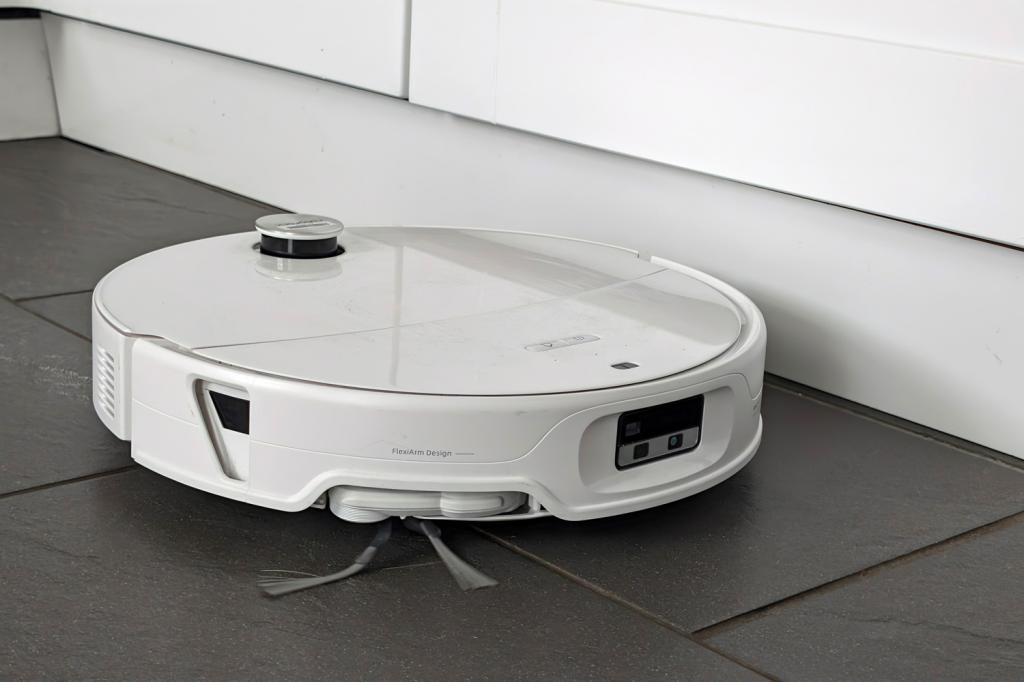
Does your home have a mix of hard floors and carpets which are rarely free from obstacles? Have high thresholds put you off other robot vacs? Then the Saros 20 Neo / Qrevo Edge 3 Pro could be a great buy – albeit an expensive one. This all-in-one ‘bot vacuums and mops very effectively, isn’t easily beaten by carelessly scattered objects, and is small enough to get under more furniture than you might expect.
While the app can overdo it with settings and features once you dig beyond the main screen, most people should be able to steer clear and let the robot do its thing – both mopping and vacuuming are effective enough at the defaults. It is bested at the latter by one or two rivals over thicker carpets, but only by a small margin.




Read the full article here


