






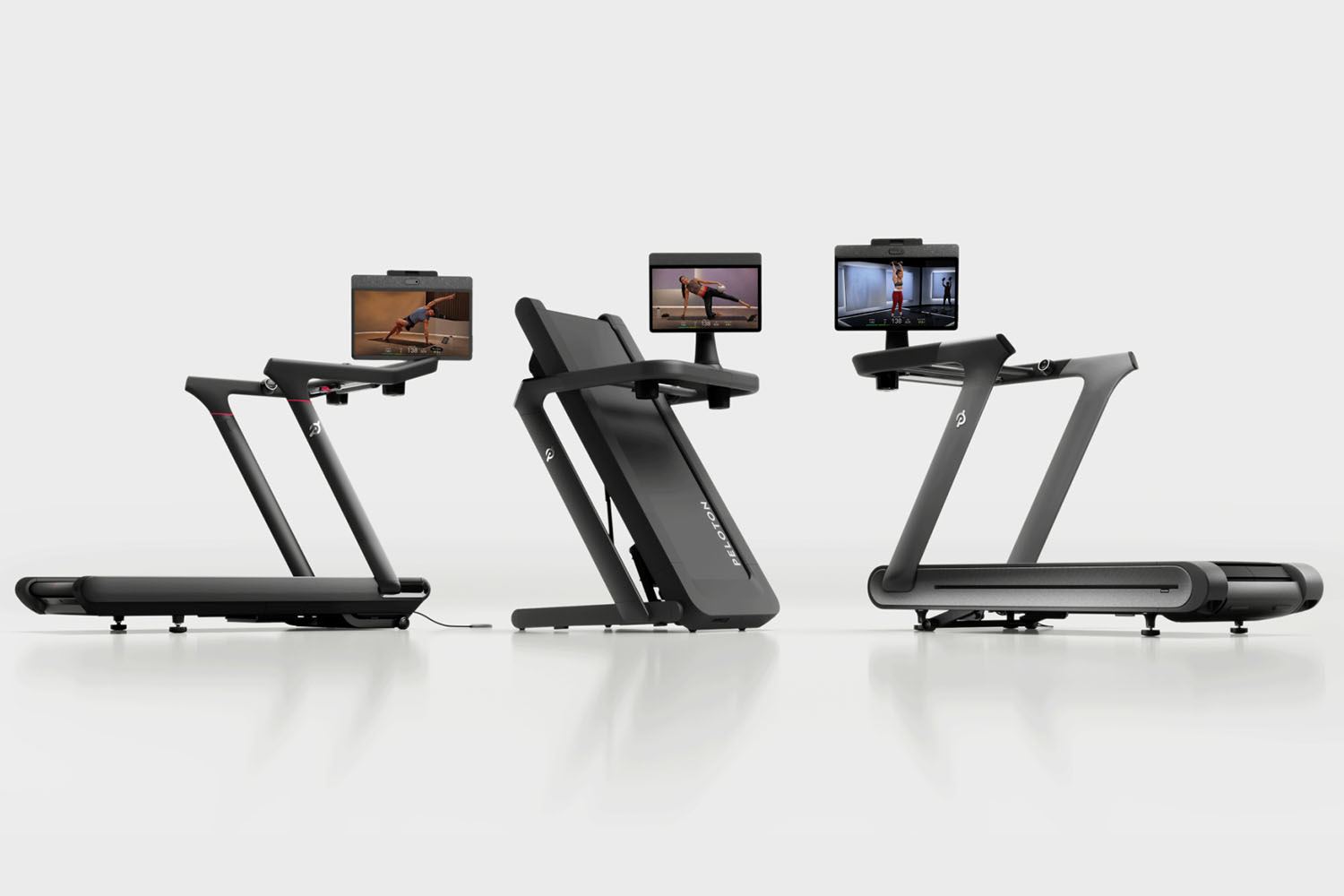
Peloton has announced three new treadmills. Yes, really – not just one, but three, because one running machine was clearly not enough. Usually I am a Peloton Bike girl rather than a Peloton Tread girl, but a couple of things in this announcement have made it more interesting, even to me.
The company isn’t just enhancing its current Peloton Tread and calling it a day (though it is doing that too). Instead, it’s trying to fix a couple of things that make current treadmills, including its own, feel like a compromise: they take up a lot of room, and running on one never feels like running your run. Here’s what’s new with Peloton and what you should be excited about.
The one that folds

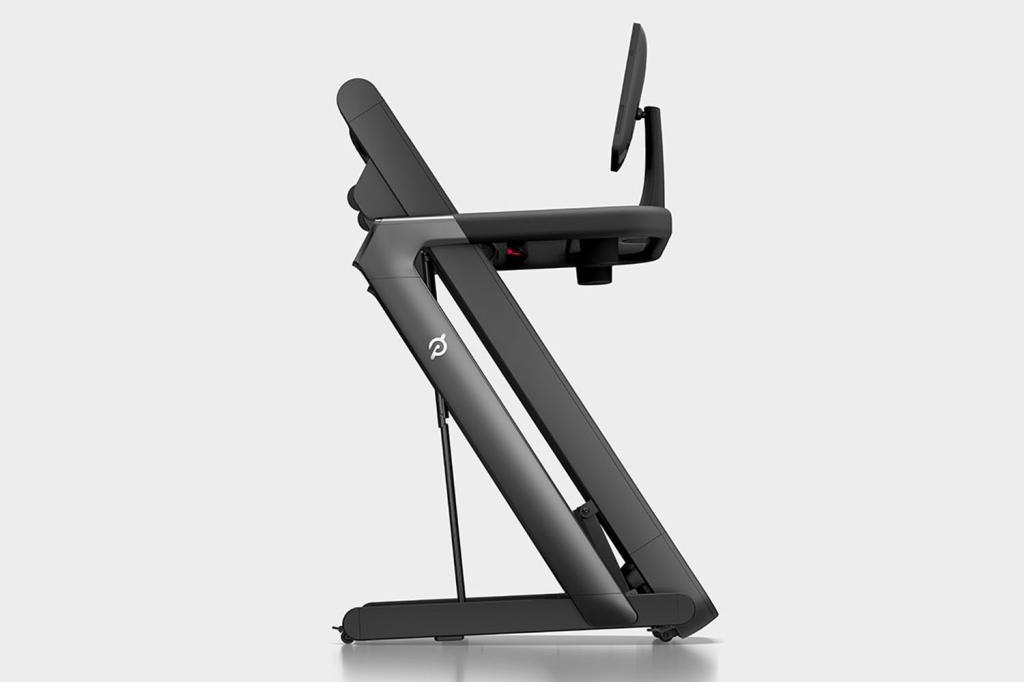
Peloton has never made a folding treadmill before – its Tread has always taken up quite a lot of square footage – considerably more than the Bike, making it unattainable for some. If you have a small house or flat, the Peloton Tread takes up roughly the same space as a small sofa, which for those of us not living in a mansion, would be too much of a space sacrifice.
The new Tread Flex changes that. It’s not only Peloton’s most affordable treadmill (starting at $2,195 in the US and £1,999 in the UK), but it’s also the first folding model. It reduces by nearly 50 per cent when folded, so if you don’t have the luxury of a home gym, this could be the answer you’ve been looking for.
It’s shorter than the Peloton Bike when folded so that should give you an idea of how much space you’ll need and it has castor wheels to make it easy to move around. It’s also has a new quiet brushless motor, said to peak at 70 decibels even at its maximum speed of 12.5mph, and it has a swivelling screen so you can do other workouts on the floor when you’re not running.
The ones that have a camera
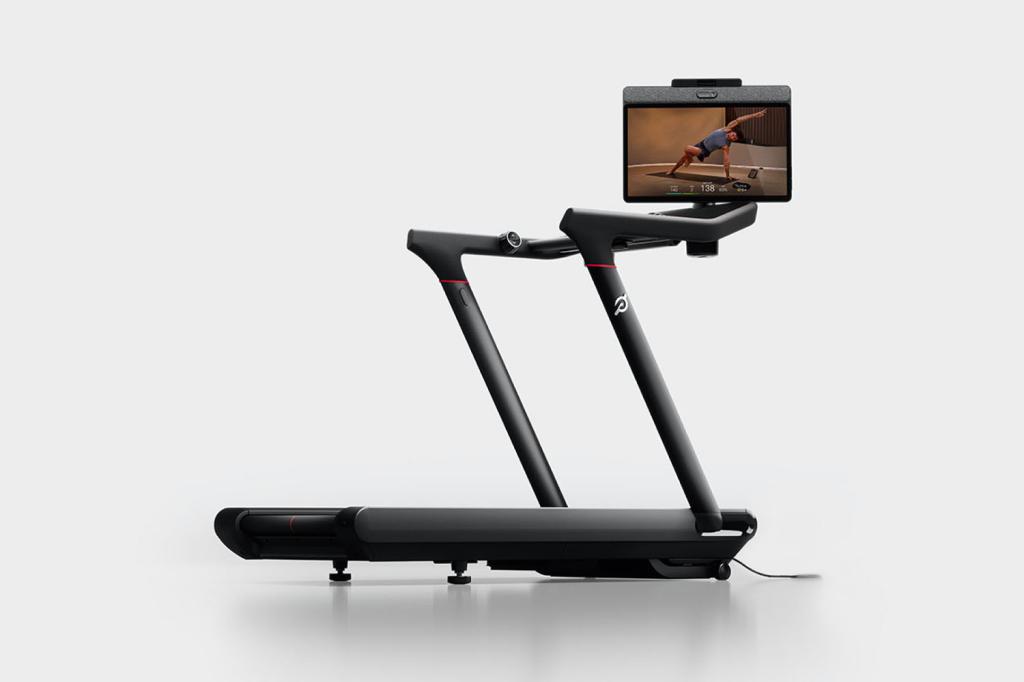
We shouldn’t have favourites, though, so while the folding treadmill will no doubt be the most exciting news for any Peloton fan who hasn’t had space for the Tread before, the other two treadmills are worth mentioning too.
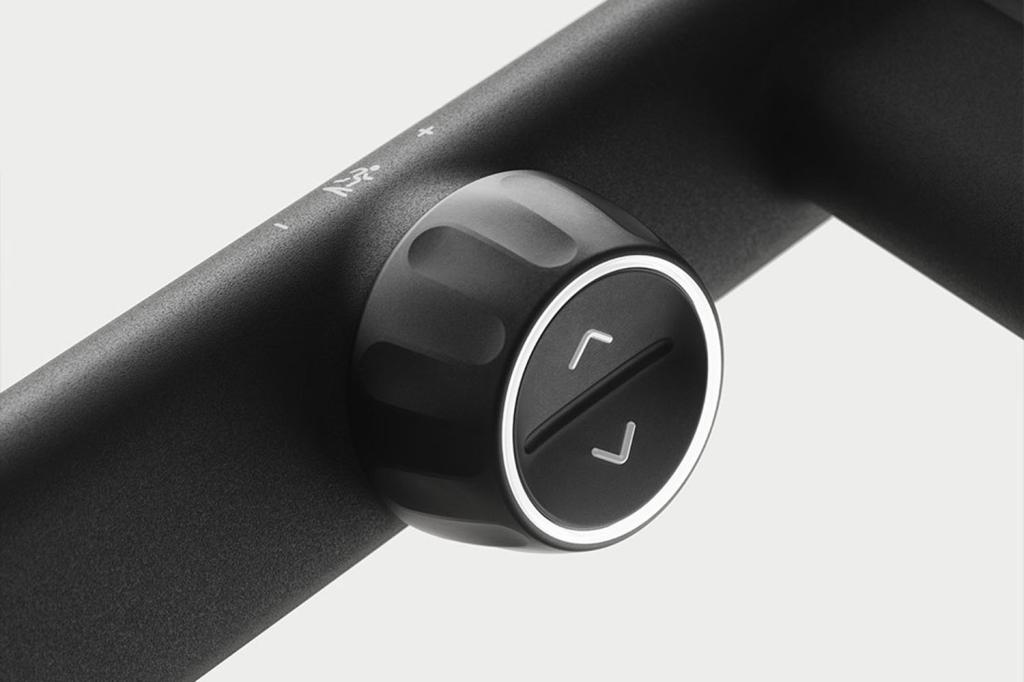
Tread Vision sits in the middle of the range, priced at $3,495 in the US and £2,999 in the UK. It introduces a movement-tracking camera, like the Cross Training Bike+, that will give you post-run form feedback and help correct your lifting form when you step off it . The running feedback will show one tip per run, allowing you to focus on that improvement rather than being overwhelmed by data and unsure where to start. It comes with a new cushioning system for better comfort, there are handy jump buttons so you can increase speed or incline quickly and it has a redesigned tray for your phone or tablet.
Last up in the new Peloton portfolio is the Tread+ Vision. You’ll need to really love running on a treadmill for this one, given it’s priced at $6,695 in the US with a UK price currently unknown, but Peloton describes it as the “ultimate training partner”. It also has a movement-tracking camera like the Tread Vision for personalised feedback (I suspect mine would be telling me to go back to the Bike), and it has a slat belt and a feature called Sled Mode. This lets you add resistance of up to 300 pounds for HYROX-style push training without stepping off it. It’s clearly aimed at the crowd that wants their treadmill to double as a full gym, as it should at that price.
The one feature that got me excited
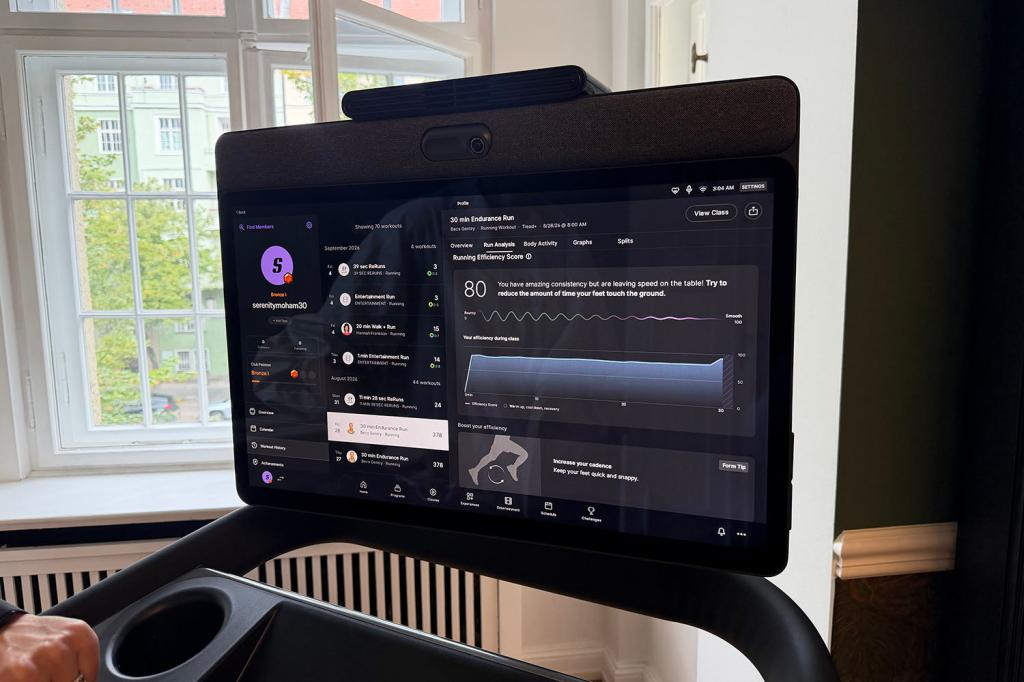
But Peloton has never been just about hardware. If anything, I’d say it’s more about software, even though the hardware is some of the most premium kit in the business. As such, all three treadmills run on Peloton IQ, the AI-powered software system the company launched last October.
There are a number of new features being added to the Peloton IQ, including Run Analysis, which offers a new efficiency score that takes into account your cadence, vertical oscillation and stride length, and provides tips to help you run smarter. This one is exclusive to Tread Vision and the Tread+ models, though, so Tread Flex owners won’t get it.
Elsewhere, IQ Pace Targets adjust your interval speeds based on recent performance, while a new Heart Rate Zone Workout format supports Zone 2 training. Peloton is also now syncing with WHOOP, on top of its existing Apple Health, Fitbit and Garmin integrations. If you’re a WHOOP user, this could be the most exciting part you’ve read so far.
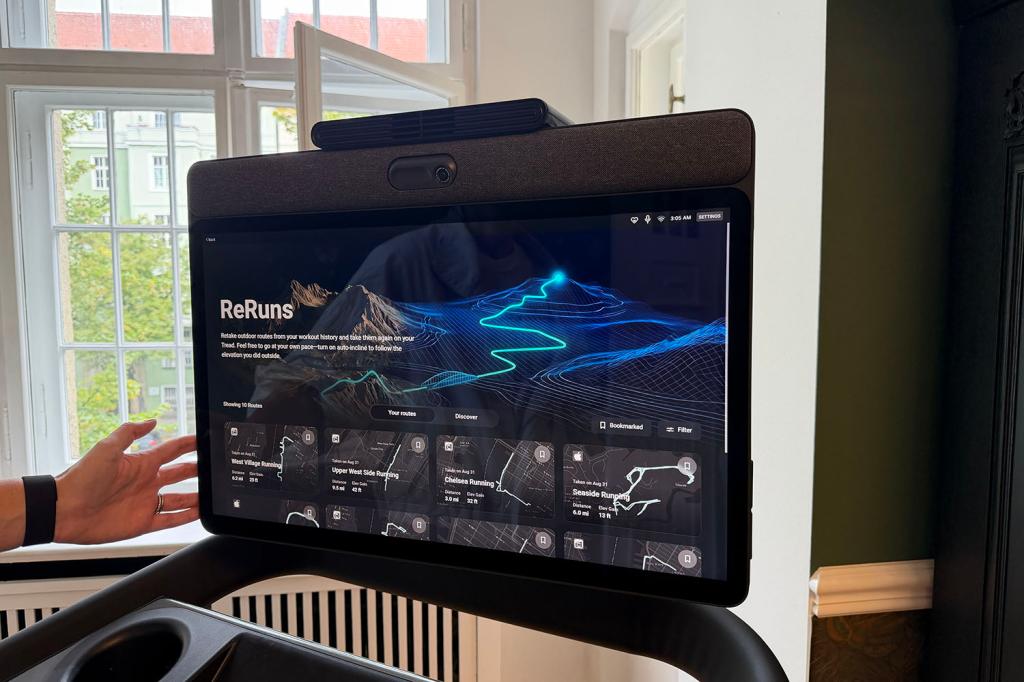
What excited me the most, though, was a feature called ReRuns. If you’re a runner who loves doing the same 5km or 10km route every day, you’re in for a treat. The ReRuns feature lets you sync incline data from an outdoor route via the Peloton app on a device such as an Apple Watch, and the treadmill will recreate it. Every hill, every gradient change, is mapped onto your indoor session, so you aren’t just running on a treadmill, but you’re running your favourite trail or that one brutal hill session near your house that you don’t want to do in the pouring rain.
Treadmills are rarely a substitute for the real thing. Instead, they have historically been a slightly sad, flatter, more boring version of going outside. Sure, we have had scenery videos, instructor energy and gamified metrics to try to distract from that, but they are only exciting for so long. ReRuns could change that for some people. It’s not trying to distract you from the fact that you’re on a treadmill, but instead make the treadmill behave like the specific run you care about. If you’re training for a hilly marathon and can’t get to the hills, or you just love one particular route and want to do it at 11pm in December, this feature will allow for that.
There are now over 17,000 Tread classes, plus new structured Race Training Programs that build out full training cycles with speed work and recovery days baked in, so there’s no shortage of content. But what I want to know is whether the cheapest treadmill Peloton’s ever made can fold away and still feel as premium as other Peloton products, and whether reliving your favourite run on a screen feels as good as it sounds.
Price and availability
If you’re in the US or Canada, all three treadmills go on sale on 1 October. Tread Flex starts at $2,195/£1,999, with the fold-down design reaching other markets in spring 2027 (autumn if you’re in Australia). Tread Vision costs $3,495/£2,999 and arrives in the US, Canada, UK, Germany and Austria on 1 October, with Australia following a day later on 2 October. Tread+ Vision costs $6,695 in the US and also launches on 1 October, but will be US and Canada only for now.
The Peloton IQ features will be available to all Peloton members from 1 October, with some, such as Run Analysis and Sled Mode, available on prior Tread+ models as well as the new Tread Vision.
Read more: Peloton IQ fixes the one thing that’s bugged me about Peloton since I reviewed the Bike+ so here’s what it is and what it does




Read the full article here


