






Range, charge speed and price are key factors when it comes to buying a new electric car – but what about practicality? Cars have grown over the years, but boot space hasn’t always kept up with the number of cupholders and USB ports – as a result, some star EVs are still somewhat lacking in the suitcase stowage department.
Which EV is the most practical? We’ve decided to rank this top ten on boot capacity, as quoted by the manufacturer, with seating for five. The last point is important, since massive seven-seaters like the Hyundai Ioniq 9 only really have huge boot space when the third row is folded away.
Volkswagen ID. Buzz – 1,121 litres

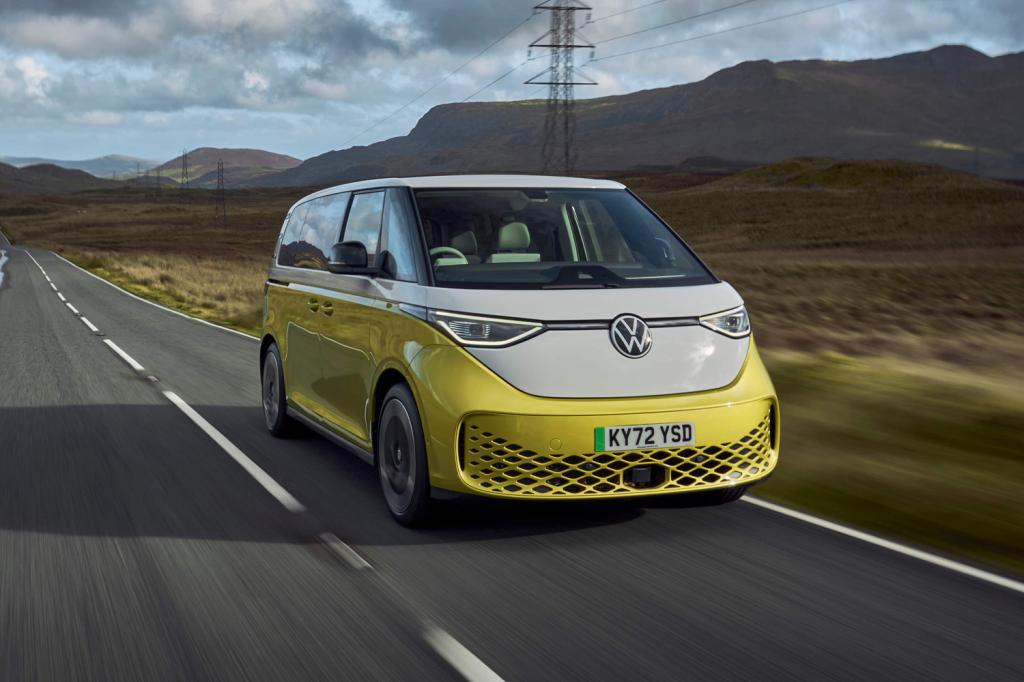
Volkswagen’s retro-futurist ID. Buzz is the electrified great-grandchild of the iconic Type 2 camper van, complete with two-tone paint options and an aesthetic that works best when surfboards are close by.
Perhaps a bit van-like for some – a commercial version is available, after all – the ID. Buzz uses that to its strengths, and as a result packs a cavernous 1,121 litres of boot space, plus seating for five. There are also six- and seven-seater versions with an extended wheelbase if you need stowage and three rows of chairs.
We love the retro design, but wish the range was a bit better – up to a claimed 293 miles will get you to the seaside, but in a world of 500-mile BMW iX3s more would always be welcome.
| Motor | rear-mounted electric |
| Battery | 79 kWh |
| Power | 286 PS |
| Torque | 560 Nm |
| 0-62 mph | 7.6 sec |
| Top speed | 99 mph |
| Range | 293 miles |
| Charge rate | 185 kW |
| Cargo volume | 1121 litres |
| Price | $59,995 / £60,005 |
Hyundai Ioniq 9 – 908 litres
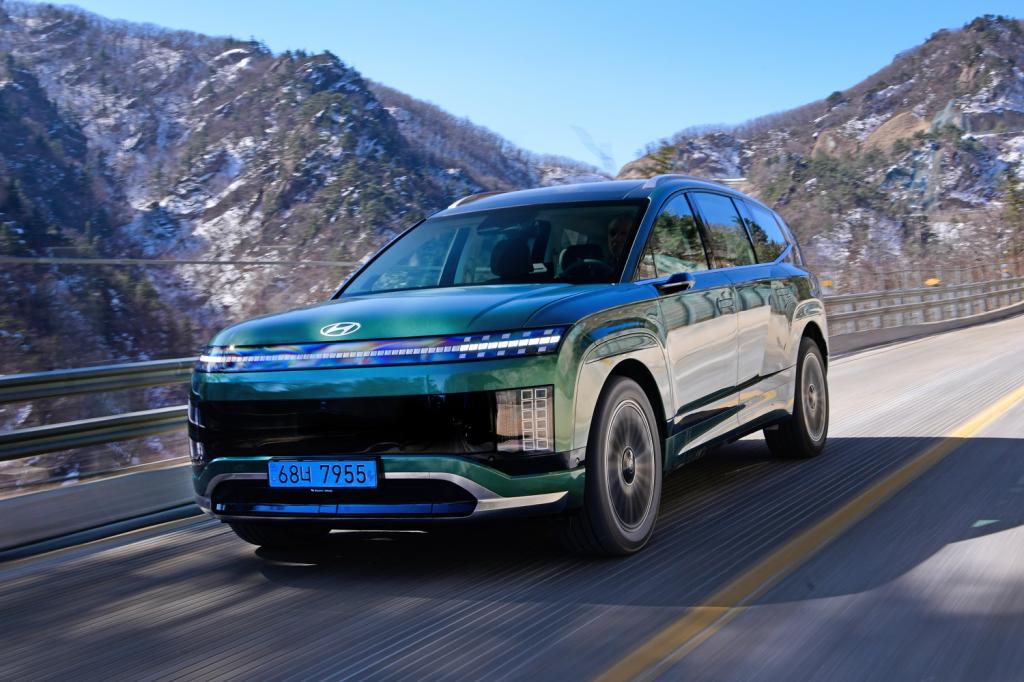
Big, bulky and capable of swallowing a wardrobe whole, the Ioniq 9 is closely related to the equally large Kia EV9. Both sit on the Hyundai group’s excellent E-GMP electric platform, which means good range, rapid charging and smart interior tech.
The third-row seats are perfectly usable, even for adults not just children, and even with them in use the boot capacity remains a respectable 338 litres using the European VDA measuring standard. This swells to 908 litres when the third row is folded away. We also liked the Ioniq 9 for its chunky 385 miles of range, interior comfort, and how it’s more agile than expected for a car of this size.
| Powertrain | Permanent magnet synchronous motor |
| Battery | 110.3 kWh |
| Power | 218 PS |
| Torque | 350 Nm |
| 0-62 mph | 9.4 sec |
| Top speed | 115 mph |
| Range | 385 miles |
| Charge rate | 233 kW |
| Cargo volume | 908 litres |
| Price | $58,995 / £64,995 |
Tesla Model Y – 854 litres

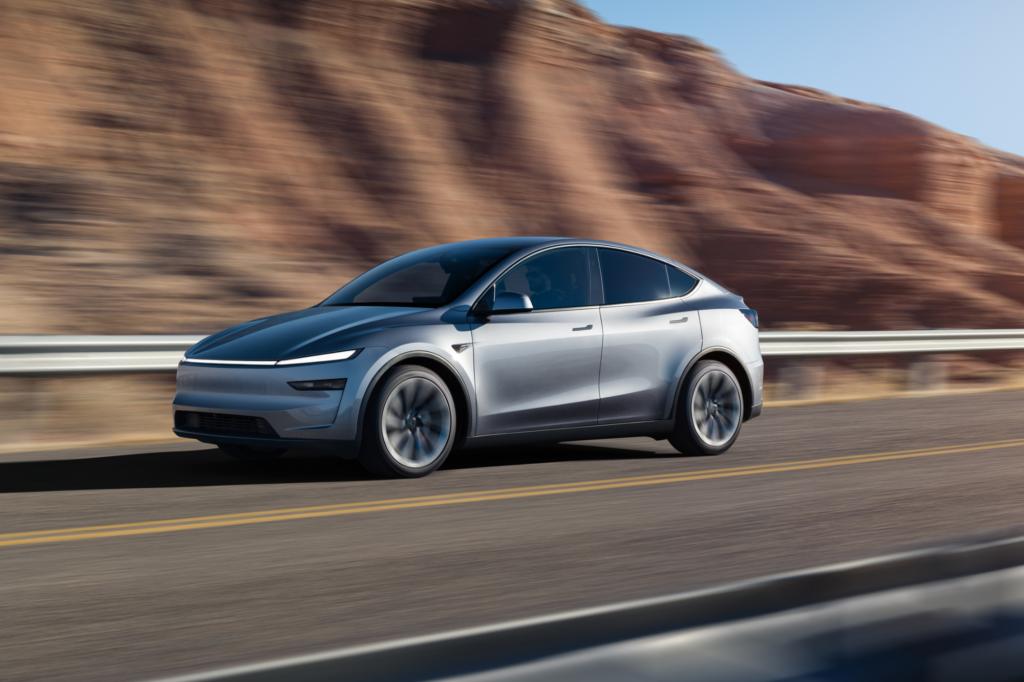
Built in five, six and seven-seat configurations, the Tesla Model Y is something of a Tardis, since it doesn’t look massive on the outside – not like the old Model X did, anyway – yet has one of the biggest boots of any SUV on the road, at 854 litres with seating for five still intact. That figure is achieved by using clever underfloor storage, while the huge hatch gives great access and makes the boot properly usable.
Face-lifted in 2025, the Model Y benefits from all of the usual Tesla hallmarks – strong efficiency, a great range, clever tech and the company’s unmatched charge network. It also carries the same badge burden, too, but in terms of value it’s a practical EV that’s hard to beat.
| Powertrain | 2x permanent magnet synchronous motors |
| Battery | 75 kWh |
| Power | 514 bhp |
| Torque | 493 lb-ft |
| 0-62 mph | 4.8 sec |
| Top speed | 125 mph |
| Range | 372 miles |
| Charge rate | 250 kW |
| Cargo volume | 854 litres |
| Price | $39,990 / £41,990 |
Peugeot E-5008 – 748 litres
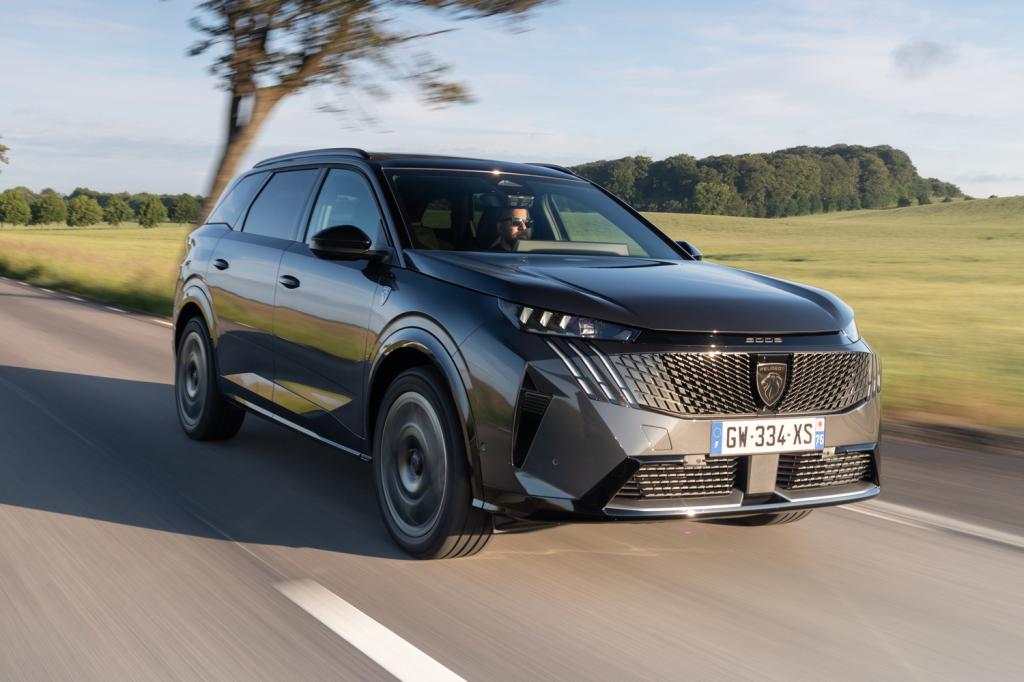
A seven-seater that doesn’t really look like one, the Peugeot E-5008 can’t quite match the Hyundai Ioniq 9 for outright spaciousness, but does an excellent job of packing seven seats into a more conventional-looking car. The third row can get tight for adults, but fold those down and you’ve an electric five-seat family car with one of the biggest boots in its class, at 748 litres.
It’s got a fantastic range too, of up to 414 miles if you opt for the bigger 98 kWh battery, while the trademark shrunken Peugeot steering wheel helps it feel far nimbler than it looks. Some of the interior design is a bit try-hard, but it’s still a nice alternative to the coldness of some overtly minimal rivals.
| Powertrain | Permanent magnet synchronous electric motor |
| Battery | 73 kWh |
| Power | 210 PS |
| Torque | 345 Nm |
| 0-62 mph | 9.7 sec |
| Top speed | 105 mph |
| Range | 310 miles |
| Charge rate | 160 kW |
| Cargo volume | 748 litres |
| Price | £40,195 (not available in US) |
MGS6 EV – 674 litres
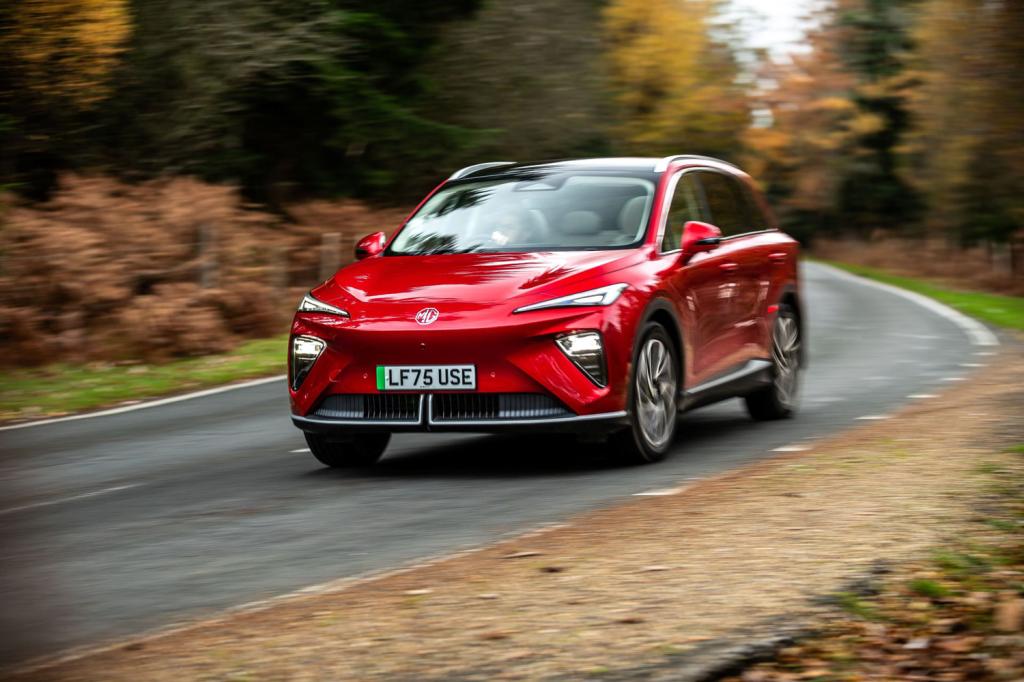
Going up against the Volkswagen ID.4, Skoda Enyaq and Tesla Model Y, the MGS6 EV does a stellar job of taking on its better-known rivals. A roomy interior helps it achieve this, with the 674 litre boot being a particular highlight – plus there’s a very generous 124 litre frunk under the nose, too.
The MG’s 74 kWh battery is good for a range of over 300 miles. We were pleased to see MG fit a decent level of specification, even in the base model, and the interior feels fairly polished for the price. Destined to be a hit with budget-conscious but practicality-focused families, the MGS6 EV might not be an exciting car, but it’s certainly a dependable one.
| Powertrain | Permanent magnet synchronous motor |
| Battery | 74.3 kWh |
| Power | 244 PS |
| Torque | 350 Nm |
| 0-62 mph | 7.3 sec |
| Top speed | 124 mph |
| Range | 329 miles |
| Charge rate | 144 kW |
| Cargo volume | 674 litres |
| Price | £38,540 (not available in US) |
Toyota bZ4X Touring – 669 litres
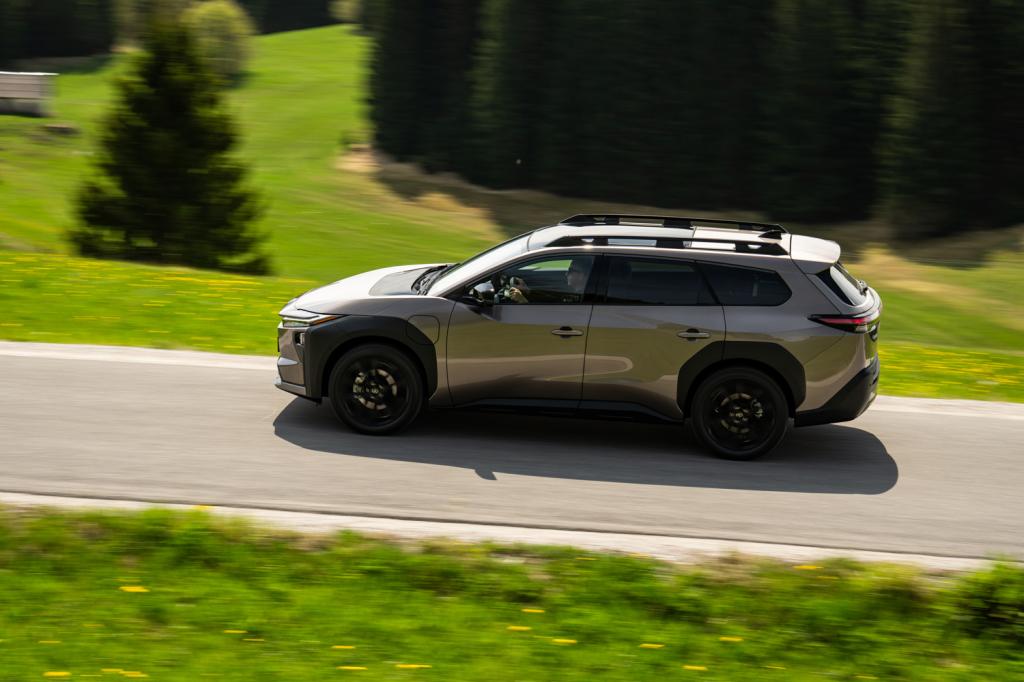
Essentially an estate version of the bafflingly-named Toyota bZ4X, the Touring benefits from a larger boot, to the tune of 669 litres with all five seats in place.
Despite the larger boot, the Touring actually has the same wheelbase as the regular car, since all the extra space comes from adding 140mm to the rear overhang. We’re fans of the dual-motor car’s surprisingly capable off-roading system, and like the interior for its reassuring durability.
Even in standard, single-motor, front-wheel-drive form, the Touring surprised us by being nicer to drive than the regular car. That said, the infotainment and digital instruments are decidedly average, and the dual-motor car’s range could be better.
| Powertrain | Permanent magnet electric motor |
| Battery | 74.7 kWh |
| Power | 224 PS |
| Torque | 269 Nm |
| 0-62 mph | 7.3 sec |
| Top speed | 99 mph |
| Range | 366 miles |
| Charge rate | 150 kW |
| Cargo volume | 669 litres |
| Price | $45,300 / £45,995 |
MG IM6 – 665 litres
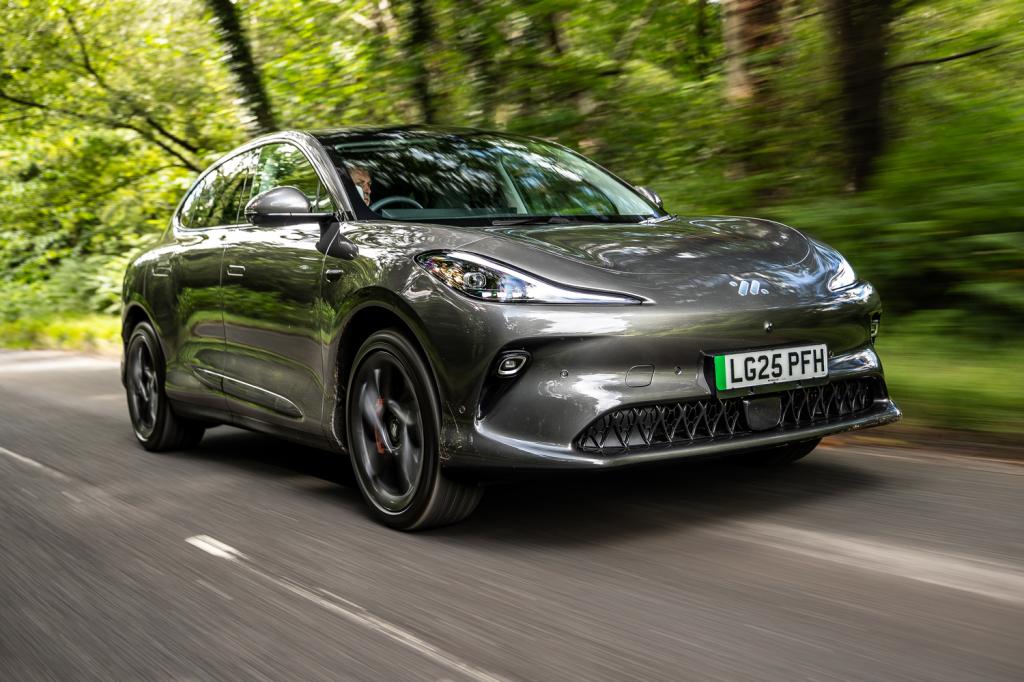
We were blown away by the speed of the MG IM6, especially in dual-motor guise – 62 mph in 3.5 seconds is in supercar territory – but this is still a thoroughly practical car, with 665 litres of boot space behind the rear seats of the single-motor model. This drops slightly to a still impressive 646 litres in the dual-motor, all-wheel-drive version – the one with a bonkers 751 PS and that blistering acceleration time.
There’s plenty of range too, at a claimed 388 miles, and it’ll charge very quickly too, thanks to a maximum rate of almost 400 kW. Good luck even finding a charger that powerful here in the UK…
The MG IM6 loses a practicality point for its tiny rear windscreen, but this is otherwise a great car for anyone seeking out a worthwhile Tesla rival.
| Powertrain | Permanent magnet synchronous motor |
| Battery | 96.5 kWh |
| Power | 407 PS |
| Torque | 500 Nm |
| 0-62 mph | 5.4 sec |
| Top speed | 146 mph |
| Range | 388 miles |
| Charge rate | 396 kW |
| Cargo volume | 665 litres |
XPeng G6 – 571 litres
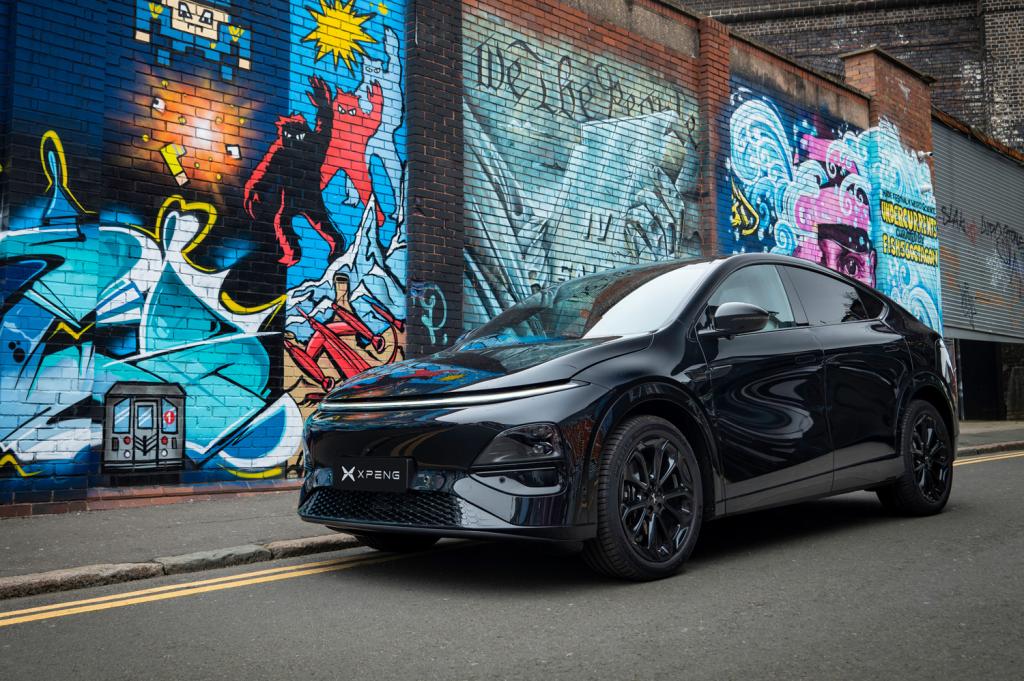
China’s answer to the Tesla Model Y, the XPeng G6 was recently updated with much faster charging. Inside, it remains spacious and practical, with a five-seat cabin ahead of a big, sensibly-shaped boot that weighs in at 571 litres.
Charge speed was recently boosted to a faintly bonkers 451 kW in the Long Range and Performance variants, while even the standard car peaks at 382 kW. XPeng claims a 10 to 80% top-up in just 12 minutes and a range of up to 326 miles. We also liked the G6’s onboard tech, which has masses of computing power and presents a surprisingly usable operating system. Even the voice assistant works well.
| Powertrain | Permanent magnet synchronous motor |
| Battery | 80.8 kWh |
| Power | 480 bhp |
| Torque | 660 Nm |
| 0-62 mph | 4.1 sec |
| Top speed | 125 mph |
| Range | 316 miles |
| Charge rate | 451 kW |
| Cargo volume | 571 litres |
| Price | £39,990 (not available in US) |
Kia EV5 – 566 litres
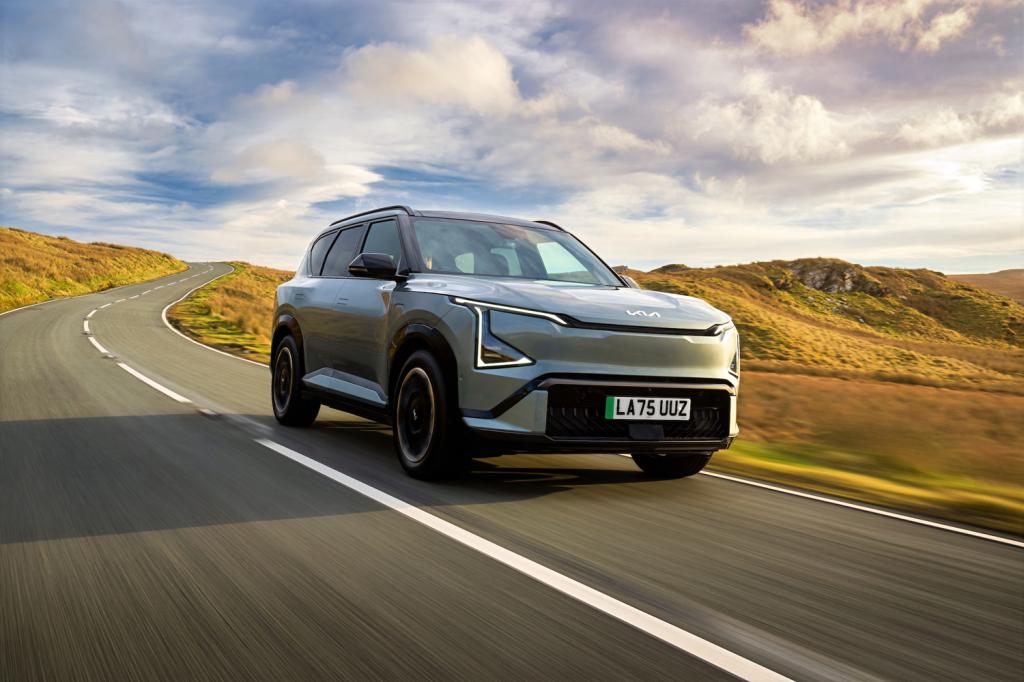
Kia has been producing some excellent electric cars recently, and the EV5 is a central pillar of its expanding range, with the EV3 and EV2 below, and the EV6 and EV9 above. It’ll therefore be the sweet spot for many buyers, especially those who want practicality at a sensible price and without ending up with a car that’s tricky to park.
The EV5’s boot capacity measures in at 566 litres with all five seats in place, and that’s the same for all variants of the car. It might not be an exciting car, but the EV5 is certainly a practical one that is well-made, drives well and has excellent onboard tech. We liked the blocky design, found ample room inside, and were impressed by both its performance and efficiency.
A claimed 313 miles of range is decent enough, but the maximum charge rate of 150 kW could be better.
| Powertrain | Permanent magnet synchronous motor |
| Battery | 81.4 kWh |
| Power | 214 bhp |
| Torque | 295 Nm |
| 0-62 mph | 8.4 sec |
| Top speed | 102 mph |
| Range | 313 miles |
| Charge rate | 150 kW |
| Cargo volume | 566 litres |
| Price | £39,345 (not available in US) |
Citroën ë-C5 Aircross – 565 litres
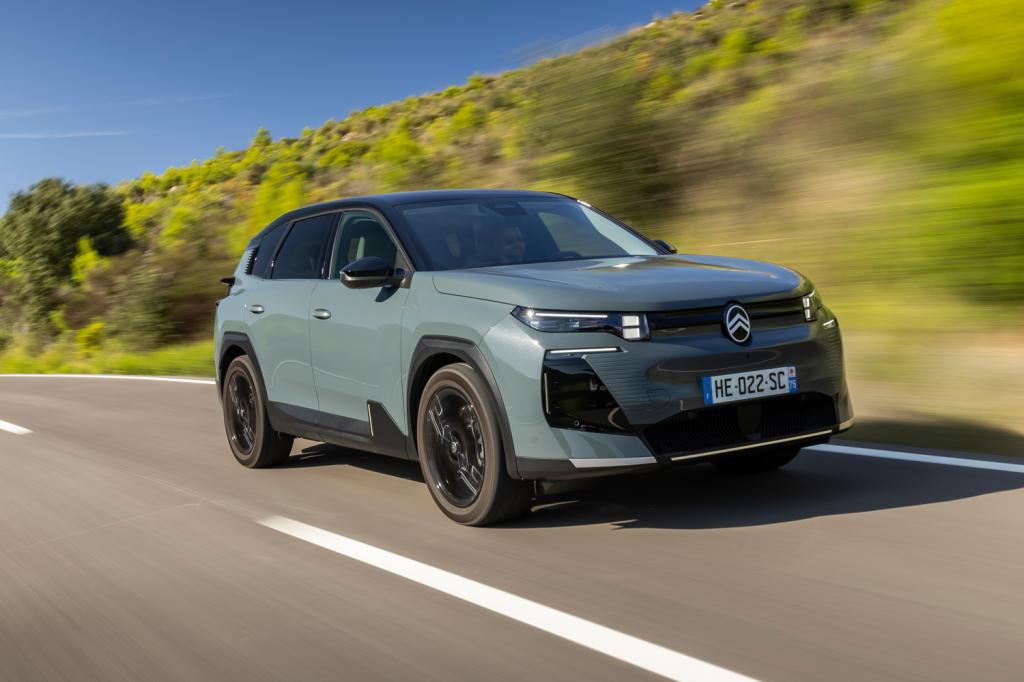
Finally, the 10th spot in our EV practicality roundup goes to the Citroën ë-C5 Aircross. This family-friendly SUV has 565 litres of boot capacity and impressed us with its distinctive styling, roomy interior and, of course, French levels of ride comfort.
It’s also priced well, promises up to 421 miles of range and manages to prove itself as much more than yet another minor-league addition to the massive Stellantis SUV family. That said, we felt the navigation system was a bit slow, and the lack of a frunk for extra storage under that large bonnet is disappointing.
| Powertrain | Permanent magnet synchronous motor |
| Battery | 97 kWh |
| Power | 230 hp |
| Torque | 343 Nm |
| 0-62 mph | 8.9 sec |
| Top speed | 106 mph |
| Range | 421 miles |
| Charge rate | 160 kW |
| Cargo volume | 565 litres |
| Price | £36,705 (not available in the US) |




Read the full article here


