





Up to now, our mixed reality future has felt like a lot of empty promises: big and bulky headsets you’d only want to wear for a short while, rather than a convenient gadget that’s as effortless to use as a smartphone. The Meta VR Glasses might be about to change all that. After cutting its teeth with the Quest virtual reality headset line, Meta has gone back to the drawing board for something that’s altogether sleeker, more comfortable to wear and easier to use.
Launching next Spring for $1299, the Meta VR Glasses undercut both the Samsung Galaxy XR and Apple Vision Pro. This standalone wearable also has them beaten for software support, especially on the gaming side.
After just a brief demo session ahead of a more in-depth official review, I’m already convinced other mixed reality headset makers now have some serious catching up to do.
Glasses beat headsets for comfort all day
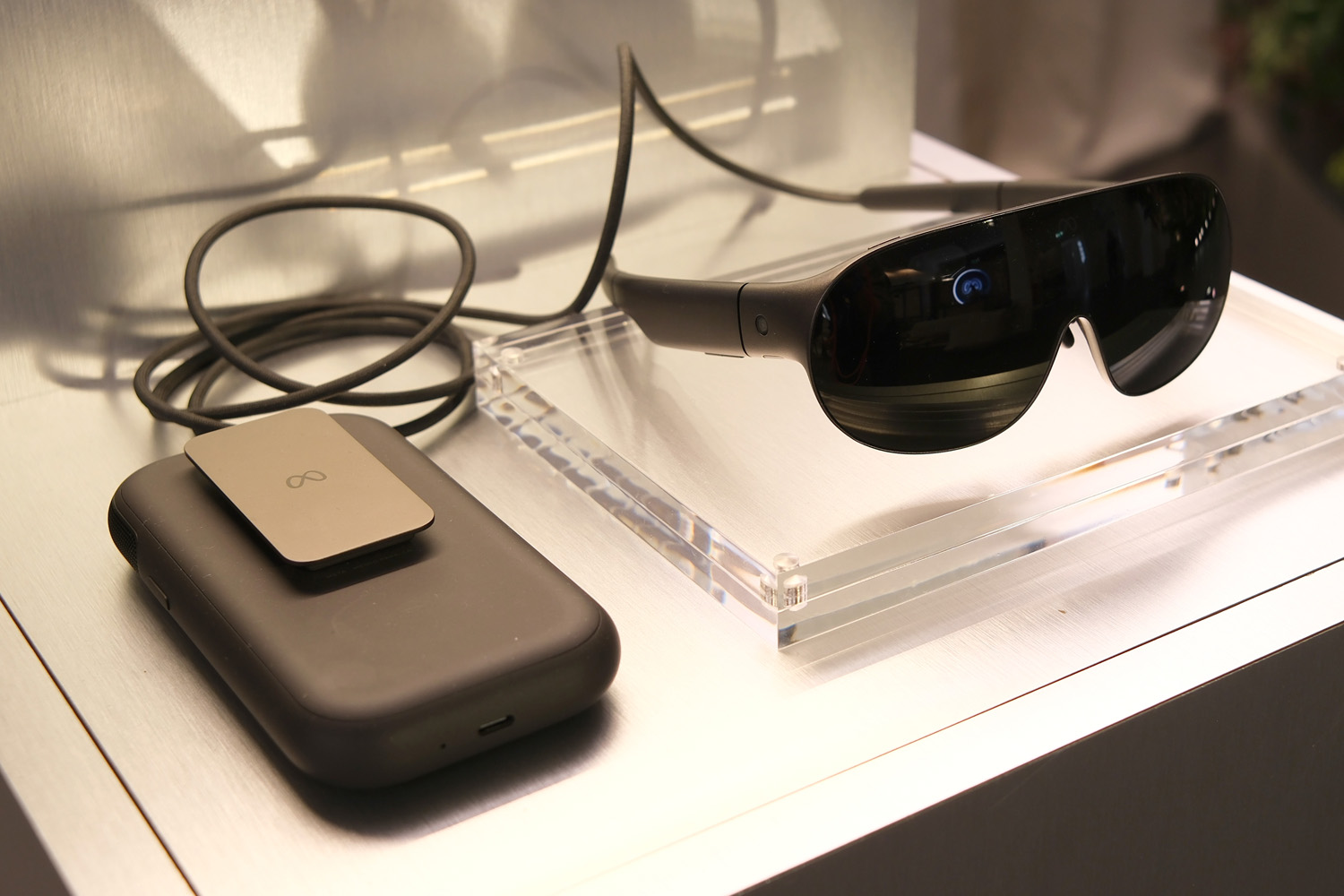
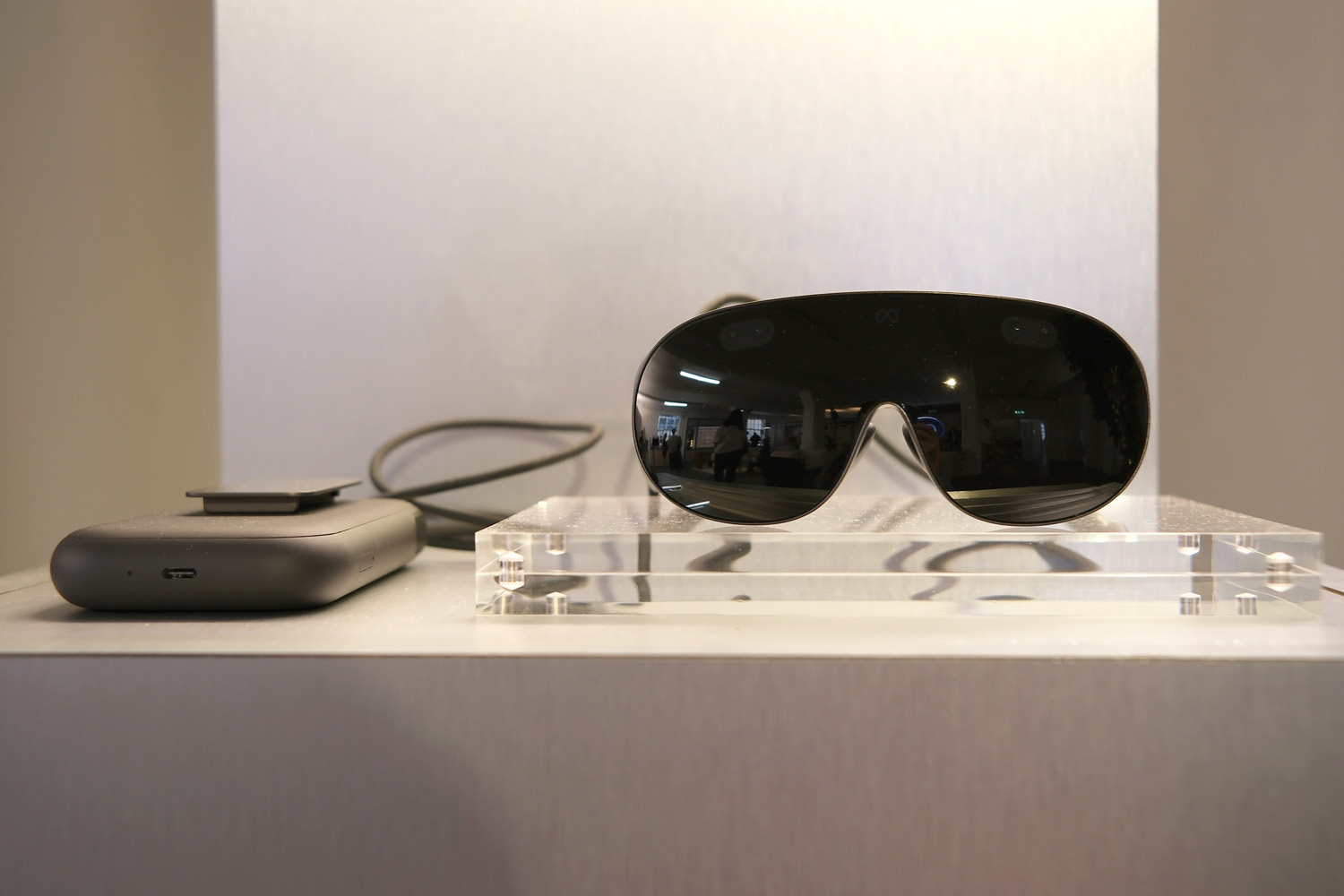
That name isn’t doing any lifting: wearing the Meta VR Glasses really isn’t any more complicated than putting on a regular pair of specs. They sit on your face, not over your head. There’s no strap to tighten and no bulky battery pack putting pressure on your neck. The glasses part weighs barely over 100g, helped by a tough yet light magnesium alloy construction. Because your face isn’t fully enclosed, I could really see myself wearing a pair for an extended period of time without being reduced to a sweaty mess – unlike Samsung and Apple’s efforts.
Meta has pulled off this compact design by shifting both the compute hardware and battery to an external puck, which is no larger than a portable power bank. The tethered unit slips neatly into a pocket or hooks onto your belt using the built-in clip. It’s got a USB-C port for charging and plugging in external hardware – I was told it can support laptops, smartphones and practically anything else with a DisplayPort.
Power on the Glasses with the button on the top right of the frame and two stunningly sharp micro-OLED displays blink into life. With a combined 5K resolution and 37 pixels per degree (PPD), clarity is simply superb. So is colour, with impactful hues, pretty much perfect blacks and exceptional contrast. This is also the first mixed reality device I’ve tried that’s IMAX enhanced certified.
The operating system walks you through manual IPD adjustment, pushing the left and right lens housings in and out to match onscreen graphics, until focus is perfect. The maximum 120Hz refresh rate has both Apple and Samsung beaten for smoothness. I don’t suffer from VR motion sickness, but those extra frames could help anyone that does.
Any grumbles? The field of view maybe isn’t the widest, but that didn’t hurt my immersion in the games and experiences I tried. The lenses still fill a lot of your vision. I also thought blackout covers could be useful, as I was always able to see my surroundings when looking down; I was told they wouldn’t be shipping in the box, but would be sold as an optional extra.
Eye and hand tracking are second to none
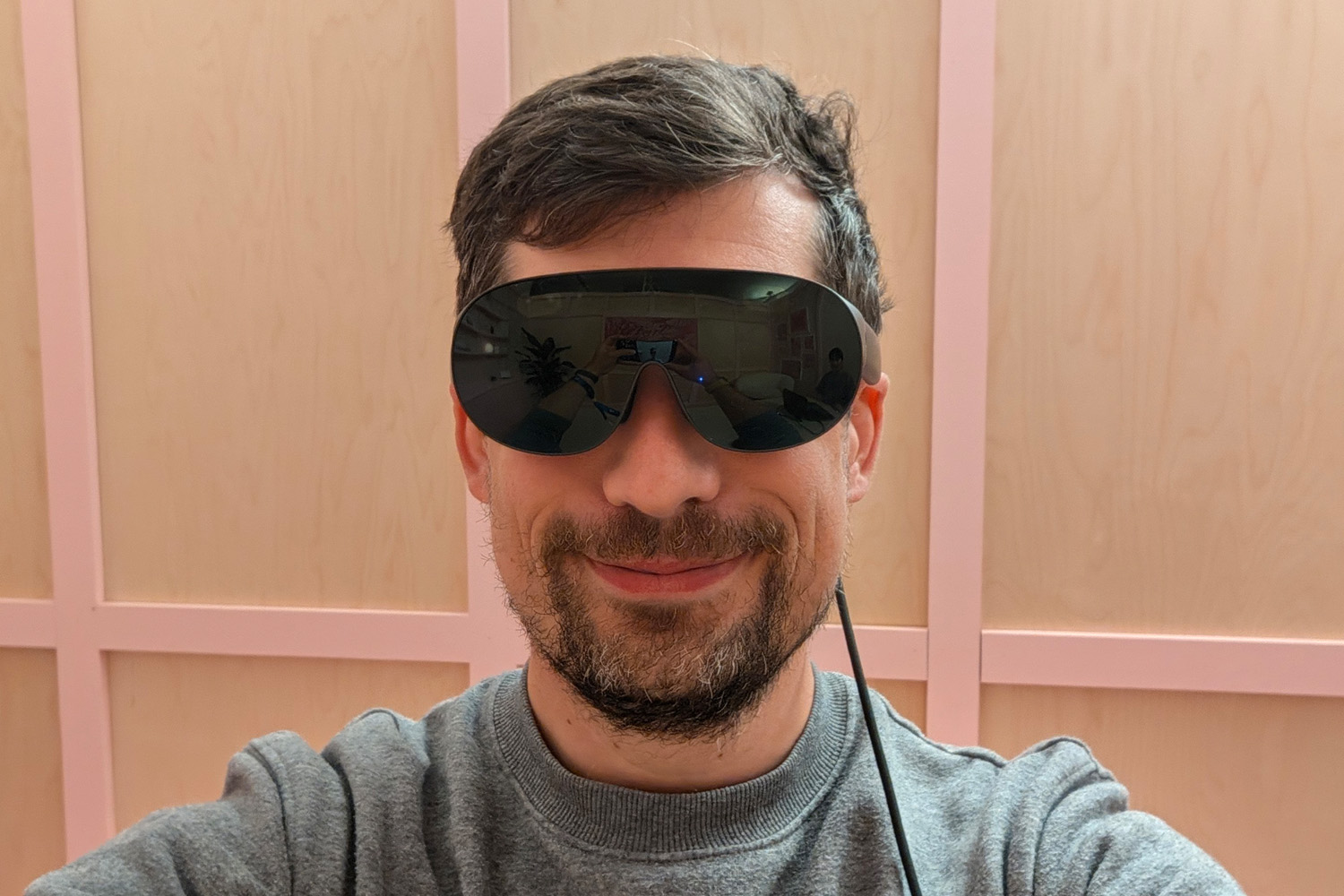
The Meta VR Glasses run the latest version of Meta’s Quest operating system. The layout is largely familiar, with colourful icons and menus that are easy to navigate. Unlike a Quest, however, here that navigation is done solely with your hands and eyes. Multiple outward-facing cameras in the headset (plus some downward-facing ones in the arms of the Glasses) do a phenomenal job, letting you use your arms at your sides rather than raised in front of you Minority Report-style. The way it keeps track of individual fingers allows for properly precise movements in virtual space too.
Case in point: the flat surface keyboard. Put both hands on a desk and the headset detects the surface, creating a virtual keyboard you can physically ‘tap’ on. Unlike a floating keyboard where you peck away at individual letters with no physical feedback, here I was writing full sentences at near full speed, with next to no typos, pretty much instantly. With a little practice I could see myself getting proper work done almost anywhere with a flat surface.
Eye tracking is also a treat, coping with even the smallest UI elements. When I tested the Samsung Galaxy XR I struggled to close windows because the virtual cursor wouldn’t always align with exactly where I was looking; that was never an issue here.
I was seriously impressed with the Meta VR Glasses’ colour passthrough cameras as well. They are wonderfully clear. Not quite ‘looking through a window’ sharp but far more detailed than Samsung’s effort. I was able to use my smartphone and see a laptop’s screen clearly without taking the glasses off. Factor in the virtual desktop function that can create multiple windows for individual apps and I could absolutely see myself sat at a desk wearing this headset instead of making room for multiple monitors in real space.
Games haven’t gone anywhere
It might not wear the Quest name anymore, meaning it isn’t strictly a gaming headset, but the Meta VR Glasses can still play everything in the Quest back catalogue. No physical controllers are included in the box, but can be paired if you buy them separately, and older Quest controllers are compatible.
You won’t need them for the 75 titles that have been optimised for hand and eye tracking at launch. I tried Beat Sabre Flux, a tweaked version of the popular VR rhythm game, and didn’t miss having physical controls at all. Hand tracking was nigh on flawless, meaning the only times I dropped combos were when I forgot which gesture I had to perform to score a particular note pattern. That said, I’d still be interested to see how more complex games deal with purely hand controls.
Meta has teamed up with a bunch of streaming services and content creators to give non-gamers plenty to be getting on with too. Disney has produced some Marvel’s Avengers and Star Wars clips that expand the storytelling beyond the flat screen, with animated scenes and effects that match the onscreen action. Seeing Thor’s Stormbreaker Axe being forged in Avengers: Infinity War was a lot more impactful when I felt I was actually in the forge, with machines pumping and smoke billowing around the picture.
Graphically things haven’t advanced a huge amount from Quest 3 and Quest 3S, but serious VR gamers will be able to pair the VR Glasses to their gaming PC and play more demanding titles through Meta Link.
My Meta VR Glasses initial verdict

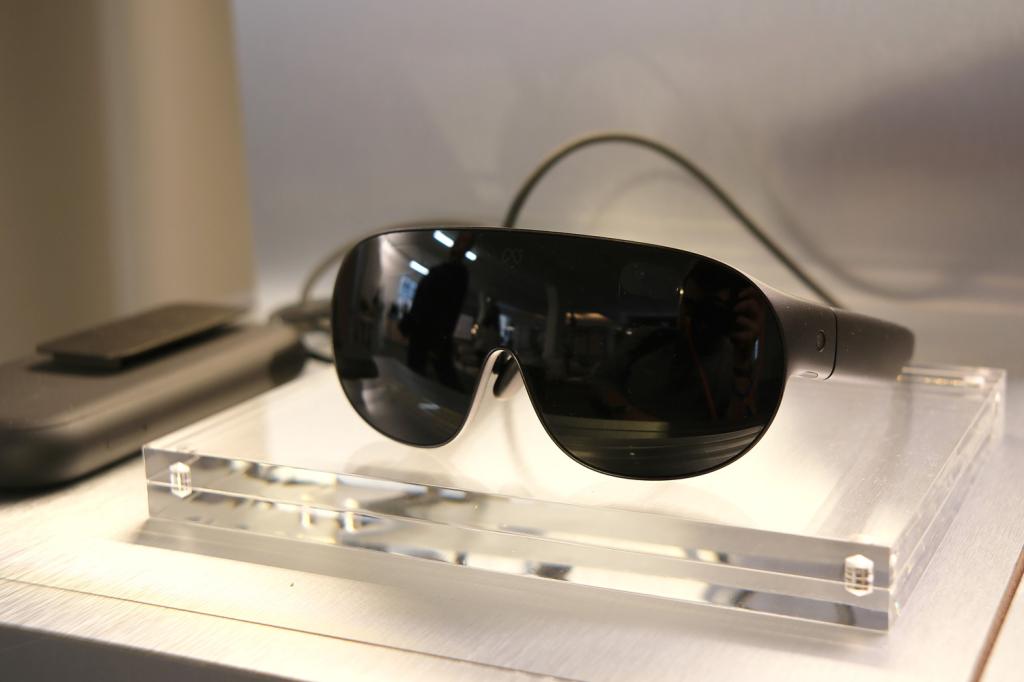
VR and AR fans, I really, really hope you didn’t rush out to buy a Galaxy XR or Apple Vision Pro. On first inspection, Meta’s latest effort blows both out of the water. The glasses form factor and light weight mean comfort is next level, while hand and eye tracking has to be experienced to be believed.
Gamers will love having the entire Quest back catalogue available at launch, and even though the number of optimised titles is lower, there are still plenty at launch to keep you busy. Productivity looks promising too, being a genuine alternative to a multi-monitor desk setup.
To top it off, the Meta VR Glasses are cheaper than both of its closest competitors. There’s the unanswered question of what Meta is doing with your data and I don’t doubt that the firm is swallowing some of the cost here (just like it did with the Quest range to help cement it as the number one pick for standalone VR gaming) but I’m sure consumers won’t complain if it means cutting edge hardware for less than they’d otherwise have to pay.
This is where mixed reality really goes next. I can’t wait to try the final version when it launches in early 2027.




Read the full article here


