








Remember when you could spot a dodgy website from a mile away? Unfortunately, that’s no longer the case. Gone are the days of telltale signs like blurry logos and bad grammar, with AI swooping into their place to give shopping scams a makeover and produce websites so believable that it’s easier than ever to fall for them. Turns out, AI might be good for summarising a document, rewriting an email and creating talking cat videos, but it has a dark side too. The cat is innocent in this story, don’t worry.
In a BBC report, Which? said AI is enabling fraudsters to mislead people on an unprecedented scale, and it seems they will target you from all angles, not just your social media feed but even within AI chatbots such as ChatGPT. So how do you spot an AI scam, and what kinds of scams should you watch for?
The AI scams you might come across


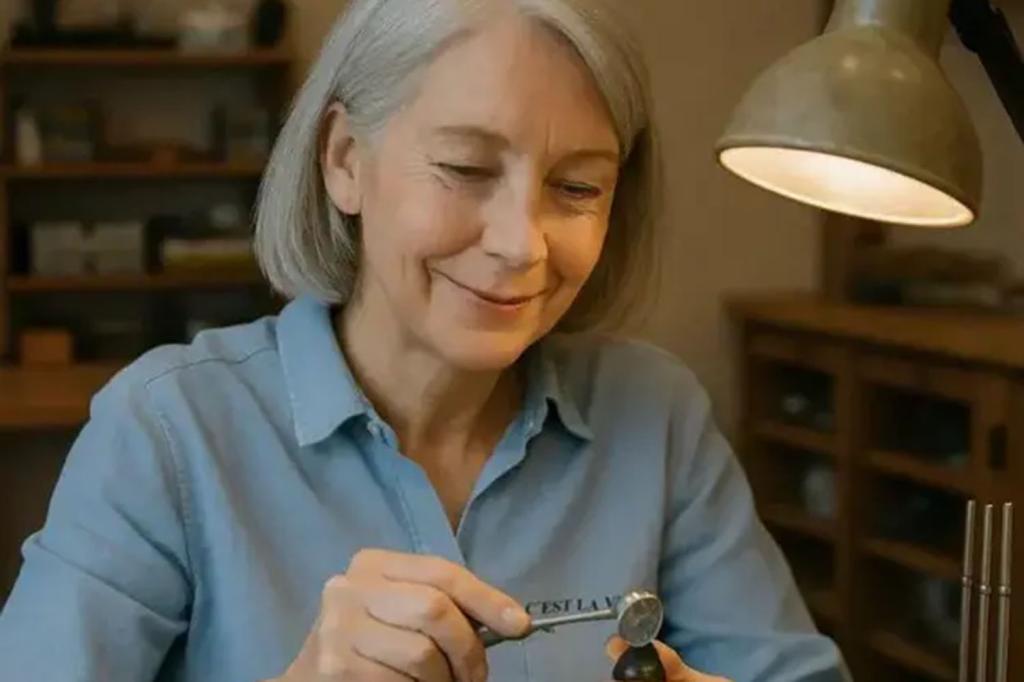
Scams are everywhere, but let’s start with Eileen and Patrick, featured in a BBC article in October 2025, to illustrate the lengths these scammers will go to. They are the smiling couple behind C’est La Vie, a jewellery boutique that claimed to have traded in Birmingham’s Jewellery Quarter for 29 years – exactly the kind of independent business you might look to support.
But the BBC investigation last year found that the shop’s returns address was in China, not Birmingham, and experts said the pair’s photos on the site were AI-generated. University of Birmingham’s AI professor Mark Lee thought they looked too perfect – like the photo that comes in the frame and you look at for months before swapping it out. Lee also noted that giveaways, such as oddly placed hands and questionable fingers placement, can no longer be relied on to spot a fake image.
If that wasn’t enough, it was only half the scam’s story. Adverts on the website then claimed Patrick had died and that a heartbroken Eileen was closing up shop with an 80 per cent off sale. More than 500 one-star Trustpilot reviews then piled up about the site (and Mabel & Daisy below), with buyers from C’est La Vie saying they received cheap resin and plastic tat. Hours after the BBC got in touch following its investigation, C’est La Vie declared itself sold out and closed. It briefly renamed itself Alice and Fred, then reverted.
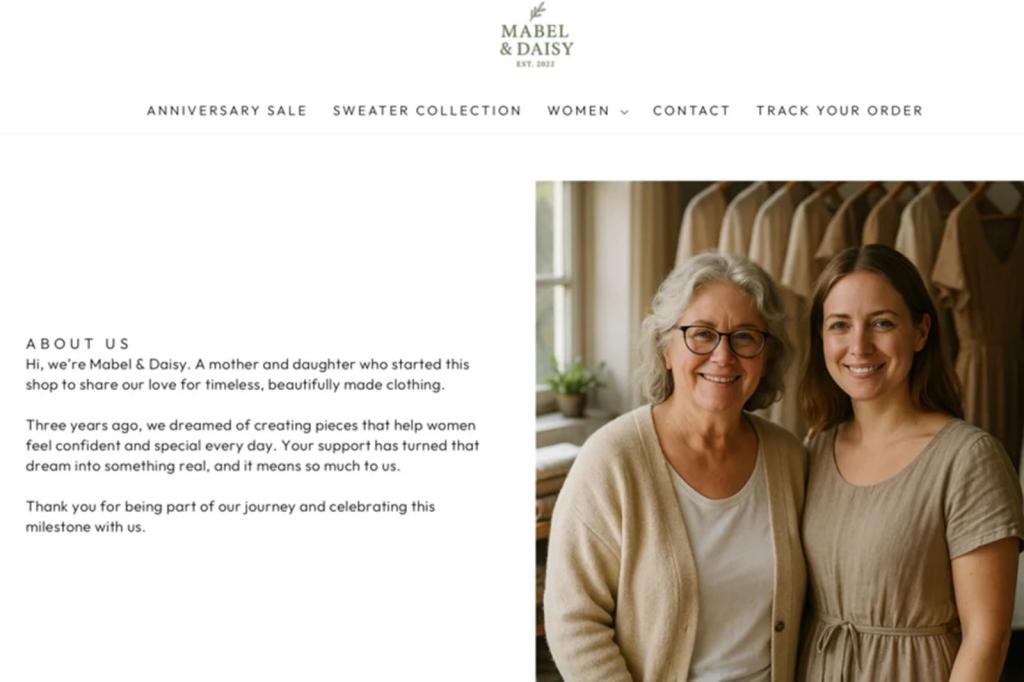
As for Mabel & Daisy that I briefly mentioned above. This was another similar scam discovered in the same BBC report, only this time, it was posing as a Bristol mother-and-daughter clothing firm. As you might have guessed by now, it was far from what it seemed. This time, the return address was in Hong Kong, orders took weeks to arrive, and the quality fell far short of the advertised “timeless” standard, despite readers telling the BBC that “the website looked lovely, professional and authentic”.
From chatbot recommendations to fake celebrity endorsements
But it isn’t just these small independent websites that might appear in your social media feeds that you need to watch out for. According to a Guardian story, scam-checking service Ask Silver found that ChatGPT was directing people to cloned sites mimicking retailers such as Russell & Bromley and Dunelm. If you’re currently shopping for new shoes or homeware, look twice before you impulse buy.
Asked about popular Russell & Bromley bags, ChatGPT reportedly dished out styles and prices, with two fraudulent sites among its sources, one touting discounts of up to 80 per cent – something any Russell & Bromley super fan would know is very unlikely, but the trap had a chance of working because Russell & Bromley went into administration in January and was absorbed by Next.
Its shop now lives on Next’s site, but not everyone will know that, and there’s every chance shoppers will still be searching for the old one. OpenAI says it has removed the fakes from its search index, which is, of course, a start, but these kinds of scams could quickly become whack-a-mole.
National Trading Standards’ Louise Baxter told the Guardian that no one should assume a site is genuine simply because an AI tool recommended it. Criminals, she said, are adapting as quickly as consumers turn to AI for advice, and they’ll exploit any new technology that helps them reach victims. Scammers, it turns out, read the tech news too.
Deepfakes are one of those new technologies to be mindful of. Age UK warns that deepfake videos featuring trusted faces are being used to flog products, from diet gummies to miracle cures, while MoneySavingExpert reports a surge in fake Martin Lewis clips, too. If Martin appears to be personally recommending a miracle investment in a paid ad, it isn’t Martin. Sadly, we’re in an age where you should question everything you see.
How to spot the scams and what to do
So apart from double- and triple-checking, what else can you do? Look at the web address first, and really look at it. As noted by The Guardian, legitimate retailers usually use .com or .co.uk (in the UK), and tacked-on words like “official” or “deals” should set alarm bells ringing. A shop that only accepts bank transfers is another red flag, so if you end up on a website asking you to transfer money – don’t do this.
The safest route is to type the address directly into your browser or use the retailer’s official app, rather than following any link you’re served, whether it comes from social media or a chatbot. Read Trustpilot reviews too, and check that others who have bought from the retailer you’re about to use are happy with what they got.
It’s also advisable to pay by credit card where possible. Citizens Advice explains that Section 75 lets you claim from your card provider for items costing between £100 and £30,000, while the Financial Ombudsman Service says that chargeback can help with debit and credit card payments if you have evidence. However, MoneySavingExpert warns that scam sites that route payments through a third party can break Section 75’s link, so you really do need to be vigilant too. If you do get stung, ring your bank straight away and report it to Report Fraud on 0300 123 2040.
Use a chatbot for ideas, by all means. Just type in the shop’s address yourself before handing over a penny, and we mean even a penny.
Read more: The five coffee sins almost everyone is guilty of (and what to do about them)




Read the full article here


