







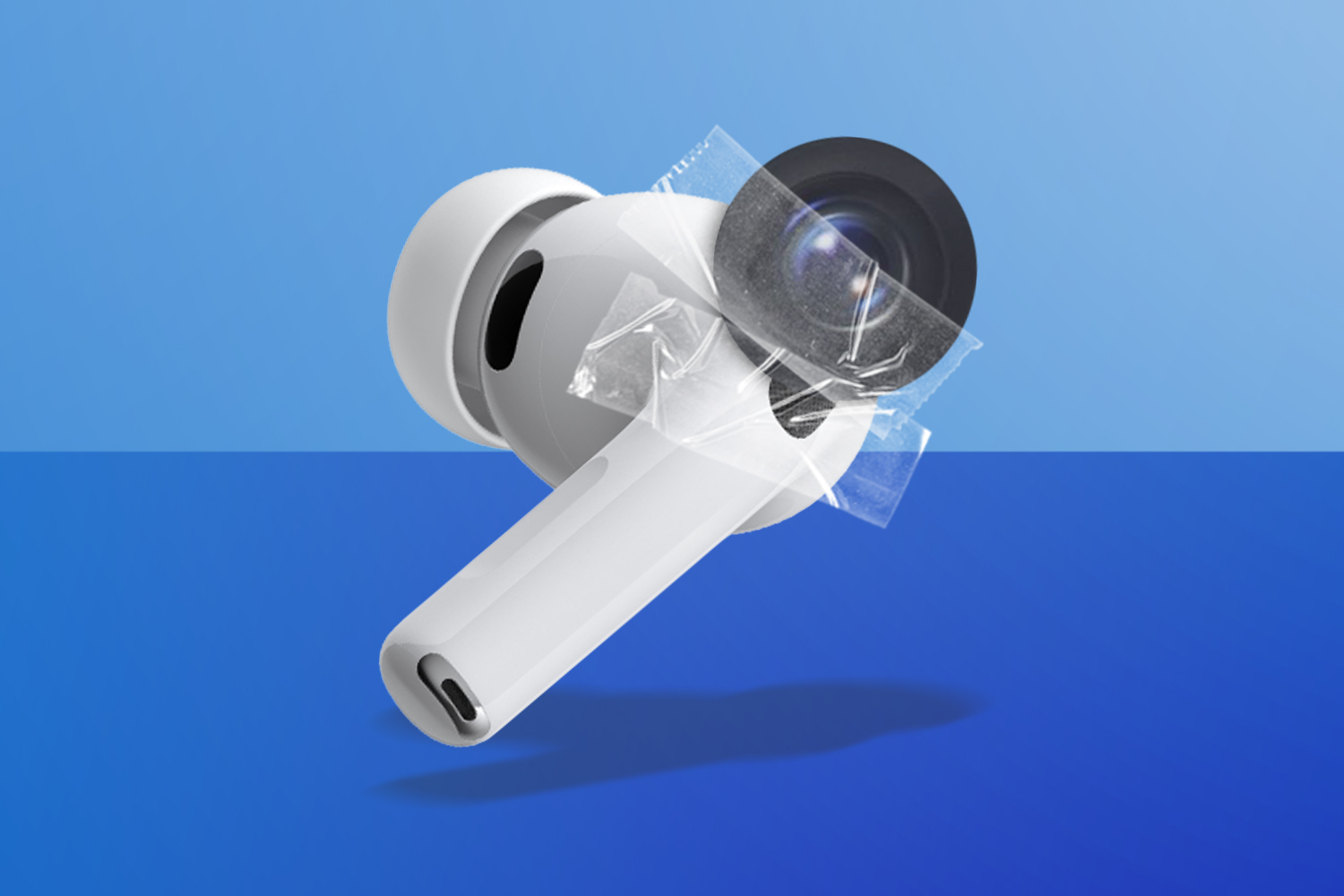
AirPods are some of the best headphones money can buy, but are AirPods with cameras a step too far? In an age of Meta pervert glasses, your answer might be yes. But, to borrow a much-worn phrase from Meta’s own Facebook, it’s complicated. Apple can avoid the meta pervert glasses trap by taking a privacy-first (and perverts-last) approach to wearable tech with cameras. But will it? And will that be enough?
Rumours about AirPods with cameras have done the rounds for years. In 2024, analyst Ming-Chi Kuo claimed Apple was working on AirPods with infrared camera modules. Rather than being for photography, they would work alongside products like Apple’s Vision Pro to create richer spatial audio experiences and recognise hand gestures.
Bloomberg’s Mark Gurman later claimed AirPods with cameras existed and were imminent – and then delayed. Fortunately, his insights about functionality were useful and aligned with Kuo’s. He said these AirPods will have low-res cameras intended to provide visual info for Apple Intelligence rather than image and video capture.
What Apple AirPods with cameras could help you do


So if AirPods with cameras won’t let you make your own Black Mirror episode with footage of your every waking moment, what will they do? Well, before tech giants temporarily became obsessed with the metaverse, augmented reality was the big new thing, adding a digital layer to your life. AirPods with cameras would help the Apple ecosystem better understand your surroundings.
As reported by MacRumors, a video buried in a macOS Tahoe release candidate showed how this might work: “With Visual Intelligence, your world becomes saveable. See something you like? Just ask me to save it for later.” This narration was accompanied by someone holding up a book, which was presumably recognised and its title stashed in an app.
Such deliberate, short-term camera access could have a range of practical uses: identifying the mysterious plant your dog just demolished; naming a building you’re standing in front of; describing the colour of clothing to the visually impaired. In short, Siri could understand what you’ve said and what you’re looking at, without you ever having to reach for your iPhone.
There are also ‘passive’ use cases, such as AirPods with cameras better detecting the screen you’re looking at, adjusting Spatial Audio accordingly. And Apple’s patent filings talk of audio cues based on nearby objects, which should help its wearable warn users about hazards, both in physical and mixed-reality worlds.
How Apple AirPods with cameras will work
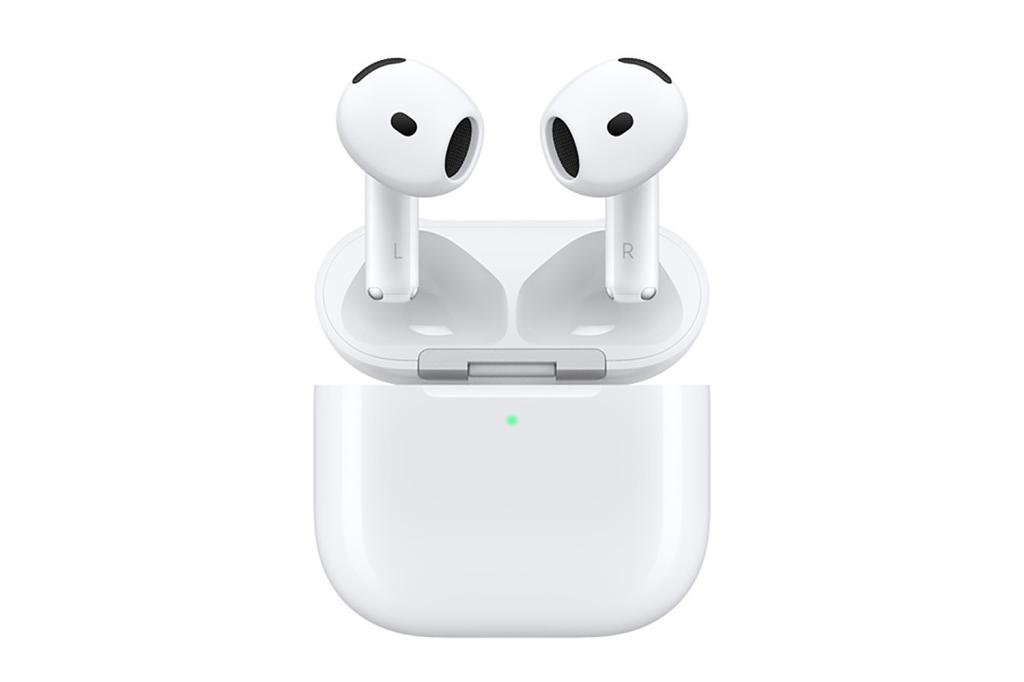
Apple’s patent filings describe an ear-mounted device featuring a speaker, along with an outward-facing image sensor capable of analysing the wearer’s surroundings and generating audio based on what it detects. It also discusses multiple cameras and depth sensing. This aligns with a recent Reddit thread that further digs into macOS 26.7, finding yet more details about AirPods with cameras.
The thread claims Apple’s new wearable will have passive and active modes, the former primarily designed for environmental awareness. Apple AirPods with cameras reportedly capture single or periodic shots, but not video, and will prefer camera input over Face ID tech when both are available. The system can also detect people, pause when movement or multiple displays may cause confusion, and alert you if the cameras are covered.
Naturally, squeezing camera hardware into something as small as a single AirPod presents an enormous engineering challenge. Apple already packs speakers, microphones, batteries, wireless radios, noise-cancelling hardware and advanced processors into an incredibly compact design. Adding a camera system would increase power consumption, generate more heat and take up valuable internal space.
That’s why rumours consistently point towards relatively simple imaging hardware rather than the sort of cameras you’d find on an iPhone. Apple’s patent filings reinforce this by focusing on scene analysis and environmental awareness, rather than image quality. Strangely, this lack of high-quality imagery could actually benefit Apple.
How Apple can stop AirPods with cameras being a privacy nightmare

AirPods are hugely popular and so adding cameras risks tarnishing the entire brand. As I said recently, everyone’s had their fill of pervert glasses. The last thing we need is Apple unleashing pervert AirPods.
Rumours suggest LEDs will indicate when the cameras are recording. But smart glasses already do this, and it’s easy to miss. With AirPods being so small, discreet and ubiquitous, such visual notifications would be almost meaningless. At a distance, it’s not like you’d be able to tell camera-equipped AirPods from standard AirPods Pro anyway.
Apple will therefore have to build trust through what its wearable can – and can’t – do. Reportedly, passive and active modes will work with 320x320px and 640x640px images respectively. Tech wizardry may give Visual Intelligence 1MP images to use, but that’s no good for nefarious purposes. Moreover, Apple’s system apparently won’t record video or retain processed imagery.
Apple AirPods with cameras cost and release date
No one outside Apple knows how much AirPods with cameras will cost and when they’ll appear, but it’s possible to make educated guesses. Today, a pair of AirPods Pro 3 costs $249/£219. Adding cameras will increase that, and we could see this product flirting with a $300 launch price in the US.
As for when AirPods with cameras will appear, rumours long claimed mass production would begin this year. Gurman now reckons Apple’s targeting a 2027 on-sale date, giving the company’s revamped AI efforts a chance to bed in, and ensuring there are no distractions from the iPhone Ultra.
If so, that gives Apple time to get its pitch right, educating the masses that AirPods with cameras are all about environmental awareness, not photography and recording. But given the stigma now associated with wearable cameras, convincing everyone that its new AirPods aren’t creepy might be a tougher challenge than any engineering one.




Read the full article here


